
AtlasAlign
Align brain microscopy to an atlas, review and export ROIs
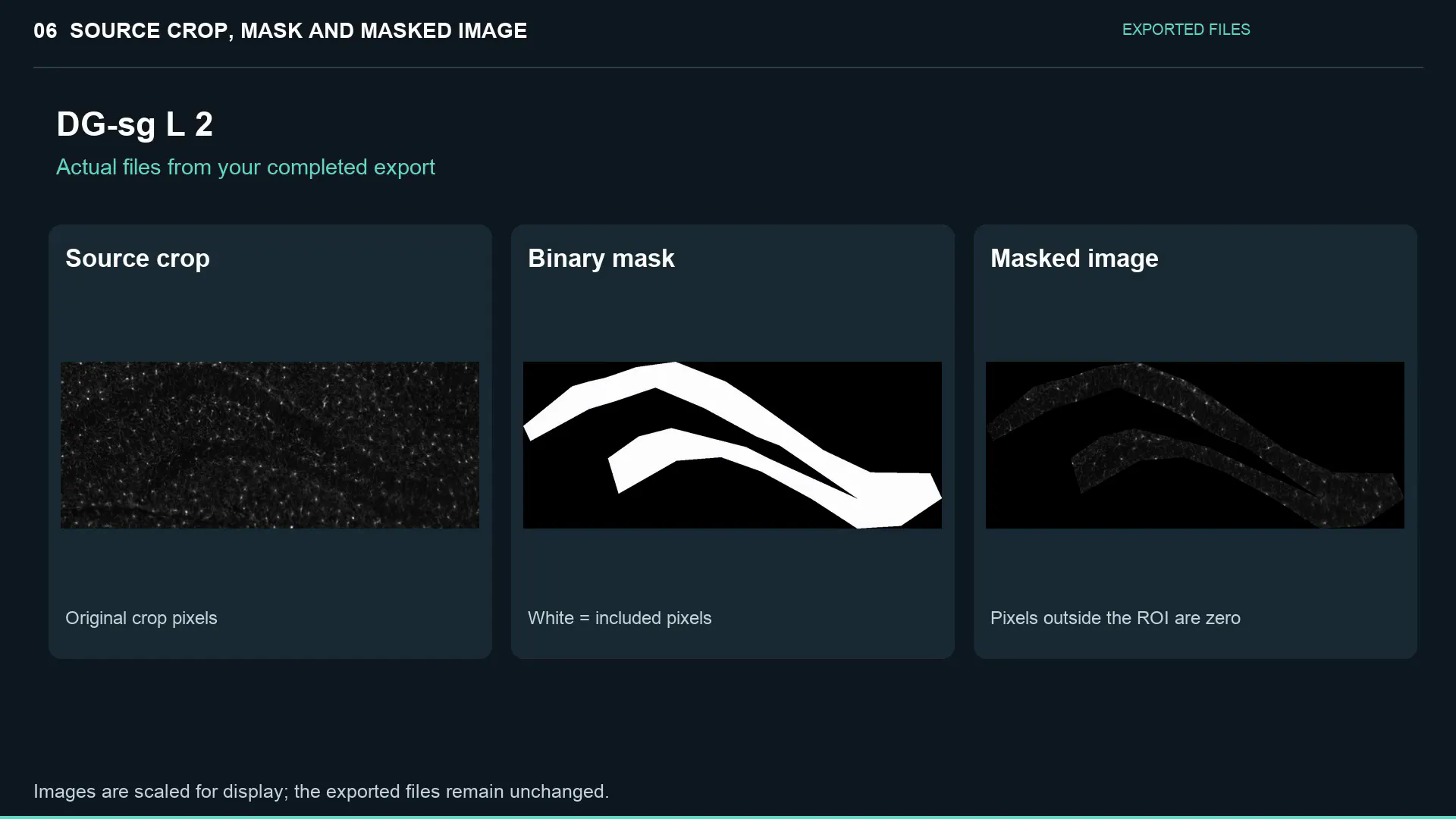
AtlasAlign is an open-source Fiji/ImageJ2 plugin for mouse brain atlas alignment and ROI export. Beta.3 adds multichannel and composite viewing, registration pinned to C/Z/T, selected-plane exports, and saved review sessions. Refine alignment, edit anatomical ROIs, and export crops and masks in original image coordinates. Resume individual or batch reviews. Source images stay read-only; researchers review and accept the anatomy. Demo frames show the earlier interface.
AI Analysis
AtlasAlign is an open-source Fiji/ImageJ2 plugin for aligning mouse brain microscopy images to atlases. Core features include refining alignments, editing anatomical ROIs, multichannel/composite viewing, pinned registration, selected-plane exports, saved review sessions for batch/individual processing, and exporting crops/masks in original coordinates while keeping source images read-only. It solves key pain points in neuroscience: time-consuming manual alignments, inconsistent ROI definition, and data integrity risks. USP is its researcher-centric review workflow and seamless integration with popular bioimage tools. Value proposition: accelerates accurate anatomical analysis for researchers without altering original data.
In 2025-2026, neuroscience research and large-scale brain mapping projects continue to expand with growing microscopy datasets and demand for reproducible analysis tools. Open-source integration with ImageJ aligns with trends favoring accessible scientific software amid funding for AI-bio convergence, though this tool is not AI-heavy. Policy support for open science and rising user needs for efficient ROI workflows make it favorable. Excellent Timing.
Technical difficulty is medium leveraging mature Fiji/ImageJ2 ecosystem; already in beta with GitHub source. Development/operation costs are low for open-source model. Minimal supply chain or compliance risks for research software. Strong scalability via community contributions. Team fit is high for bioimage developers. Overall rating: High.
Main segments: Neuroscientists, biologists, and research labs using mouse brain models (academia, pharma R&D, institutes); global distribution with concentration in US, Europe, and Asia. Estimated market: Niche TAM for life sciences image analysis tools around $200M, SAM for brain atlas alignment ~$30M. Core pain points: tedious registration and ROI export. Willingness to pay: moderate (free OSS preferred, but grants/support services viable).
Competition Level: Medium. Direct competitors: 1. ABBA (github.com/BioImageAnalysis/ABBA), 2. QuickNII (nitrc.org/projects/quicknii), 3. elastix (elastix.lumc.nl), 4. brainreg (github.com/brainglobe/brainreg), 5. Imaris (imaris.oxinst.com). Advantages: free/open-source, unique saved review sessions, read-only source protection, batch resume, Fiji-native exports. Disadvantages: beta stage, potentially less automated than AI competitors, limited commercial support and documentation compared to paid tools.
Upgrade Pro to unlock full AI analysis
Similar Products

Appwrite 2.0
The open-source cloud for agents and developers
▲ 215 votes

CodeBurn
See where your AI coding spend actually goes
▲ 101 votes

Juggler
A visual AI coding harness
▲ 94 votes

Recursi
Self improving vibe coding env with no API fees
▲ 92 votes

Blop
Describe your app and Blop tests it and repairs broken tests
▲ 80 votes

Stagent
Drive Claude Code through long tasks it would otherwise drop
▲ 58 votes