
Brain2Qwerty v2
Decode sentences directly from non-invasive brain signals
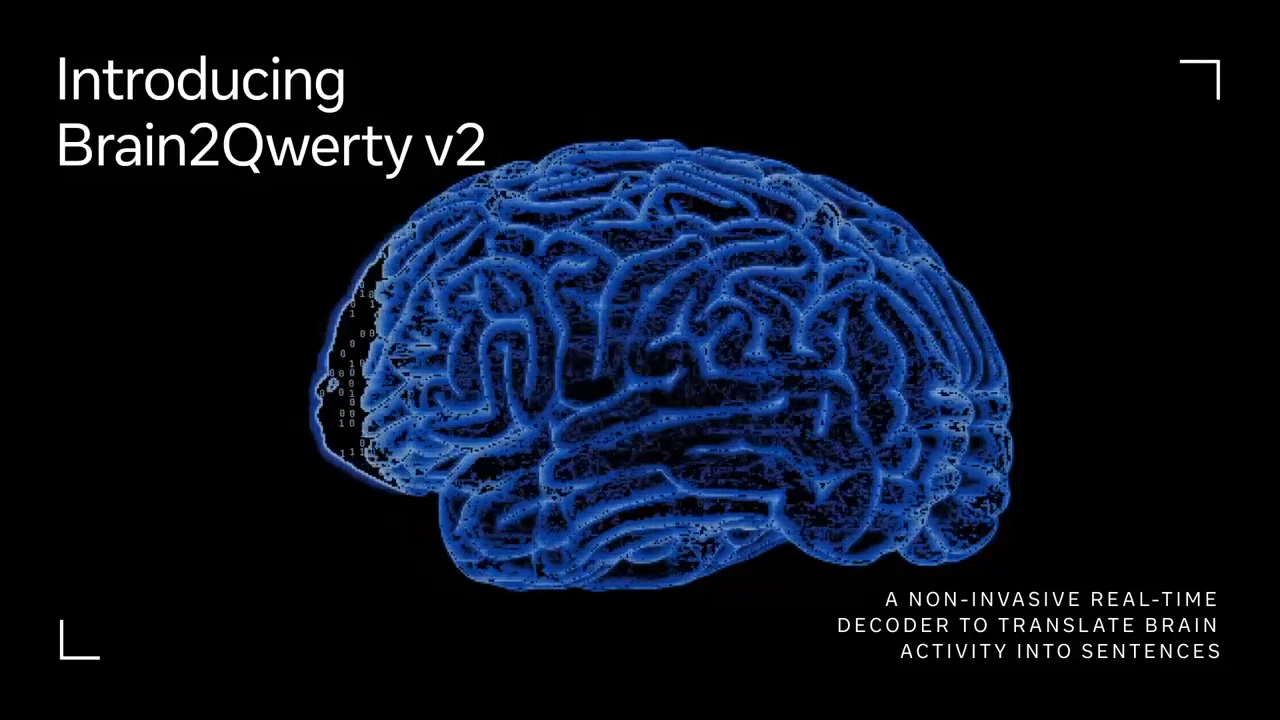
Brain2Qwerty v2 is a non-invasive brain-computer interface from Meta that decodes raw MEG brain signals into text. Using end-to-end deep learning and LLMs, it reaches up to 78% word accuracy without surgery.
AI Analysis
Brain2Qwerty v2 is a non-invasive brain-computer interface from Meta that decodes raw MEG brain signals into coherent text using end-to-end deep learning and LLMs. It achieves up to 78% word accuracy without any surgery or implants. Core features include direct sentence decoding from brain activity, leveraging custom models for improved performance over traditional methods. It solves key pain points for users with motor or speech impairments who face invasive BCI risks or slow alternative communication tools. The value proposition is enabling safe, high-accuracy thought-to-text conversion, bridging neuroscience and AI for assistive communication and future human-computer interaction.
In 2025-2026, AI integration with neuroscience is accelerating, with maturing deep learning models and growing demand for non-invasive medical tech amid ethical concerns over implants like Neuralink. Aging populations increase need for assistive devices, supported by favorable policies in digital health. This aligns perfectly with BCI commercialization trends. Excellent Timing.
Technical difficulty is high due to reliance on expensive, non-portable MEG scanners and need for large specialized brain signal datasets. Development costs are significant for ML training and medical validation. High compliance risks as a medical device requiring regulatory approvals (FDA etc.). Scalability is currently limited beyond research settings, though Meta's resources help. Overall rating: Medium.
Primary segments: Patients with paralysis or ALS (ages 30-70), neuroscientists, and assistive tech developers. Industries: Healthcare and medical research. Geographic focus: North America and Europe with advanced medical infrastructure. Estimated TAM for BCI/neurotech ~$15-20B by 2028; SAM for non-invasive interfaces ~$1-2B; SOM for text decoding solutions ~$300-500M. Core pain: Inability to communicate effectively. High willingness to pay for effective, safe solutions via insurance or out-of-pocket.
Medium. Direct competitors: 1. Neuralink (neuralink.com) - invasive with higher potential bandwidth. 2. Synchron (synchron.com) - endovascular stent-based BCI. 3. Emotiv (emotiv.com) - consumer EEG headsets with lower accuracy. 4. Kernel (kernel.com) - non-invasive neuroimaging focus. 5. OpenBCI (openbci.com) - open-source EEG platforms. Advantages: Truly non-invasive MEG approach with LLM-enhanced 78% accuracy and no surgery. Disadvantages: Less portable than EEG, higher hardware costs, still in early prototype stage compared to commercial EEG alternatives.
Upgrade Pro to unlock full AI analysis
Similar Products

React UI Kit V7
All the chat components you need. None of the complexity
▲ 115 votes

Coarena by Coasty
The arena where agents battle on real-world work
▲ 104 votes

CodeBurn
See where your AI coding spend actually goes
▲ 101 votes

gg-friggin-ez
Fast, cheap profanity and toxicity screening via Jev & Laya
▲ 88 votes

Blop
Describe your app and Blop tests it and repairs broken tests
▲ 80 votes

Prowler Cloud
Where your AI agent becomes a cloud security defender
▲ 64 votes