
ChordWeaver
Create, learn, and explore music through theory
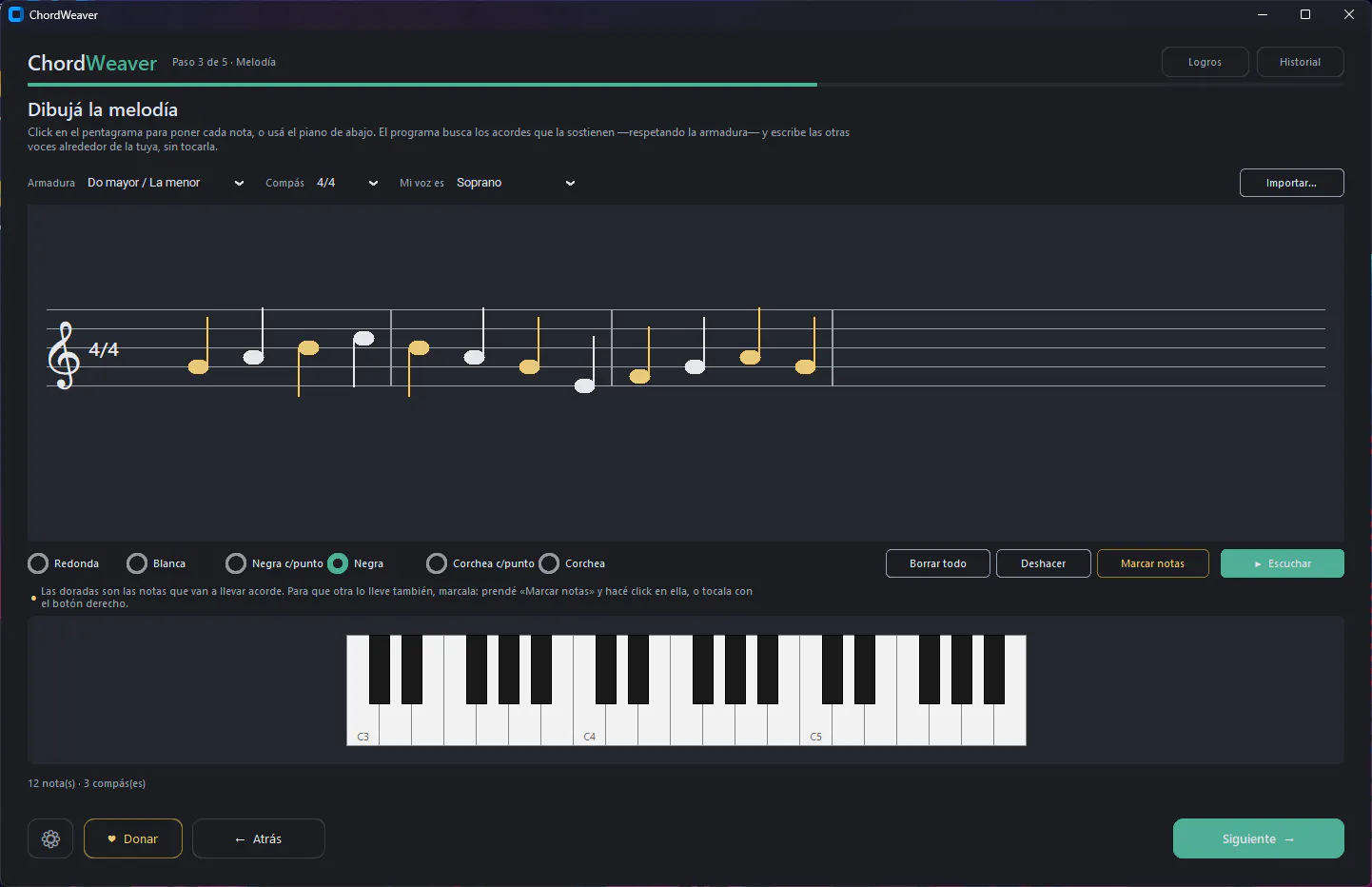
Chordweaver is a free music theory playground for creating, experimenting, and learning. Organize voices, generate harmonic progressions, or harmonize melodies according to different musical genres. Explore Story Mode, unlock achievements, and learn with the Theory Book. English version coming next week!
AI Analysis
ChordWeaver is a free music theory playground for creating, experimenting, and learning. Core features include organizing voices, generating harmonic progressions, harmonizing melodies by musical genres, Story Mode, achievements, and a Theory Book. It solves the pain point of traditional music theory being abstract, dry, and hard to apply by offering an interactive, hands-on, and gamified experience. The value proposition is making music theory accessible, practical, and fun for self-learners and enthusiasts. Currently a work in progress with English version launching soon.
In 2025-2026, market timing is favorable with the continued growth of edtech, rising interest in digital creative hobbies, and mature web technologies for interactive audio. User demands are shifting toward engaging, gamified learning tools amid economic pressures favoring affordable self-education. However, AI-driven music tools are also emerging, which could either complement or compete. Overall a good time for innovative music education platforms. Rating: Moderate Timing.
Overall feasibility is High. Technical difficulty is moderate with established music theory algorithms and JS libraries available; development and operation costs are low for a free web tool. No supply chain issues or major compliance risks. Team appears fit given GitHub/WIP status and music focus. High scalability potential as a digital platform with low marginal costs.
Main target segments: Music students, hobbyist musicians, and aspiring composers (ages 15-35), globally distributed but focused on English-speaking regions (US, Europe). Industries: Music education and independent music production. Estimated market size: Music edtech TAM ~$10B+, SAM for theory tools ~$500M, SOM ~$20-50M. Core pain points: Lack of interactive ways to experiment with theory. Potential willingness to pay: Medium-high for premium features once English version launches (currently free).
Medium. Direct competitors: 1. musictheory.net (musictheory.net), 2. Hooktheory/Hookpad (hooktheory.com), 3. Teoria (teoria.com), 4. Music Theory.net exercises. Advantages: Unique playground for creation/harmonization by genre, integrated gamification (Story Mode, achievements) and Theory Book; fully free. Disadvantages: WIP status means less polish and features than established competitors; limited current language support and potentially smaller user base.
Upgrade Pro to unlock full AI analysis
Similar Products

CodeBurn
See where your AI coding spend actually goes
▲ 101 votes

Juggler
A visual AI coding harness
▲ 94 votes
gg-friggin-ez
Fast, cheap profanity and toxicity screening via Jev & Laya
▲ 88 votes

Blop
Describe your app and Blop tests it and repairs broken tests
▲ 80 votes

Prowler Cloud
Where your AI agent becomes a cloud security defender
▲ 64 votes

Poddle
Swing your phone, play pickleball on any computer!
▲ 62 votes