
El Niño
See live signals from the Pacific warming climate
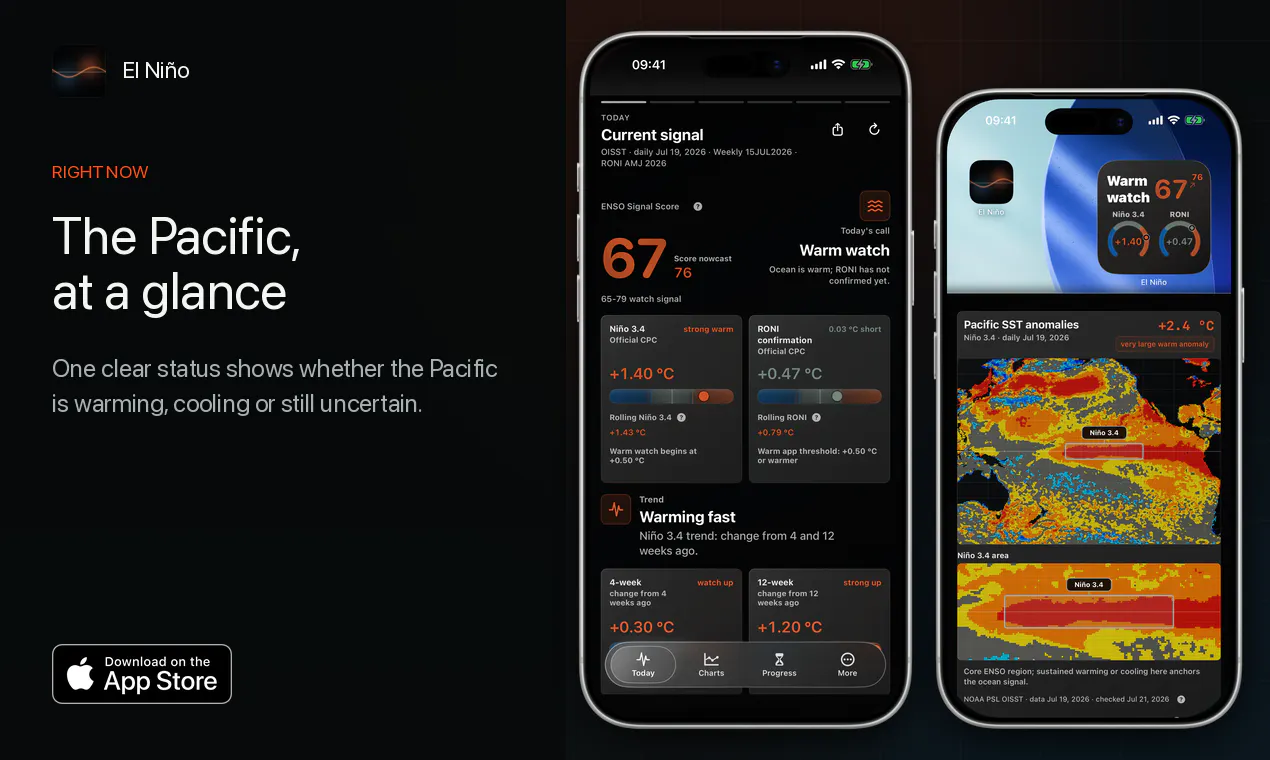
El Niño is a recurring warming pattern in the tropical Pacific that can influence weather around the world. This iPhone app turns live public NOAA data into a simple answer: is that warming signal building, fading or still uncertain? See what changed, where the warm water sits and how similar events unfolded before. A Home Screen widget keeps the latest complete update nearby. Upfront paid once, with no account or subscription. Independent context, not a forecast or official guidance.
AI Analysis
El Niño is an iOS app that transforms live public NOAA data into a simple visual indicator of whether the Pacific warming signal is building, fading, or uncertain. Core features include data visualizations showing changes over time, warm water locations, historical event comparisons, and a Home Screen widget for at-a-glance updates. Unique selling points are its one-time upfront payment, no accounts or subscriptions, independent non-forecast context, and focus on clarity over complexity. It solves user pain points around interpreting dense, technical climate datasets by providing straightforward, accessible insights into a phenomenon that influences global weather. The value proposition is convenient, trustworthy environmental awareness without hype or ongoing costs.
The current market timing is favorable for 2025-2026. Climate change awareness and demand for transparent, independent weather data are rising due to increasing extreme weather events. Mobile data visualization technology is mature, user interest in personal climate insights is growing beyond traditional forecasts, and policy emphasis on environmental data supports such tools. While El Niño is cyclical, heightened focus on ocean-climate links makes this a relevant period. Excellent Timing.
High. Technical difficulty is low as it uses public NOAA APIs for data integration, standard iOS development for visualizations and widgets. Development and operation costs are minimal for an indie one-time purchase app with no servers needed. Low compliance risks since data is public domain; no supply chain issues. Strong scalability for future updates or additional climate signals, suitable for a small experienced team.
Main target segments: Tech-savvy iOS users aged 25-55 interested in weather, climate science, and environment; includes enthusiasts, educators, and professionals in agriculture, marine, or disaster preparedness. Geographic focus: Primarily US, Europe, Australia, and Latin America (El Niño impacted regions). Estimated market size: TAM for weather/climate apps ~$10B, SAM for data visualization tools ~$1B, SOM for niche signal trackers ~$10-20M. Core pain points: Difficulty parsing raw scientific data for practical understanding. Potential willingness to pay: Moderate to high for a one-time affordable purchase providing unique ongoing value.
Low. Direct competitors: 1. NOAA ENSO resources (climate.gov), 2. Windy.com (windy.com), 3. Carrot Weather (meetcarrot.com/weather), 4. Clima app (getclima.com), 5. Buoy Data apps (e.g., Buoyweather.com). Advantages: Extreme focus and simplicity on El Niño signal with historical context, widget convenience, one-time pricing vs subscriptions, independent non-official view. Disadvantages: Narrow scope (not full weather app), relies on specific public data updates, less brand recognition than established players.
Upgrade Pro to unlock full AI analysis
Similar Products

Fuzzy AI
We warm your prospects before reaching out
▲ 527 votes

MOVO AI
The world's first long-form video agent for mobile
▲ 277 votes

Loot
Collect your favorite things in real life
▲ 115 votes

Mirlo
Social media for real connections. No likes, no algorithm.
▲ 94 votes

DOYT
The Dynamic Island to-do app you don't have to open
▲ 57 votes

BioScript
Self-hosted white label link-in-bio
▲ 0 votes