FeelMyMac
Lets you feel different textures through your Mac’s trackpad
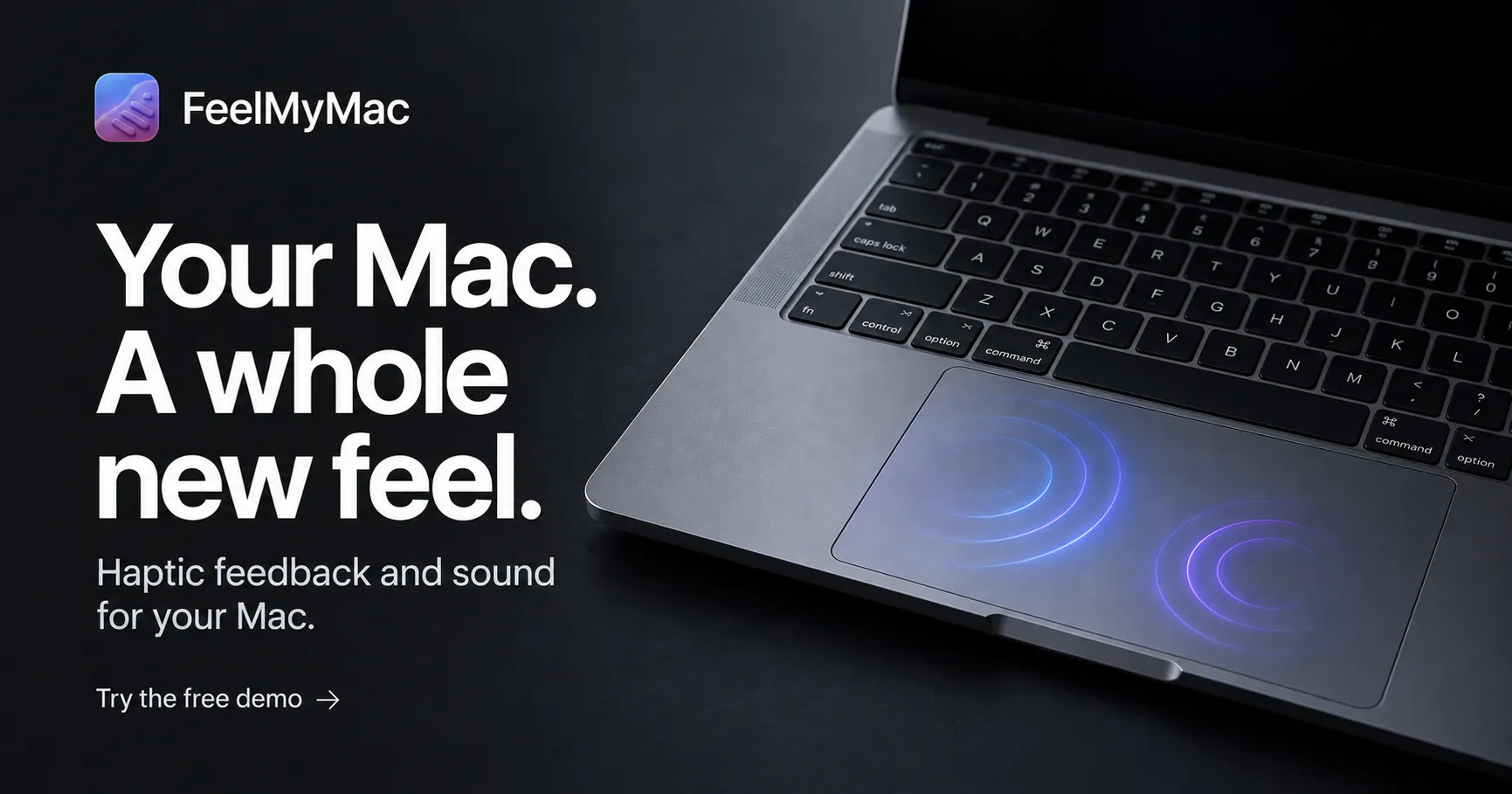
FeelMyMac brings haptic textures to cursor movement and scrolling on Mac trackpads. Instead of feeling feedback only when you click, you can actually feel simulated surfaces as you move your cursor, with different materials and textures to choose from. You can enable haptics separately for cursor customize intensity, and add optional sound effects. FeelMyMac also includes keyboard sounds for an extra layer of feedback. How it works? Easy it's Taptic Engine just like an iPhone would!
AI Analysis
FeelMyMac is a Mac app that simulates haptic textures and materials on the trackpad during cursor movement and scrolling, extending beyond traditional click feedback. Core features include selectable textures, independent haptic controls for cursor/scrolling with intensity customization, optional sound effects, and added keyboard sounds. It leverages the Mac's Taptic Engine (like iPhone) to create immersive tactile experiences. It addresses the pain point of flat, monotonous trackpad interactions that lack sensory depth during prolonged use. The value proposition is enhancing everyday Mac UX with richer, more engaging haptic feedback for a more natural and enjoyable computing experience.
For 2025-2026, timing is Moderate. Haptic technology is mature thanks to widespread adoption in smartphones and wearables, with rising user demand for immersive, multi-sensory computing experiences aligned with AR/VR growth. However, Apple’s potential integration of advanced haptics natively in macOS, combined with economic uncertainty affecting consumer spending on niche utilities, makes it less than ideal. It benefits from remote work trends increasing Mac usage but lacks explosive market catalysts.
Overall feasibility is High. Technical difficulty is moderate-low since it builds on the existing Taptic Engine with straightforward API access for haptics and audio. Development and operation costs are low for a digital SaaS-like Mac app with no hardware or complex supply chain. Compliance risks are minimal (standard Mac App Store guidelines). Scalability is strong via digital downloads and updates. Main challenge is maintaining compatibility with future macOS versions and Apple silicon.
Primary users are tech-savvy Mac owners, including designers, developers, writers, and creative professionals (ages 25-50) in tech and media industries, concentrated in North America, Europe, and urban Asia. Estimated TAM for Mac utility/enhancement apps is ~$300-500M, SAM for haptic/UX tools ~$20-50M, SOM ~$1-5M depending on marketing. Core pain points include fatigue from uniform trackpad feel during extended sessions and desire for premium, Apple-like immersion. Willingness to pay is moderate-high for convenient UX upgrades, supporting $5-20 pricing.
Competition level: Low. Direct competitors: 1. BetterTouchTool (folivora.ai) - advanced trackpad gestures and customization. 2. LinearMouse (linearmouse.org) - cursor and scrolling utilities. 3. Karabiner-Elements (pqrs.org) - keyboard and input remapping. 4. Apple's native Accessibility haptics. FeelMyMac's advantages include unique real-time texture simulation during movement (not just gestures) and bundled keyboard audio. Disadvantages: narrower scope than full-featured tools like BetterTouchTool; may require users to run multiple apps for complete customization; limited brand awareness as a newer/niche offering.
Upgrade Pro to unlock full AI analysis
Similar Products

Paradigm
Turn any goal into a personalized, adaptive learning path.
▲ 464 votes

React UI Kit V7
All the chat components you need. None of the complexity
▲ 115 votes

Kosshi
Simple, fast outliner for Mac and iPhone.
▲ 90 votes
Whiteout
Auto-redact sensitive info from Mac screenshots
▲ 83 votes

Blop
Describe your app and Blop tests it and repairs broken tests
▲ 80 votes

Mantel
Stop confusing your Claude Code sessions & terminal windows
▲ 72 votes