
Generative MUI
Let the LLM build the UI — in your own Material UI theme
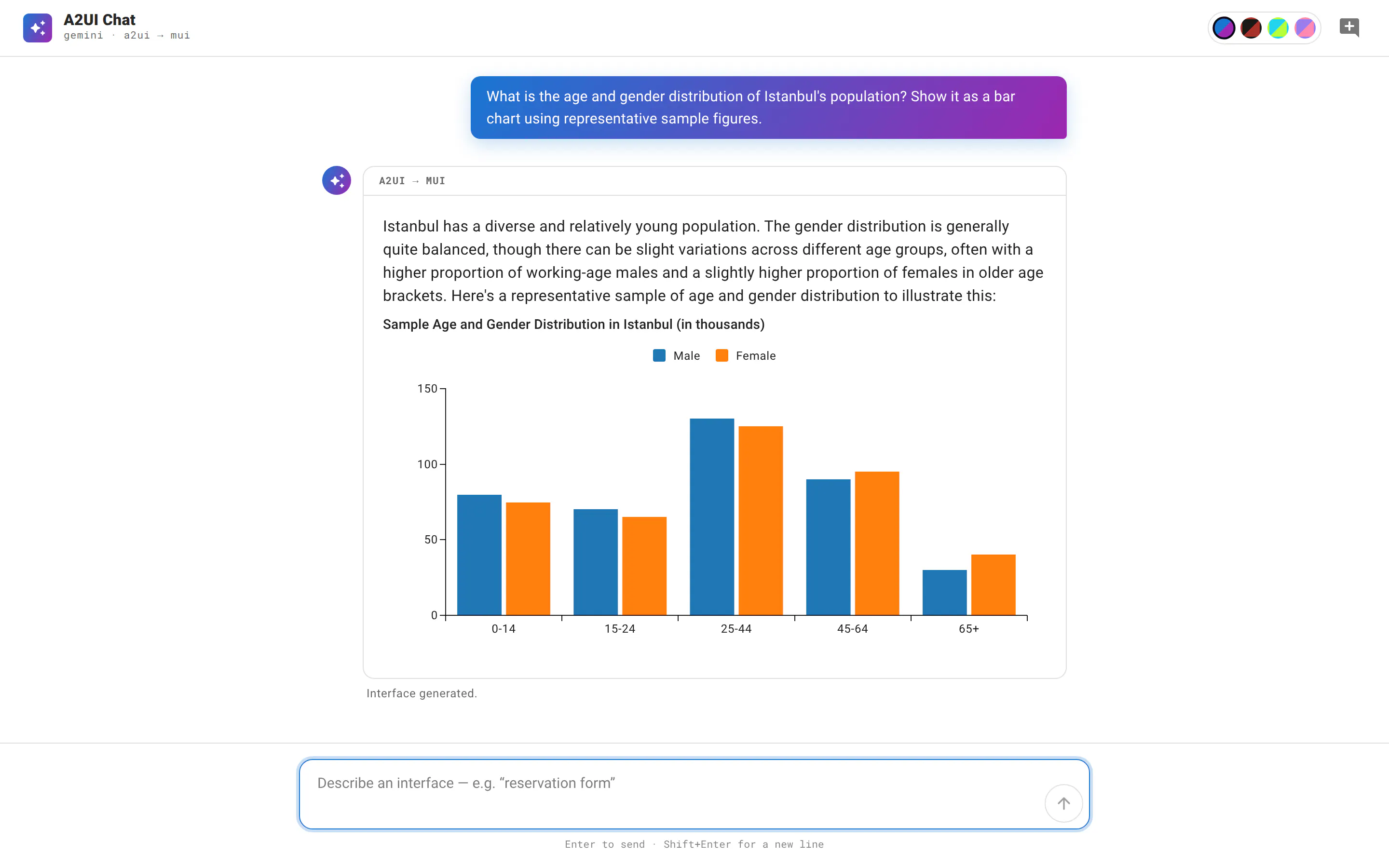
Renderer for Material UI: an LLM emits A2UI, this renders it as real MUI in your host ThemeProvider — with streaming, two-way binding, charts, and runtime custom components. - yessGlory17/generative-mui
AI Analysis
Generative MUI is an open-source renderer for Material-UI that lets LLMs output A2UI format, which is then rendered as authentic MUI components within your existing ThemeProvider. Core features include streaming UI generation, two-way data binding, chart integration, and support for runtime custom components. It addresses key pain points like time-consuming manual UI coding, inconsistent designs from generic AI outputs, and integration issues with established design systems. The value proposition is enabling rapid, theme-consistent UI development by bridging LLMs directly with real MUI components for developers and teams using React and Material-UI.
In 2025-2026, AI code generation and LLM-powered tools are maturing rapidly with high adoption in developer workflows. Trends favor AI-native devtools that boost productivity, while React/MUI remain widely used. Changing demands for faster prototyping align well, with supportive economic environment for OSS innovation. This is a good time as complementary tools like AI IDEs gain traction. Excellent Timing.
Technical difficulty is medium as the core renderer is already built and available on GitHub, though ensuring reliable LLM output parsing remains challenging. Development and operation costs are low for an OSS library with no infrastructure needs. Minimal supply chain or compliance risks. High scalability for integration into React apps. Overall High with proven implementation reducing team fit barriers.
Main segments: React frontend developers, UI/UX engineers, and dev teams at SaaS companies and agencies using Material-UI. Demographics: tech professionals aged 25-40. Geographic: global with concentration in North America and Europe. Estimated TAM for AI dev tools ~$10B+, SAM for UI gen tools ~$1B, SOM smaller for MUI niche. Core pain points: slow UI building and design system mismatches. Moderate to high willingness to pay for productivity gains via sponsorships or enterprise support.
Medium. Direct competitors: 1. v0 by Vercel (v0.dev), 2. Cursor AI (cursor.com), 3. Galileo AI (galileo.ai), 4. Anima (animaapp.com). Advantages: specific deep MUI theme integration, advanced features like two-way binding and streaming, fully open-source. Disadvantages: narrower user base limited to MUI adopters, less marketing polish and ecosystem than commercial alternatives, potential reliability issues with LLM outputs.
Upgrade Pro to unlock full AI analysis
Similar Products

React UI Kit V7
All the chat components you need. None of the complexity
▲ 115 votes

buddylist
Chat with your coding agents like it's 2005
▲ 114 votes

CodeBurn
See where your AI coding spend actually goes
▲ 101 votes
gg-friggin-ez
Fast, cheap profanity and toxicity screening via Jev & Laya
▲ 88 votes

Prowler Cloud
Where your AI agent becomes a cloud security defender
▲ 64 votes

Poddle
Swing your phone, play pickleball on any computer!
▲ 62 votes