
God’s Eye View
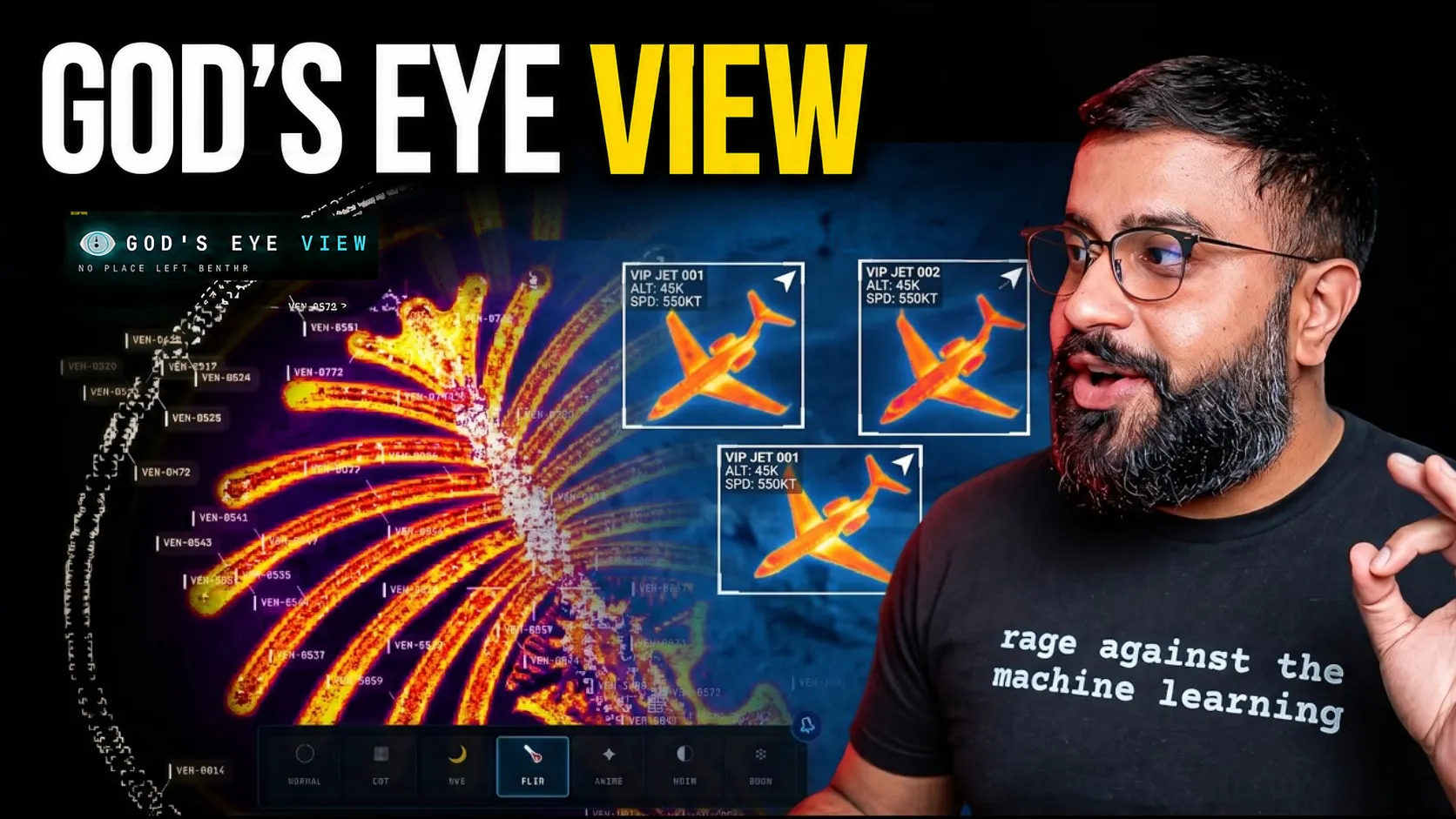
Spy satellite simulator in your browser but the data is real
Mapped the world at Google. Now mapping the frontier of creation & computing. Your atlas to AI, AR/VR, robotics, and the technologies blurring our physical and digital worlds. Deep dives with technical depth and zero fluff. Click to read Map the World by Bilawal Sidhu, a Substack publication with tens of thousands of subscribers.
AI Analysis
God's Eye View is an open-source spy satellite simulator running in the browser that uses real satellite and mapping data. Core features include interactive global exploration from a satellite perspective, integration with technologies in AI, AR/VR, and robotics, and technical deep-dive content via an associated Substack newsletter. Unique selling points are its accessibility without specialized hardware, real (not simulated) data, and open-source availability on GitHub for customization. It solves user pain points of expensive or complex geospatial software and limited access to high-quality satellite views. The value proposition is providing an educational atlas to frontier mapping technologies with zero fluff for enthusiasts and professionals.
Favorable in 2025-2026 due to booming AI and geospatial tech adoption, maturing satellite open data policies, rising demand for browser-based interactive tools amid remote sensing growth, and economic push for innovation in robotics/AR. Interest in democratized mapping tools is high with climate and urban tech trends. Excellent Timing.
Medium technical difficulty leveraging existing map APIs and open-source libraries like those on GitHub. Low development and operation costs for a browser tool. Minimal supply chain risk but potential data compliance issues with real satellite sources. Strong scalability and fits the creator's Google mapping background. Overall High.
Primary segments: Tech developers, AI/robotics researchers, geography enthusiasts, educators (ages 25-45), concentrated in US, Europe, and tech hubs in Asia. Industries: Software dev, academia, defense tech. Geospatial tools TAM ~$150B by 2026, SAM for browser/open-source mapping ~$10B, SOM ~$100M. Core pains: Access to intuitive real satellite views without costly tools. Moderate willingness to pay for premium insights or subscriptions tied to the Substack.
Medium. Direct competitors: 1. Google Earth (earth.google.com), 2. CesiumJS (cesium.com), 3. NASA Worldview (worldview.earthdata.nasa.gov), 4. OpenLayers (openlayers.org). Advantages: Pure open-source focus, unique "spy satellite" framing with real data in simple browser, strong educational tie-in via Substack. Disadvantages: Less comprehensive data layers and features than established platforms, potentially lower polish and commercial support.
Upgrade Pro to unlock full AI analysis
Similar Products

CodeBurn
See where your AI coding spend actually goes
▲ 101 votes

Juggler
A visual AI coding harness
▲ 94 votes
gg-friggin-ez
Fast, cheap profanity and toxicity screening via Jev & Laya
▲ 88 votes

Blop
Describe your app and Blop tests it and repairs broken tests
▲ 80 votes

Prowler Cloud
Where your AI agent becomes a cloud security defender
▲ 64 votes

Poddle
Swing your phone, play pickleball on any computer!
▲ 62 votes