Knockoff
Amazon, without the knockoffs
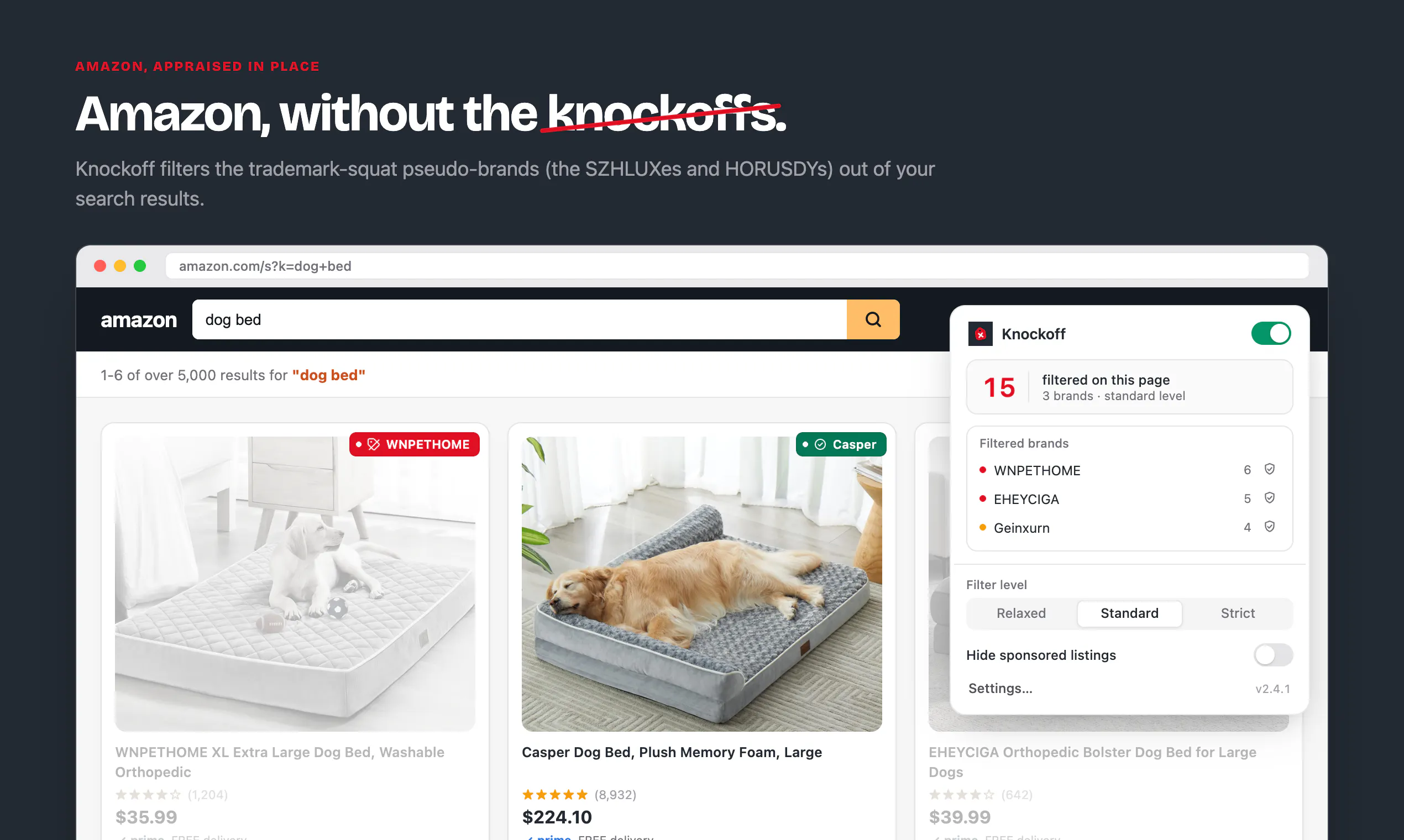
Knockoff filters the trademark-squat pseudo-brands (the SZHLUXes and HORUSDYs) out of your search results, so what's left is brands with a reputation to lose.
AI Analysis
Knockoff is a browser extension that filters trademark-squatting pseudo-brands (e.g. SZHLUX, HORUSDY) from Amazon search results, displaying only reputable brands with something to lose. It solves the core pain of cluttered results filled with low-quality knockoffs that waste time and lead to disappointing purchases. The USP is its reputation-based curation for a cleaner, higher-trust shopping experience on Amazon without needing manual sifting or review analysis.
Favorable in 2025-2026 as counterfeit proliferation on Amazon continues amid booming e-commerce, with rising consumer frustration over fakes, stronger IP enforcement trends, and mature browser extension ecosystems. AI-driven personalization and demand for quality tools align perfectly. Excellent Timing.
High. Low technical difficulty as a Chrome extension using content scripts, blocklists and simple heuristics. Minimal dev/ops costs, no supply chain issues; compliance limited to extension store rules. Easily scalable via updated brand databases. Strong team fit for solo or small dev teams.
Primary segments: Frequent US Amazon shoppers aged 25-55, middle-income, brand-conscious consumers tired of counterfeits; extends to UK/EU Amazon users. TAM within $600B+ global e-commerce tools, SAM ~30-50M quality-focused Amazon users, SOM 2-5M potential adopters. Pain: poor quality fakes and review fatigue. Moderate-to-high willingness to pay for reliable filters via freemium.
Low. Direct competitors: 1. Fakespot (fakespot.com), 2. ReviewMeta (reviewmeta.com), 3. CamelCamelCamel (camelcamelcamel.com) for price tracking, 4. Generic Amazon review analyzers. Advantages: proactive brand filtering vs reactive review scoring, simpler UX, strong reputation focus. Disadvantages: dependency on maintained blocklists; narrower scope than multi-feature tools.
Upgrade Pro to unlock full AI analysis
Similar Products

CodeBurn
See where your AI coding spend actually goes
▲ 101 votes

Juggler
A visual AI coding harness
▲ 94 votes
gg-friggin-ez
Fast, cheap profanity and toxicity screening via Jev & Laya
▲ 88 votes
Blop
Describe your app and Blop tests it and repairs broken tests
▲ 80 votes
Prowler Cloud
Where your AI agent becomes a cloud security defender
▲ 64 votes

Poddle
Swing your phone, play pickleball on any computer!
▲ 62 votes