Kodro
Code robots in an offline Python learning simulator
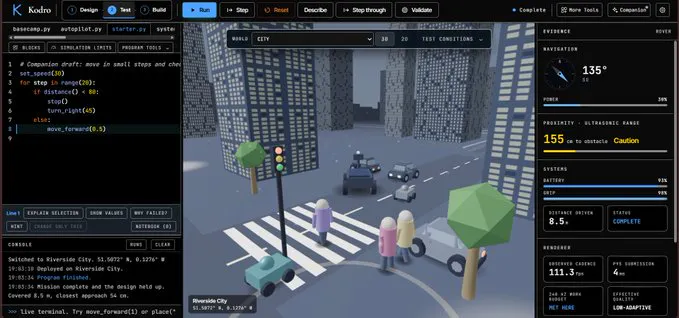
Kodro turns robotics learning into one visual loop: Design → Code → Simulate → Prove → Build. Students can assemble robots, program them with Python or blocks, test them in interactive 3D worlds, inspect live sensors and export evidence, all offline-first. Teachers get 24 curriculum lessons plus a lesson creator, while makers can prototype without expensive hardware. No account, cloud connection or AI is required.
AI Analysis
Kodro is an offline-first robotics learning simulator that integrates a visual loop: Design → Code → Simulate → Prove → Build. Core features include robot assembly, Python or block-based programming, interactive 3D simulation, live sensor inspection, evidence export, 24 curriculum lessons, and a lesson creator for teachers. It is open source, requires no account, cloud, or AI. USPs are its fully offline operation, seamless workflow, and hardware-free prototyping. It solves key pain points like high costs of physical robotics hardware, internet dependency for learning tools, and fragmented educational experiences. Overall value proposition is making robotics education accessible, practical, and engaging for students, teachers, and makers.
In 2025-2026, market timing is favorable due to rising STEM education emphasis, growing Python and coding adoption in schools, mature 3D simulation tech, and increasing demand for offline/privacy-focused tools amid data security concerns. Post-pandemic shifts favor accessible digital alternatives to expensive hardware. Economic and policy support for edtech further helps. It is a good time as educators seek integrated, no-cloud solutions. Rating: Excellent Timing.
Overall feasibility is High. Technical difficulty is manageable using existing open-source libraries for 3D simulation and Python execution. Development and operation costs are moderate for a software product, with low ongoing costs due to offline nature and GitHub open-sourcing. Minimal supply chain or compliance risks. Strong scalability for global digital distribution and community contributions. Best fit for teams experienced in edtech and robotics simulation.
Main segments: K-12 and introductory university students (ages 10-18), STEM teachers/educators, and hobbyist makers. Industries: Education and maker/DIY communities. Primarily global with focus on US, Europe, and Asia where coding curricula are prioritized. Estimated market size: Robotics edtech TAM is multi-billion USD with strong growth; SAM for simulation tools in hundreds of millions; SOM for offline/open-source niche is emerging but targeted. Core pain points: Cost barriers to hardware, internet reliance, incomplete learning platforms. Willingness to pay: High among schools for curriculum/support, moderate for individuals.
Competition level: Medium. Direct competitors: 1. Webots (cyberbotics.com), 2. Gazebo (gazebosim.org), 3. VEXcode VR (vr.vex.com), 4. RoboDK (robodk.com), 5. Tinkercad (tinkercad.com). Advantages vs competitors: Fully offline with no account needed, integrated education curriculum (24 lessons + creator), combined block/Python coding focused on real build workflow and evidence export, open source. Disadvantages: Newer with potentially smaller community, may lag in advanced physics simulation depth compared to Gazebo/Webots, less industrial focus than RoboDK.
Upgrade Pro to unlock full AI analysis
Similar Products

Paradigm
Turn any goal into a personalized, adaptive learning path.
▲ 464 votes
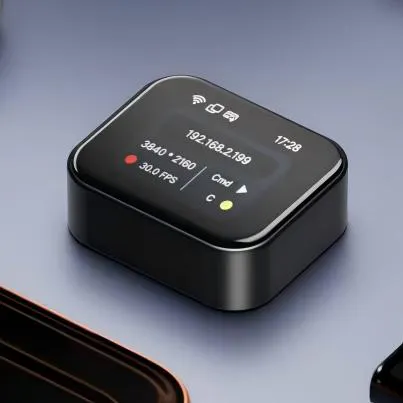
NanoKVM-Go
Give your AI agent physical control over any screen
▲ 110 votes

CodeBurn
See where your AI coding spend actually goes
▲ 101 votes
Juggler
A visual AI coding harness
▲ 94 votes
Blop
Describe your app and Blop tests it and repairs broken tests
▲ 80 votes

Stagent
Drive Claude Code through long tasks it would otherwise drop
▲ 58 votes