
Mò: Chinese Vocabulary
Chinese vocab, drilled into long-term memory. Free, offline.
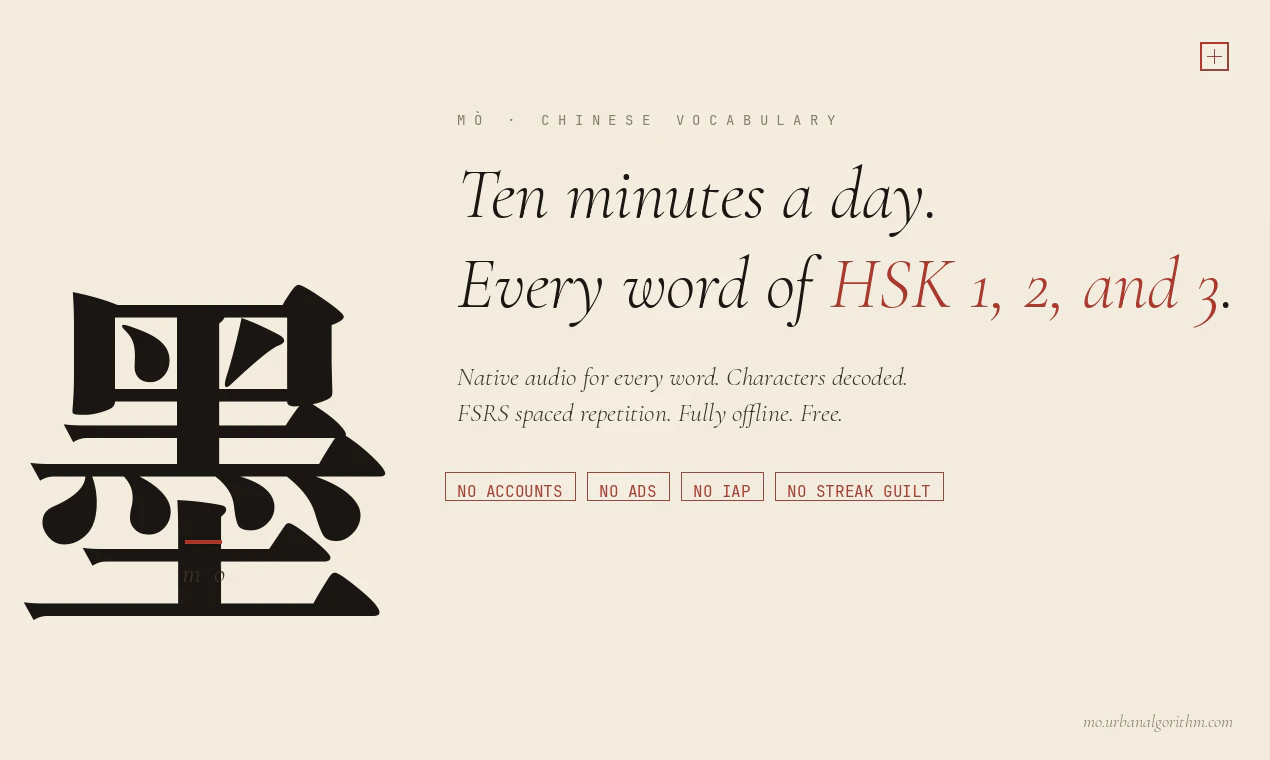
I built Mò in one week on vacation to help me achieve conversational Chinese fluency through vocab drills. The problem: Duolingo is engaging but not effective. Anki is effective but designed in the stone age. So I built this to be quietly opinionated: fully offline, peaceful design aesthetic, all 2,199 words of HSK 1, 2, and 3, native audio, characters decoded, and the latest in spaced-repetition science. Free. No login even.
AI Analysis
Mò is a free, offline iOS app for drilling HSK 1-3 Chinese vocabulary (2199 words) into long-term memory using modern spaced-repetition. Core features: peaceful design aesthetic, native audio, character decoding, no login required. It solves key pain points - Duolingo's lack of effectiveness for retention and Anki's outdated, complex interface - delivering a focused, distraction-free experience for conversational fluency. USP is its opinionated, science-backed simplicity and accessibility anywhere.
In 2025-2026, edtech and mobile language learning continue to mature with strong demand for effective, privacy-focused tools. Offline capabilities align with global accessibility needs and data privacy trends. Growing economic ties with China sustain interest in Mandarin. However, AI conversational tools may reduce demand for pure vocab drilling. Overall: Moderate Timing.
High. Technical difficulty is low as the app was built in one week using standard SRS algorithms and local data storage. Operational costs are minimal with fully offline design requiring no servers or accounts. Low compliance risks for an education app; strong scalability via App Store distribution. Team fit appears excellent given the solo developer's clear vision.
Primary users: English-speaking adults and students (18-40) learning Mandarin for travel, business, or personal growth, targeting HSK 1-3 levels. Geographically focused on US, Europe, Australia and other Western markets. Core pain points: ineffective retention and poor UX in existing apps. Language learning market is large; Chinese segment has dedicated demand with moderate willingness to pay (currently addressed by being free).
Medium. Direct competitors: Duolingo (duolingo.com), Anki (ankiweb.net), HelloChinese (hellochinese.cc), Pleco (pleco.com), Skritter (skritter.com). Advantages vs competitors: peaceful modern design, completely free/offline, curated HSK content with native audio and decoded characters, focused SRS without bloat. Disadvantages: limited to vocab (HSK 1-3 only), iOS-only, lacks broader skills practice or gamification found in Duolingo.
Upgrade Pro to unlock full AI analysis
Similar Products

Paradigm
Turn any goal into a personalized, adaptive learning path.
▲ 464 votes

Superset Mobile
Your coding agents, now in your pocket
▲ 410 votes

Loot
Collect your favorite things in real life
▲ 115 votes

Mirlo
Social media for real connections. No likes, no algorithm.
▲ 94 votes

Poke Battle Announcer
Give your Pokémon Champions battles a live announcer
▲ 64 votes
looquee
Copilot for college applications
▲ 58 votes