
Mood
A quiet record of how you feel
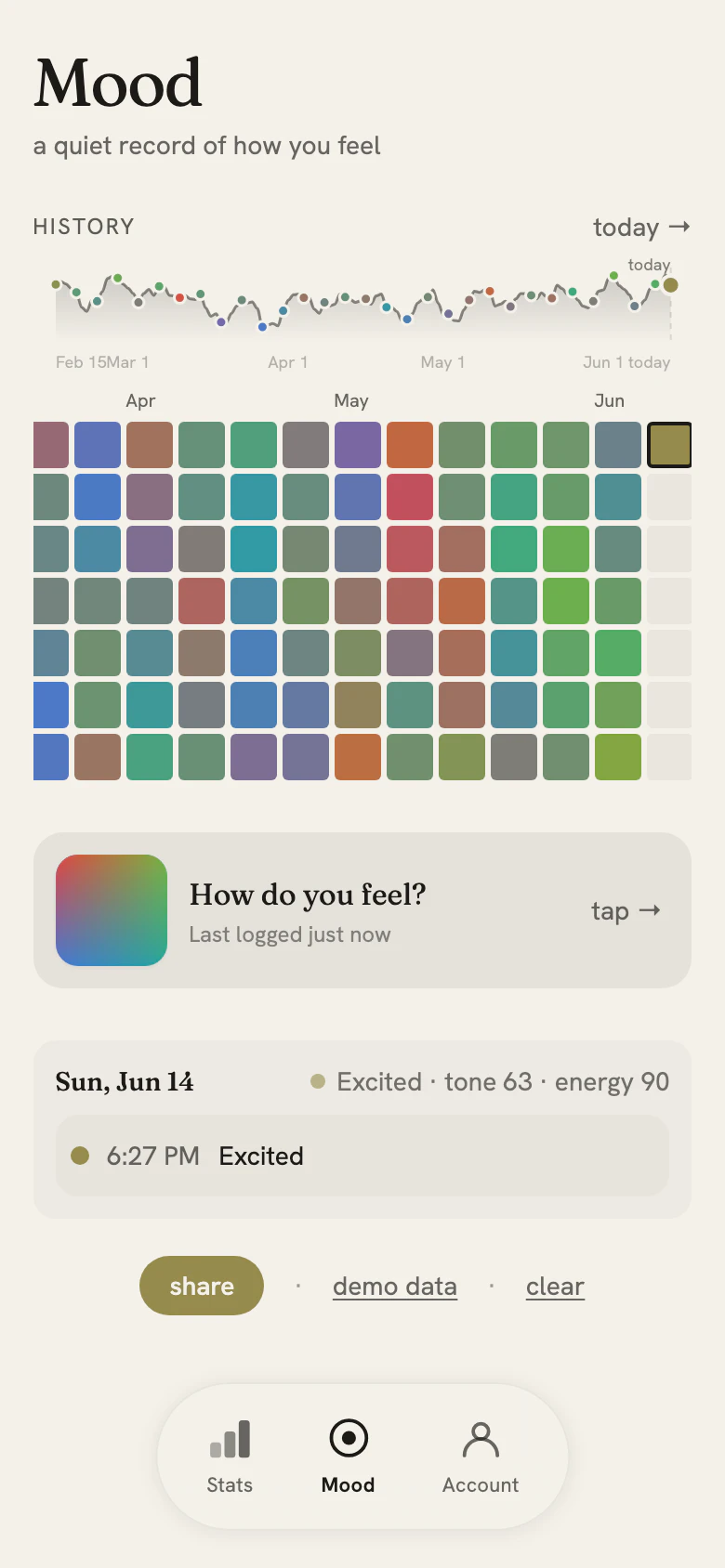
A quiet record of how you feel. Tap, label, pixel. Day by day.
AI Analysis
Mood is a minimalist app for recording daily emotions via simple taps, labels, and pixel-based visualizations building day by day. Core features focus on effortless, private tracking as part of the quantified self movement. It solves user pain points of overly complex, intrusive, or time-consuming mental health journaling apps by offering a quiet, low-friction experience. Unique selling points include its visual pixel history for instant pattern recognition and emphasis on simplicity without notifications or social features. Overall value proposition: building self-awareness and supporting mental well-being through consistent, unobtrusive mood logging.
In 2025-2026, timing is favorable due to continued growth in mental health awareness, maturity of mobile wellness tech, rising demand for privacy-focused quantified self tools amid digital overload, and integration with AI for optional insights. Economic focus on personal wellness supports this. However, app fatigue exists. Excellent Timing.
High. Low technical difficulty as a simple tap-and-store app likely built on Vercel-friendly tech stack; minimal dev/operation costs with basic backend; low supply chain/compliance risks (non-medical); strong scalability for user growth; fits small teams focused on consumer digital tools. Main risk is user retention in competitive space.
Main segments: Tech-savvy young adults (18-35 years), self-improvement enthusiasts, professionals managing stress, focused on quantified self and health; primarily English-speaking users in US/Europe. Mental health tech TAM is large and growing (estimated >$50B globally), SAM for mood trackers in hundreds of millions, SOM smaller for minimalist tools. Core pain points: lack of sustainable simple tracking methods and desire for private emotional insights. Moderate willingness to pay for premium features.
Medium. Direct competitors: 1. Daylio (daylio.net), 2. Bearable (bearable.app), 3. eMoods Bipolar Mood Tracker (emoodtracker.com), 4. Reflectly (reflectly.app), 5. Apple's Journal app. Mood's advantages: extreme simplicity, unique pixel visualization for quick overviews, and 'quiet' private focus. Disadvantages: likely fewer analytical features, reports, or integrations than established competitors; may struggle with user acquisition in saturated market.
Upgrade Pro to unlock full AI analysis
Similar Products

Paradigm
Turn any goal into a personalized, adaptive learning path.
▲ 464 votes

TouchGrass
Context-aware break reminders without invasive permissions
▲ 299 votes

Cercle
The bat signal for your closest friends.
▲ 121 votes

Edit Mind × Strava
Every clip matched to the Strava activity it's from
▲ 92 votes

FableWatch
Know the second Fable 5 is back
▲ 75 votes

Inbix
Cloudflare-native Email Infrastructure for Developers
▲ 73 votes