
Nada
Compose music with just your voice
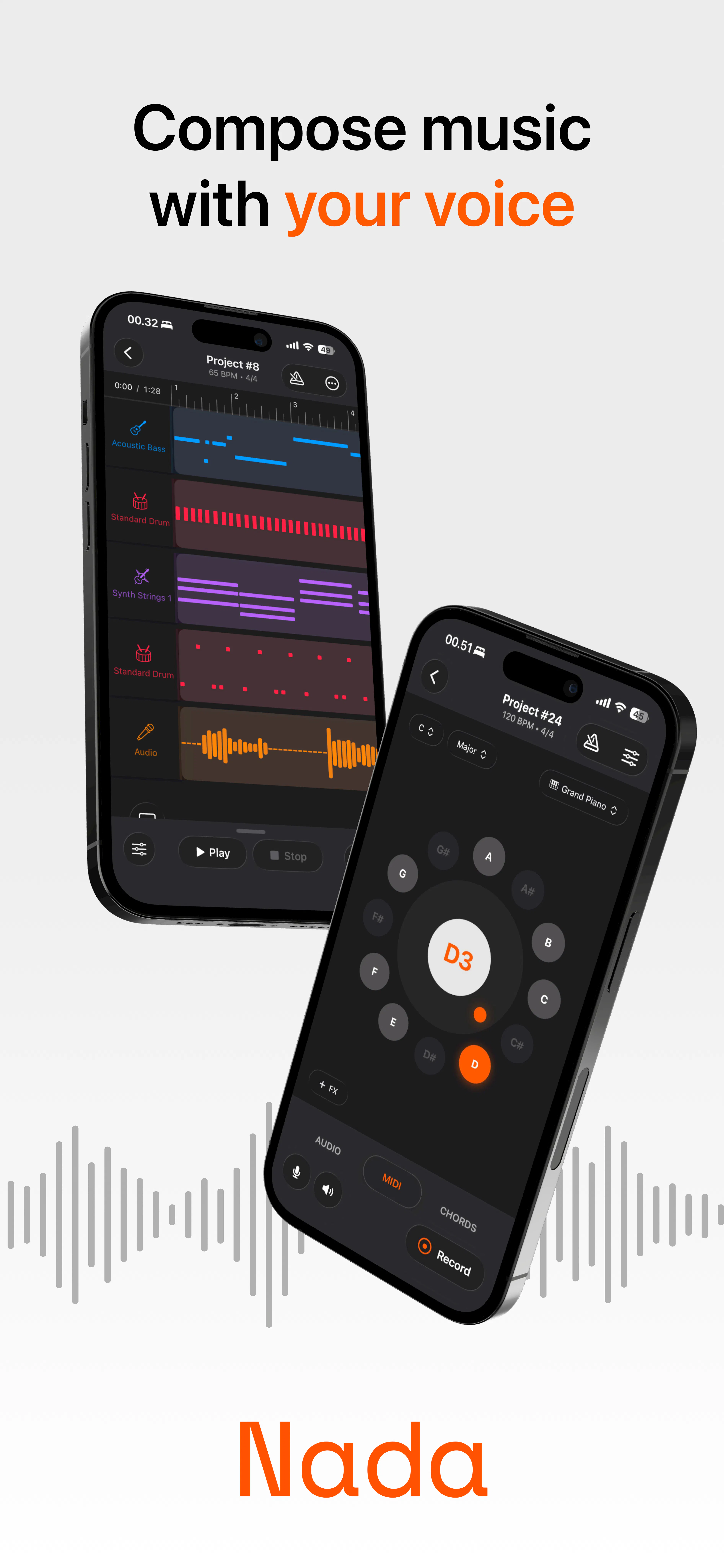
Nada is the easiest way to turn your voice into music. Hum, sing, or whistle an idea, and instantly convert it into MIDI. Arrange your melodies on mobile, choose from a variety of instruments, and build songs wherever inspiration strikes. No AI generation involved, just your own creativity, captured faster.
AI Analysis
Nada is a mobile app that turns voice into music by instantly converting humming, singing, or whistling into MIDI. Core features include real-time voice-to-MIDI conversion (no AI involved), on-mobile melody arrangement, instrument selection from a variety, and building full songs on the go. It solves key pain points for creators: slow idea capture, needing physical instruments or complex DAWs to start composing, and barriers to spontaneous creativity. USP is authentic, user-driven composition captured faster without generative AI. Value proposition: Makes music production accessible, fun, and portable, empowering anyone to compose wherever inspiration strikes.
In 2025-2026, timing is favorable with maturing mobile audio tech, growing demand for intuitive creation tools that lower barriers for non-musicians, and rising mobile-first content creation trends. While AI music generation is booming, Nada's no-AI, pure-creativity focus differentiates it amid user fatigue with generic AI output. User demands for authentic, fast capture align well; economic support for entertainment apps remains strong. Excellent Timing.
High. Voice-to-MIDI uses established pitch detection algorithms with moderate technical difficulty and no need for heavy ML training. Mobile app dev/operation costs are standard with existing frameworks. Low supply chain or compliance risks (music app). Strong scalability via app stores and user growth. Potential risks in real-world audio accuracy are manageable with iteration. Suitable for small specialized teams.
Main segments: Aspiring musicians, electronic music producers, songwriters and hobbyists (ages 18-35, tech-savvy, urban). Global but concentrated in US, Europe, East Asia via app stores. Estimated market size: TAM for music creation software ~$2B, SAM for mobile music tools ~$400M, SOM for voice-MIDI apps ~$50M. Core pain points: Barriers to quickly digitizing melodic ideas without instruments or expertise. Willingness to pay: Medium-high for premium instruments/unlocks; supports freemium model.
Medium. Direct competitors: 1. Moises (moises.ai), 2. BandLab (bandlab.com), 3. GarageBand (apple.com/garageband), 4. HumOn (gethumon.com), 5. ScoreCloud (scorecloud.com). Advantages vs competitors: Pure non-AI voice-to-MIDI for full user control, simpler mobile-focused capture and arrangement, faster idea-to-track without bloat. Disadvantages: Less comprehensive DAW features than GarageBand/BandLab, newer brand with potentially smaller community. Strong differentiation through 'just your voice' simplicity and authenticity.
Upgrade Pro to unlock full AI analysis
Similar Products
Dograh
The open source VAPI alternative
▲ 466 votes
VoiceOS App Store
The App Store for Your Voice.
▲ 263 votes
Wispro
Stop typing, start talking, get perfectly written text
▲ 135 votes
Backbeat Forge
Turn drum audio into a score you can actually edit
▲ 111 votes
Clarity
Mute the room, keep the speaker, in real time
▲ 78 votes
Jam-Pod (Android)
A player for people who keep their own music collection
▲ 0 votes