OmniDICOM
DICOM viewing and metadata editing on Mac and Windows
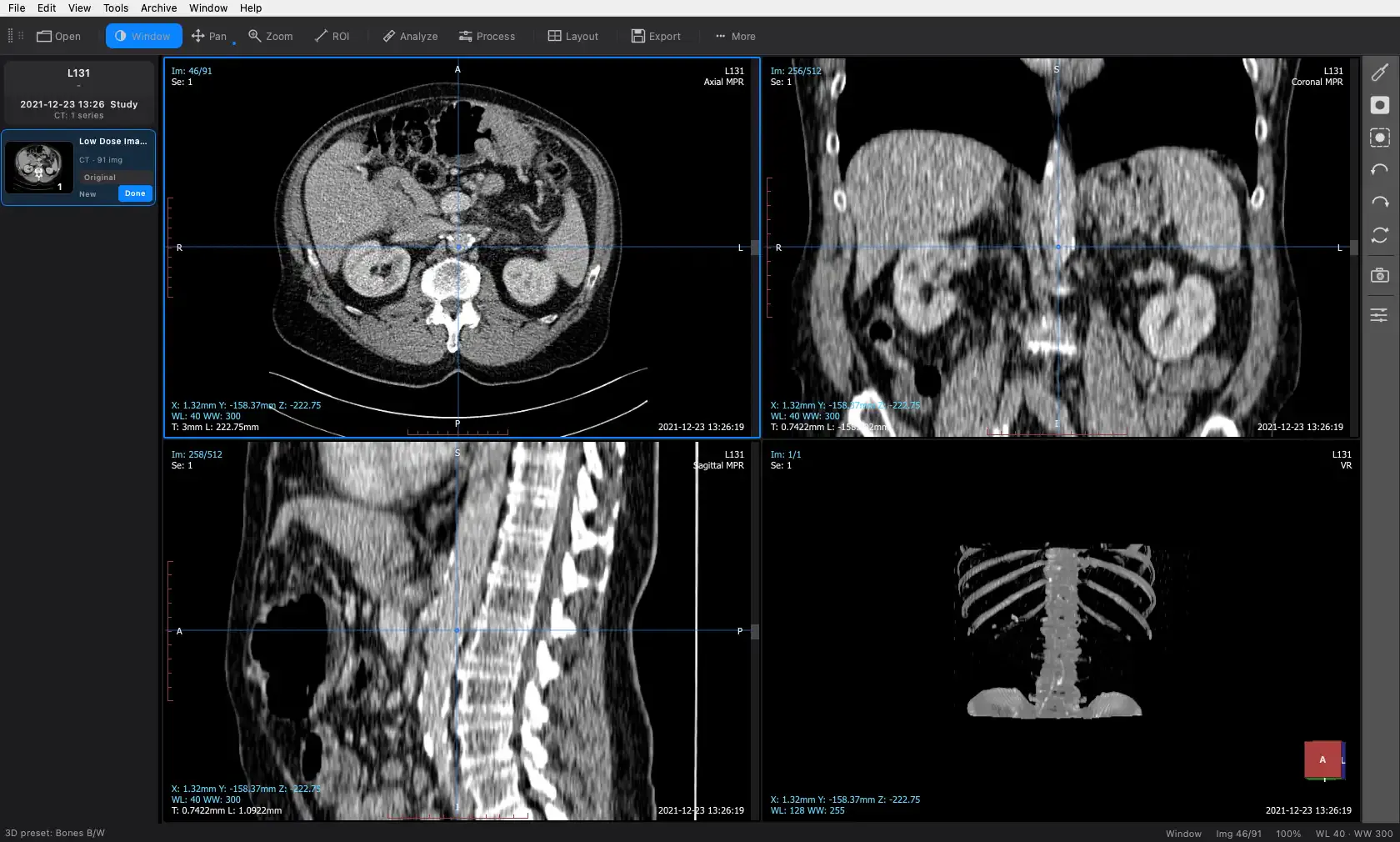
Open DICOM studies, edit metadata, and explore MPR, 3D volume rendering and cine on Mac and Windows. OmniDICOM includes PACS/DICOMweb transfer and exports; Professional adds stacked filters and analysis tools. A 14-day trial starts at first launch. Trial exports have limitations. Paid plans start at US$10/month per machine. For research and education, not diagnosis.
AI Analysis
OmniDICOM is a cross-platform desktop app for Mac and Windows that lets users open DICOM studies, edit metadata, and explore advanced visualizations like MPR, 3D volume rendering, and cine playback. It includes PACS/DICOMweb support for transfers and exports. The Professional edition adds stacked filters and analysis tools. Aimed at research and education (explicitly not for diagnosis), it addresses pain points of expensive clinical software, platform limitations, and lack of easy metadata editing. Value proposition: affordable $10/month per-machine subscription after a 14-day trial, delivering powerful non-clinical imaging tools without heavy compliance burdens.
In 2025-2026, healthcare continues shifting toward digitized imaging and AI research tools, with growing demand in education and open science. Technology for 3D rendering and DICOMweb is mature. User demand for affordable, non-clinical alternatives is rising due to budget pressures in academia. However, economic constraints in research funding and competition from established free tools make it not ideal. Moderate Timing.
Technical difficulty is medium-high due to specialized DICOM standards, 3D rendering, and cross-platform compatibility. Development and operation costs are moderate for a desktop SaaS hybrid with subscription management. Low compliance risks since not for diagnosis. Good scalability via per-machine licensing. Overall High feasibility for a team experienced in medical imaging software. High
Main segments: medical researchers, radiology educators, biomedical engineering students and academic labs (not clinicians). Demographics: 25-55 years old, higher education. Geographic: primarily North America, Europe, with growing Asia adoption. TAM for medical imaging software ~$6B; SAM for non-diagnostic/research viewers ~$300-500M; SOM limited to ~$20-50M for affordable desktop tools. Core pain points: costly licenses, fragmented tools across OS, limited advanced viz in free options. Moderate willingness to pay for reliable, updated software at $10/month.
Medium. Direct competitors: 1. Horos (horosproject.org) - free Mac DICOM viewer; 2. OsiriX (osirix-viewer.com) - paid Mac-focused with clinical versions; 3. RadiAnt DICOM Viewer (radiantviewer.com) - popular paid Windows viewer; 4. 3D Slicer (slicer.org) - free open-source with strong 3D/research features; 5. MicroDicom (microdicom.com) - lightweight free Windows tool. Advantages: true cross-platform support, built-in metadata editing, affordable recurring pricing, PACS integration. Disadvantages: restricted to non-diagnostic use, export limits in trial, less brand recognition than free incumbents and lacks some specialized clinical analysis depth.
Upgrade Pro to unlock full AI analysis
Similar Products

Paradigm
Turn any goal into a personalized, adaptive learning path.
▲ 464 votes

Tidy
Rename files automatically to tidy your mac
▲ 114 votes
Proxee
Your localhost on your phone, synced
▲ 91 votes

Kosshi
Simple, fast outliner for Mac and iPhone.
▲ 90 votes
Whiteout
Auto-redact sensitive info from Mac screenshots
▲ 83 votes

Mantel
Stop confusing your Claude Code sessions & terminal windows
▲ 72 votes