
Stimly
Real-time caffeine metabolism curve and bedtime estimate
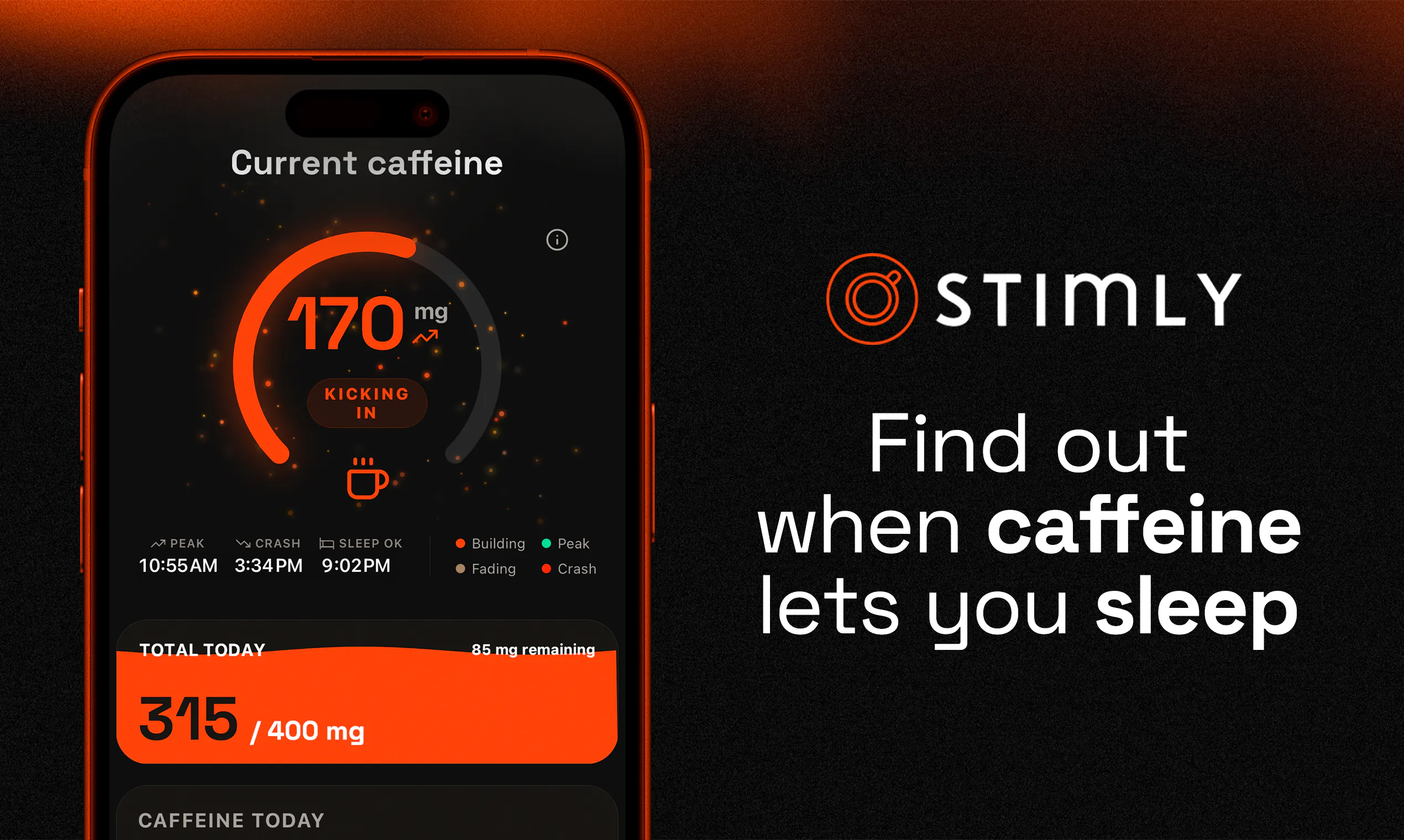
Stimly models estimated caffeine levels over time. Inputs: drink logs, body profile, and a short calibration quiz. The system renders a live clearance curve, distinguishes slow sipping from fast intake, tracks tolerance trends, and shows estimated caffeine remaining at bedtime.
AI Analysis
Stimly is an iOS app that models real-time caffeine metabolism using drink logs, body profile data, and a calibration quiz. It visualizes a personalized live clearance curve, accounts for sipping speed vs fast intake, tracks tolerance trends over time, and estimates remaining caffeine at bedtime. It solves key pain points like unpredictable impacts on sleep and energy levels due to individual metabolic differences. The value proposition is empowering users with data-driven insights for optimized caffeine consumption, better sleep hygiene, and informed daily habits.
The current market timing is favorable for 2025-2026. Rising focus on personalized wellness, sleep optimization, and biohacking aligns with user demands for data-driven health tools. Pharmacokinetic modeling tech is mature, iOS health integrations are advanced, and awareness of caffeine's sleep effects is increasing post-pandemic. No major policy barriers in health tracking apps. Excellent Timing.
Overall feasibility is High. Technical difficulty is low as it relies on established caffeine half-life formulas adjusted by user quiz/profile rather than complex AI. Development costs for an iOS app are manageable with low ongoing operation expenses. Minimal supply chain or compliance risks (lifestyle tool, not medical device). Strong scalability via App Store distribution and potential for future expansions. Fits well for small agile teams.
Main target segments: Health-conscious coffee/tea drinkers, biohackers, fitness enthusiasts and professionals with sleep concerns, aged 25-45, primarily in North America, Europe, urban areas. TAM for digital wellness apps exceeds $200B, SAM for sleep/caffeine trackers ~$2B, SOM for this niche ~$100M. Core pain points include caffeine-induced insomnia and lack of personalized metabolism insights. Moderate to high willingness to pay for premium features via subscriptions.
Medium. Direct competitors: 1. Rise (risescience.com), 2. Oura (ouraring.com), 3. WHOOP (whoop.com), 4. Caffeine Tracker by Apalon (apalon.com), 5. Various App Store caffeine calculators. Advantages: Focused real-time personalized curve, unique calibration quiz, sipping speed differentiation and specific bedtime estimate. Disadvantages: Purely estimate-based without wearable biometrics, limited brand recognition as a new product, narrower scope than full health platforms.
Upgrade Pro to unlock full AI analysis
Similar Products

Paradigm
Turn any goal into a personalized, adaptive learning path.
▲ 464 votes

TouchGrass
Context-aware break reminders without invasive permissions
▲ 299 votes

Cercle
The bat signal for your closest friends.
▲ 121 votes

Loot
Collect your favorite things in real life
▲ 115 votes

FableWatch
Know the second Fable 5 is back
▲ 75 votes

Inbix
Cloudflare-native Email Infrastructure for Developers
▲ 73 votes