
WaseiGo
Learn the 1,000+ Japanese words that only look like English
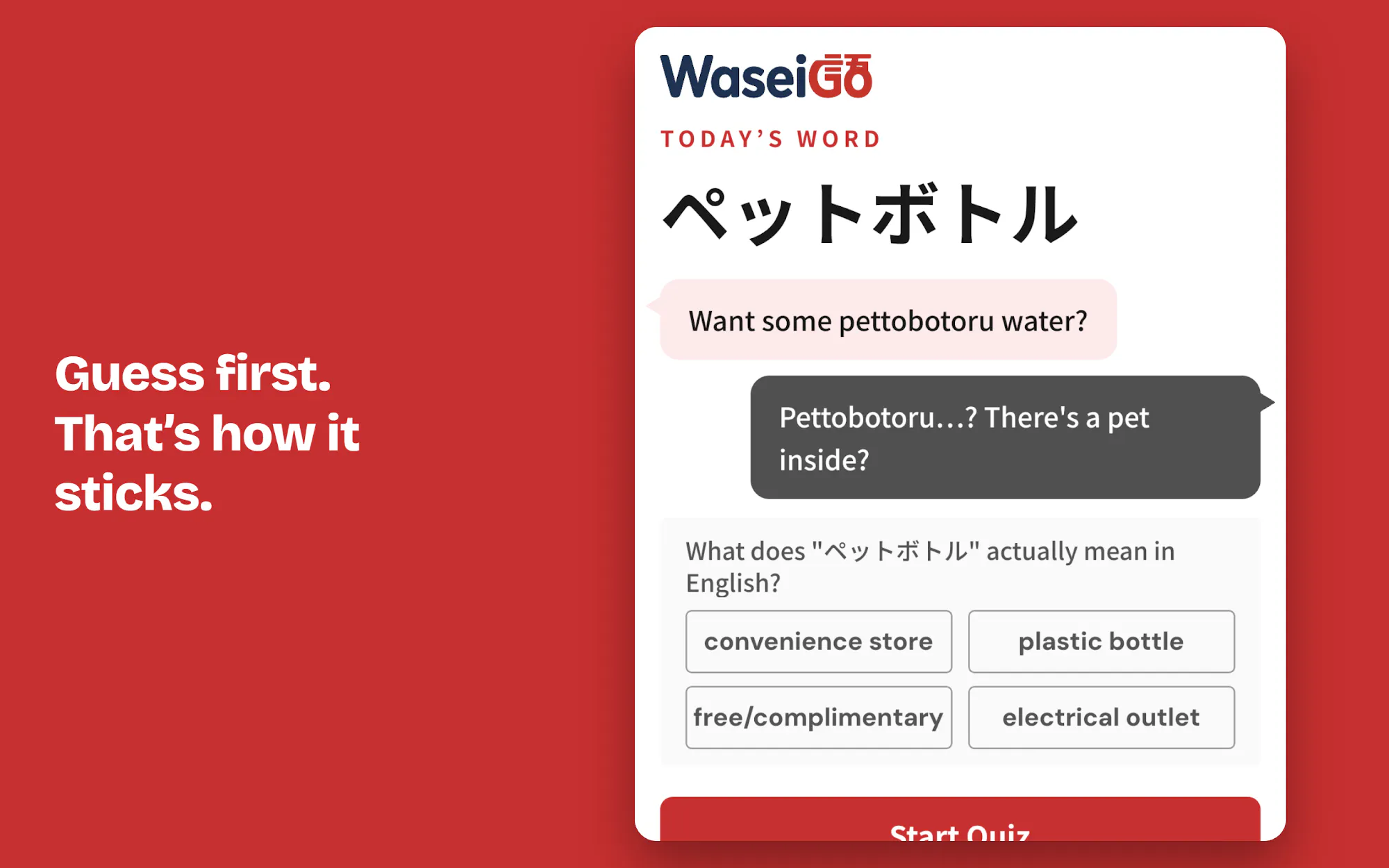
In Japan, 'consent' (konsento) means a power outlet and a 'claim' is a complaint. WaseiGo teaches 1,000+ wasei-eigo, the English-looking words whose meanings Japan reinvented, through illustrated two-voice dialogues with native audio, a searchable dictionary, and picture quizzes. Guess first, then learn why. A free selection to start; a one-time purchase unlocks everything. No subscription.
AI Analysis
WaseiGo is an Android app teaching 1,000+ wasei-eigo: Japanese words that resemble English but have reinvented meanings (e.g., 'consent' means electrical outlet). Core features include illustrated two-voice dialogues with native Japanese audio, a searchable dictionary, and picture quizzes where users guess meanings first. It solves the pain point of confusion and misinterpretation for Japanese learners caused by these faux friends. USP is its niche focus on this specific vocabulary set through engaging, interactive 'guess then learn' format. Value proposition: Fun, effective way to master unique Japanese terms via one-time purchase with no subscription.
In 2025-2026, timing is favorable with sustained global interest in Japanese pop culture, anime, and travel recovery boosting language learning demand. Mobile education technology is mature, and users increasingly seek specialized, niche content beyond generic apps. Economic environment supports one-time purchase edtech amid subscription fatigue. However, emerging AI language tools may shift preferences toward personalized tutors. Overall: Moderate Timing.
Overall feasibility is high. Technical difficulty is low to medium using standard Android tools for audio, illustrations, quizzes and search. Development and operation costs are manageable post initial content creation (1000+ entries). No major supply chain issues; compliance risks minimal for an educational language app. Strong scalability potential to iOS or web. One-time purchase simplifies operations. Rating: High.
Main segments: Japanese language learners and enthusiasts aged 18-35, including students, anime fans, travelers, and business professionals. Geographic focus: North America, Europe, Australia, and East Asia. Estimated TAM for digital language learning ~$15B+, SAM for Japanese-specific apps ~$300-500M, SOM for niche vocab tools ~$10-20M. Core pain points: Misunderstanding common wasei-eigo leading to communication errors. Potential willingness to pay: High for targeted, ad-free, one-time purchase tools among dedicated learners.
Competition level: Low. Direct competitors: 1. Duolingo (duolingo.com) - gamified general language courses. 2. Memrise (memrise.com) - crowdsourced Japanese vocab courses. 3. Anki (apps.ankiweb.net) - flashcard system for Japanese. 4. JapanesePod101 (japanesepod101.com) - podcast and lesson platform. 5. Tofugu (tofugu.com) - Japanese learning blog with wasei-eigo articles. Advantages: Deep specialization in wasei-eigo with unique guess-first dialogues, native audio and quizzes; one-time purchase vs recurring subs. Disadvantages: Narrow scope (only this topic), Android-only currently, lower brand visibility than big platforms.
Upgrade Pro to unlock full AI analysis
Similar Products

Paradigm
Turn any goal into a personalized, adaptive learning path.
▲ 464 votes

Grok 4.6
Frontier Intelligence for Long-Running Agents
▲ 237 votes

Gaming services by IFTTT
Level up the way you play with Steam, Dota 2, and more
▲ 125 votes

Orus
Claude for investing in perpetuals
▲ 121 votes

Poke Battle Announcer
Give your Pokémon Champions battles a live announcer
▲ 64 votes
looquee
Copilot for college applications
▲ 58 votes