
Albie
An AI tutor that teaches at a whiteboard, not a chat box
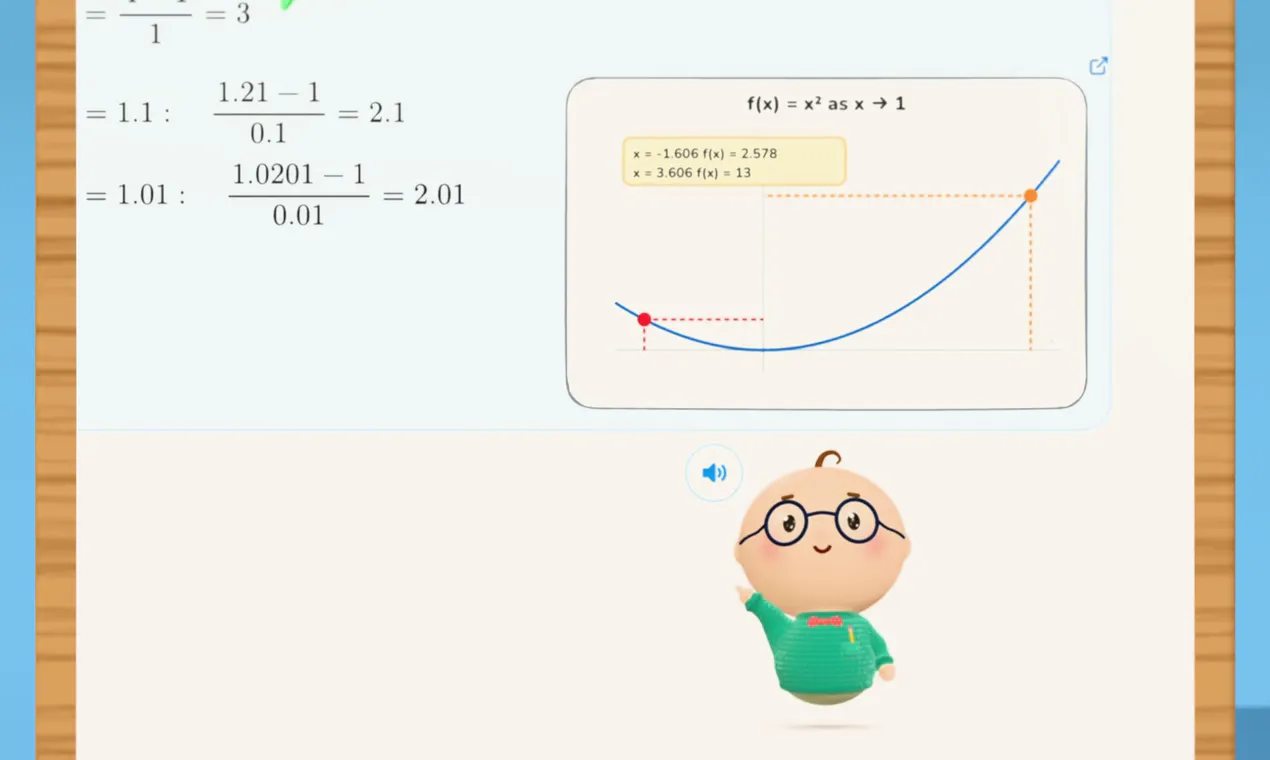
Albie teaches on a whiteboard you share: you write with a pen, he reads your handwriting and draws as he explains. Talk or chat with him. He gives quick quizzes, sets homework, codes with you, opens your web projects in-lesson, and builds small apps.
AI Analysis
Albie is an AI tutor that uses a shared whiteboard for teaching instead of chat boxes. Users write with a pen; Albie reads handwriting, draws explanations, and interacts via voice or text. Features include quizzes, homework, coding collaboration, opening web projects, and building small apps. USP: Mimics natural in-person tutoring with visual, interactive elements for engaging learning. Solves pain points like impersonal text-based AI, lack of visual explanations, and disengaging digital education for students and parents. Value proposition: Personalized, fun, effective STEM tutoring accessible at home.
Favorable for 2025-2026 as multimodal AI and vision models mature for reliable handwriting recognition and real-time drawing. Rising demand for personalized, affordable edtech due to teacher shortages, post-pandemic hybrid learning, and parent involvement in children's education. Supportive policies for AI in education and economic push for cost-effective tools make it ideal. Excellent Timing.
Technically complex due to real-time handwriting recognition, generative drawing, voice integration, and LLM coordination, but achievable with existing vision models and APIs. High ongoing AI inference costs pose operational challenges. Low supply chain risk (software-based); data privacy compliance (e.g. for child users) is key. Good scalability if optimized. Medium overall due to cost and integration hurdles. Rating: Medium
Primary segments: Parents (25-45, middle-upper income, tech-savvy) of children aged 8-16 needing STEM support; homeschoolers and self-learning students. Focus on US, UK, English-speaking regions. Edtech TAM >$250B (2025), AI education ~$20B; SAM for AI tutoring ~$5B, SOM for interactive AI ~$500M+. Pain points: Costly human tutors, non-engaging digital tools, visualizing abstract concepts. High willingness to pay ($15-40/mo) for effective personalized results.
Medium. Direct competitors: 1. Khanmigo (khanacademy.org/khanmigo), 2. Duolingo Max (duolingo.com), 3. Photomath (photomath.com), 4. Century Tech (century.tech), 5. Google Socratic (socratic.org). Advantages: Unique handwriting-enabled whiteboard for visual interaction, versatile coding/app features, more tutor-like than chatbots. Disadvantages: Less established content library and brand recognition than Khan Academy; potentially higher compute-dependent pricing; newer so may lack proven efficacy data.
Upgrade Pro to unlock full AI analysis
Similar Products

Cohere Parse 5
Turn complex docs, tables & images into AI-ready data
▲ 158 votes

Opaline
PostHog for team Claude Code and Codex sessions.
▲ 141 votes

Adapt
The company brain that gets work done
▲ 124 votes

Tapfree for Chrome
Voice dictation that adapts to what’s on your screen
▲ 122 votes

CodeBurn
See where your AI coding spend actually goes
▲ 101 votes

WikiFix for Confluence
Find and fix issues in your knowledge base
▲ 86 votes