Astra Autonomous Pentest
AI agents that find, validate, and fix every vulnerability
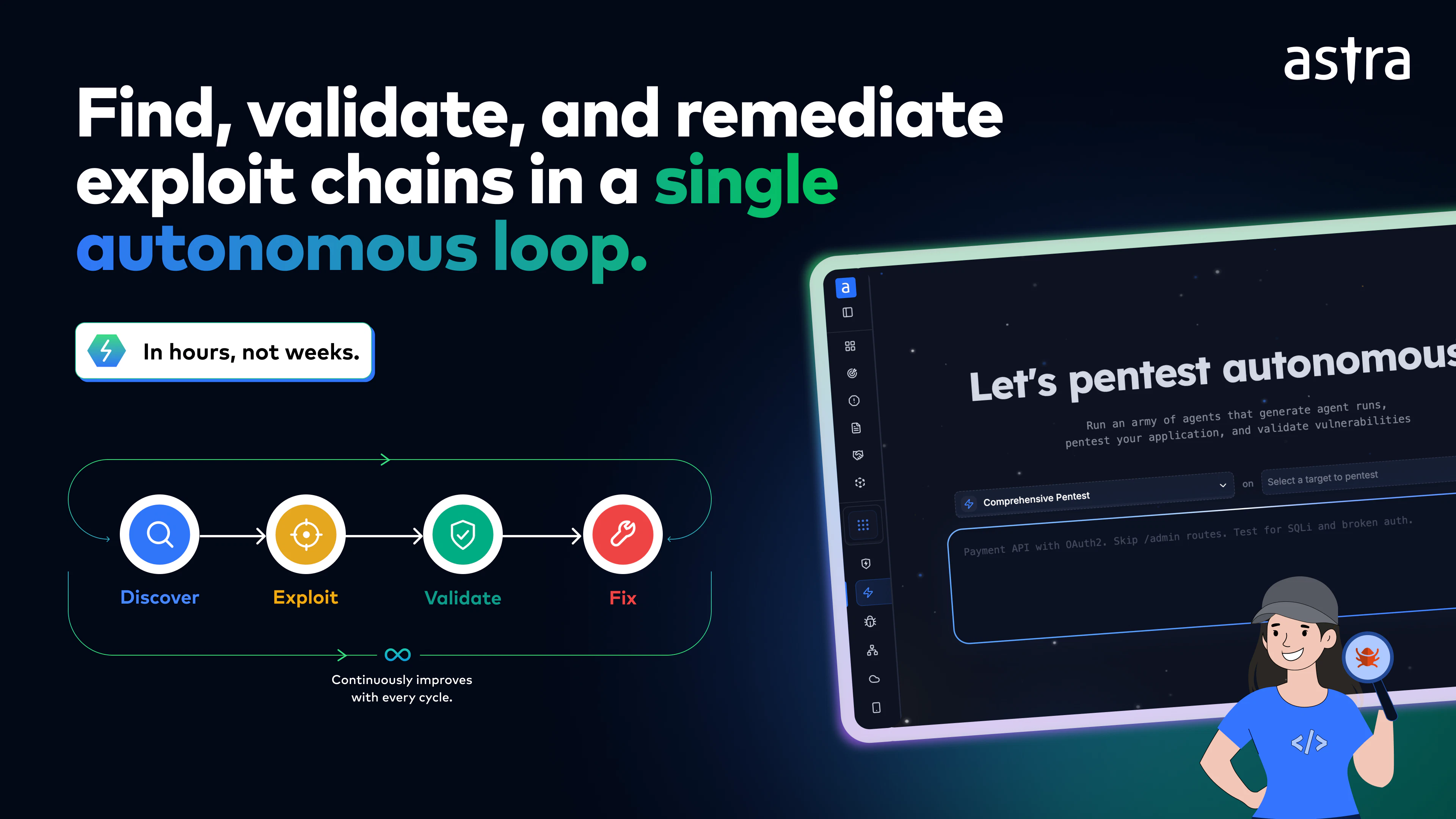
Astra Autonomous Pentesting makes self-healing software the new standard, a category we’re defining after 8 years and 5,000+ real-world pentests. An army of offensive pentesters and bounty hunter agents that discovers complex chained vulnerabilities, an independent validator layer drives false positives to near-zero, and AI-fix agents deliver remediation as native Cursor, Copilot, and Claude Code prompts. The reactive pentest era is over.
AI Analysis
Astra Autonomous Pentest uses AI agents as offensive pentesters and bounty hunters to discover complex chained vulnerabilities. It includes an independent validator layer reducing false positives to near-zero and AI-fix agents delivering remediation prompts for Cursor, Copilot, and Claude. Built on 8 years and 5,000+ pentests, it solves pain points of traditional reactive, manual, slow, and error-prone pentesting. USP is pioneering self-healing software as the new standard, shifting to proactive, integrated security in the dev workflow for robust protection and faster remediation.
In 2025-2026, timing is favorable with mature AI agent technology, surging sophisticated cyber threats, rising DevSecOps adoption, and integration of AI into developer tools like Copilot. User demand shifts toward automated, self-healing solutions amid regulatory pressures and developer shortages. Economic environment favors cost-effective proactive security over manual processes. Excellent Timing.
Overall feasibility is High. Leverages 8 years and 5,000+ real pentests as strong foundation for AI training, reducing technical difficulty in vulnerability detection. AI ops and development costs are notable but scalable. Low supply chain risk as SaaS; compliance risks managed by security expertise. High scalability potential for broader adoption. Team fit appears excellent as category definers.
Main targets: DevSecOps teams, developers, CISOs in SaaS, fintech, and software companies (mid-market to enterprise), focused in North America and Europe. TAM for cybersecurity testing tools ~$8-10B with AI/automated pentest SAM ~$1B+. Core pains: reactive testing, high false positives, slow remediation. High willingness to pay for subscription SaaS that integrates into workflows and reduces breach risks.
Competition level: Medium. Direct competitors: 1. Pentera (pentera.io), 2. HackerOne (hackerone.com), 3. Bugcrowd (bugcrowd.com), 4. Detectify (detectify.com), 5. Intruder (intruder.io). Advantages: unique AI agent army for chained vulns, validator for near-zero false positives, and IDE-native AI fix prompts; defines self-healing category. Disadvantages: newer AI approach may need more proven case studies vs established hybrid/human-augmented platforms; pricing not detailed but likely premium.
Upgrade Pro to unlock full AI analysis
Similar Products

Adapt
The company brain that gets work done
▲ 124 votes

Replay QA Security Scan
Automated Penetration Testing for AI-Built Apps
▲ 102 votes

WikiFix for Confluence
Find and fix issues in your knowledge base
▲ 86 votes

Saldor
Speed up procurement and AP.
▲ 78 votes

Audryo
Customer email your agent can operate.
▲ 68 votes

Refoid
Automate App Store refund responses and track every outcome
▲ 68 votes