
Autonomyware
Idea to physical product, engineer anything you can imagine
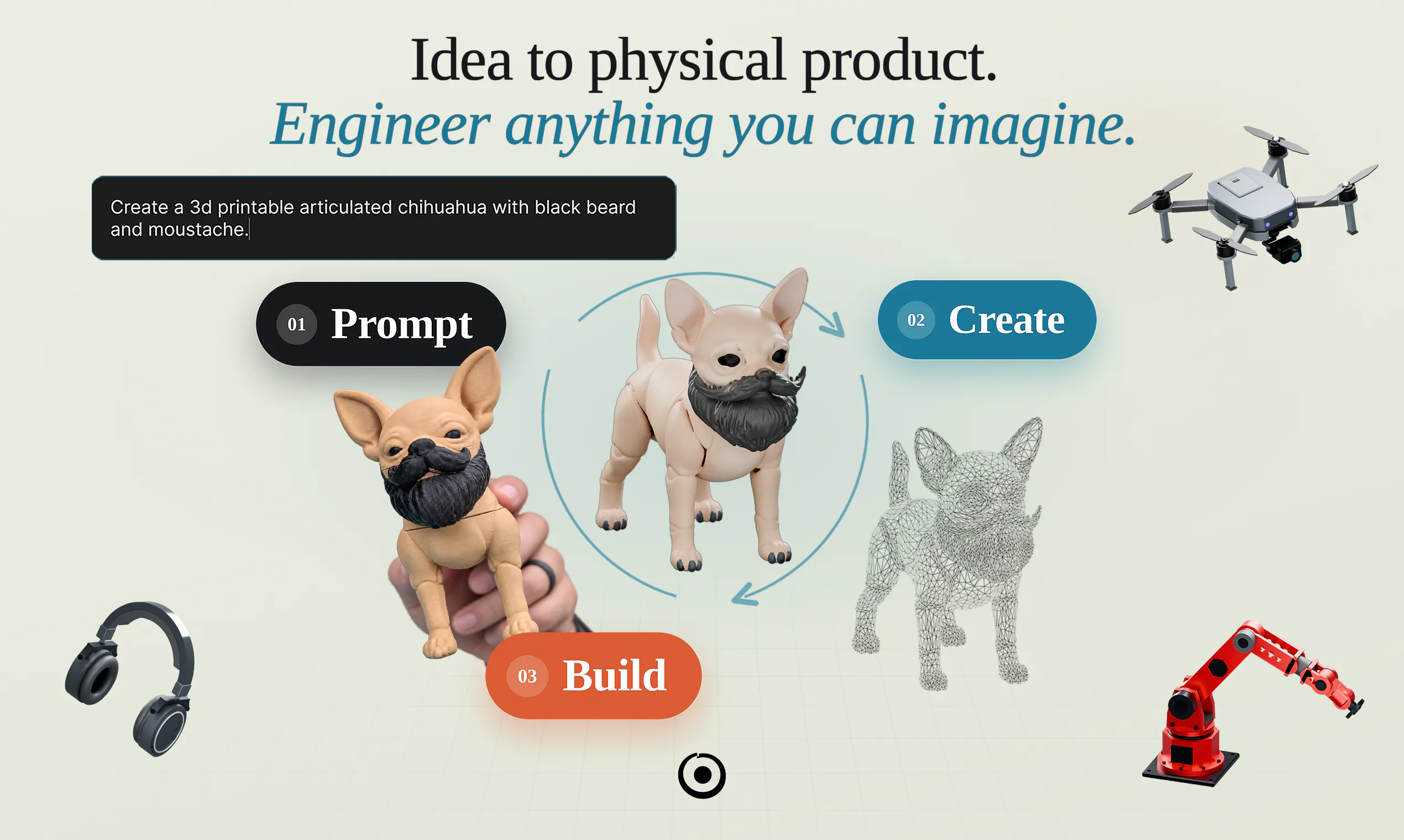
Autonomyware turns your idea into an engineered physical product. Start with your vision and let autonomous AI handle the engineering process end to end. Describe what you want to create, then move from product definition through architecture, risk, CAD, BOMs, code, verification, and manufacturing preparation. One AI-native workspace keeps every decision and engineering artifact connected from idea to implementation.
AI Analysis
Autonomyware is an AI-native platform that autonomously transforms user ideas into engineered physical products. It manages the full workflow: product definition, architecture, risk assessment, CAD, BOMs, code, verification, and manufacturing prep within one connected workspace. USPs include end-to-end AI autonomy and linked engineering artifacts. It solves key pain points like fragmented tools, lack of specialized engineering expertise, high time/cost of hardware development. Value proposition: Enables anyone to efficiently create physical products without traditional engineering barriers.
Favorable in 2025-2026 as agentic AI and multimodal models mature rapidly, enabling complex engineering tasks. Rising demand for faster innovation cycles, engineer shortages, and AI adoption in design/manufacturing align well. Economic push for efficiency and supportive tech policies make it ideal. Excellent Timing.
Medium. Technical challenges exist in ensuring AI accuracy for physical validation, physics simulation, and manufacturing compliance to prevent failures. High compute/operation costs for AI models; supply chain and regulatory risks for hardware. Scalability good with cloud AI but requires strong team in both AI and engineering. Promising yet risky.
Main segments: Hardware entrepreneurs, makers, product designers, SMBs and startups in IoT, robotics, consumer electronics; global but concentrated in US/Europe/China. TAM for engineering software ~$40B+, AI subset rapidly growing (SAM ~$5B). Pain points: expertise and time barriers to prototyping. High willingness to pay for time-saving AI tools via subscriptions.
Medium. Direct competitors: 1. Autodesk Fusion 360 (autodesk.com/fusion-360) with generative design; 2. SolidWorks (solidworks.com) by Dassault; 3. PTC Creo (ptc.com); 4. nTopology (ntop.com) for advanced modeling. Advantages: superior end-to-end AI autonomy and integrated workspace. Disadvantages: less established track record, potential accuracy concerns vs traditional CAD tools with human oversight.
Upgrade Pro to unlock full AI analysis
Similar Products

Auriko
Trading desk for LLM calls
▲ 332 votes

Cohere Parse 5
Turn complex docs, tables & images into AI-ready data
▲ 158 votes

Opaline
PostHog for team Claude Code and Codex sessions.
▲ 141 votes

Adapt
The company brain that gets work done
▲ 124 votes

Tapfree for Chrome
Voice dictation that adapts to what’s on your screen
▲ 122 votes

CodeBurn
See where your AI coding spend actually goes
▲ 101 votes