
AVTR-1 Real-Time Open Weights Model
Generating uncanny AI avatars is now open source
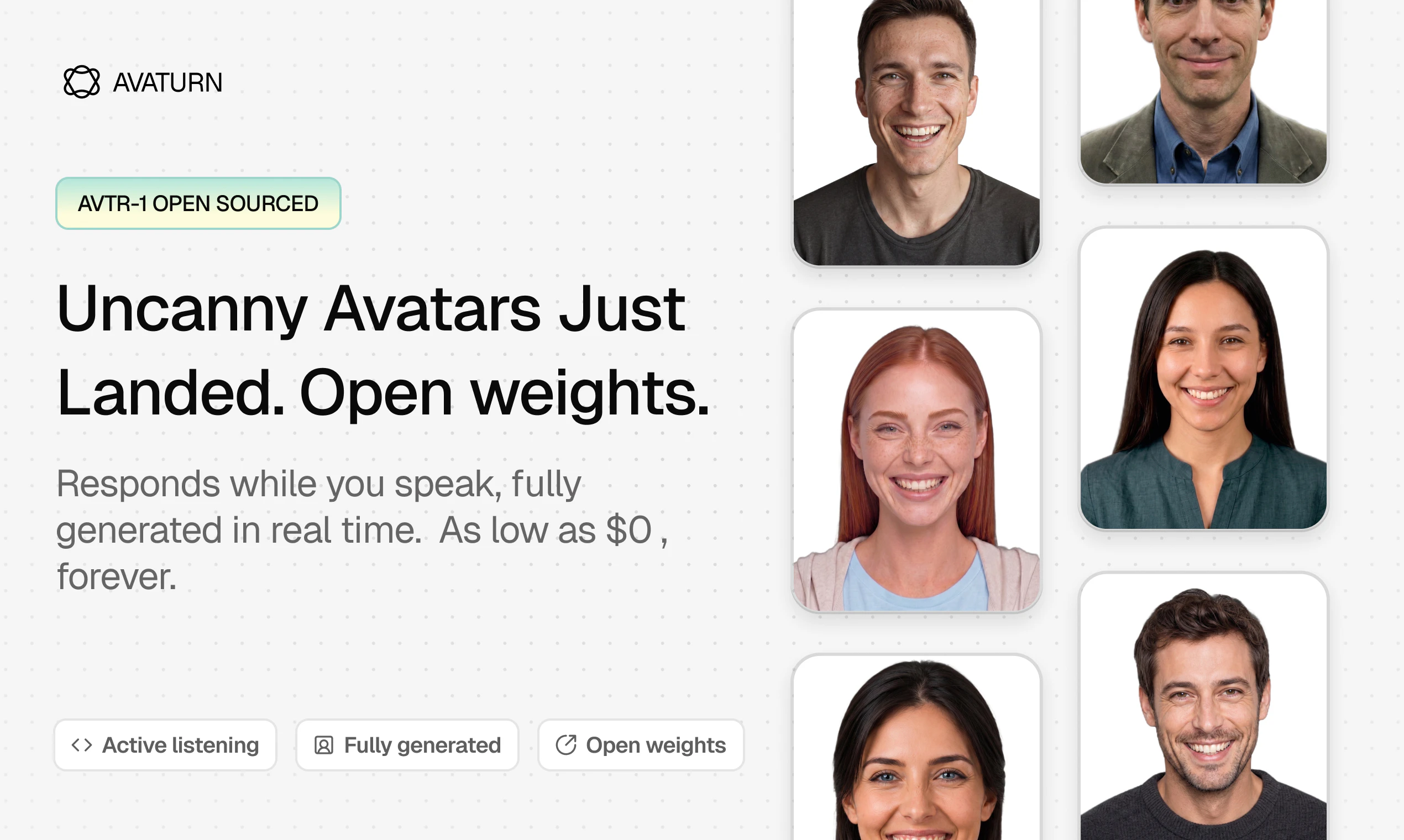
The best real-time avatar model in the world is now open source with open weights. Take the model, tweak it, and use it at $0 cost. What's unique: our model listens while you speak — full-duplex; the avatar reacts in real-time, with minimal latency. • Every frame is generated, avoiding annoying animation loops from pre-rendered playback. • Full streaming infrastructure included so you can get started right away.
AI Analysis
AVTR-1 is the world's best real-time AI avatar model, now open source with open weights for zero-cost use and customization. Core features include full-duplex interaction (listens while speaking), minimal latency reactions, per-frame generation to eliminate repetitive animation loops, and complete streaming infrastructure for instant deployment. It solves key pain points like high costs of proprietary tools, unnatural looped animations, and interaction latency. The value proposition is democratizing access to state-of-the-art, realistic AI avatars for developers and creators to build interactive applications freely.
The current market timing is favorable for 2025-2026 due to maturing real-time generative AI tech, rising demand for interactive avatars in streaming, virtual collaboration, and entertainment, and the strong trend toward open-source models (following Llama and Stable Diffusion). User needs for low-cost, natural AI interactions are increasing amid economic focus on efficiency. This positions AVTR-1 ideally. Rating: Excellent Timing.
Overall feasibility is High. The provision of open weights and full streaming infrastructure lowers technical barriers and development costs for integration. Requires AI/ML expertise for tweaks but operational costs are controllable via efficient hosting. Low supply chain or compliance risks; strong scalability in cloud environments. Team fit is good for technically proficient groups. Main challenge is compute intensity for real-time use. Rating: High.
Main target segments: AI/ML developers, independent content creators, VTubers, educators, and startups in digital entertainment and customer service tools. Demographics: tech-savvy individuals aged 20-40, global distribution with concentration in North America, Europe, and East Asia tech hubs. Core pain points include expensive commercial avatar APIs and lack of real-time natural responsiveness. High willingness to pay for related services like hosting, support, or fine-tuning despite the free core model. Market size is part of the rapidly growing generative AI sector.
Competition level is Medium. Direct competitors: 1. Hedra (hedra.com), 2. D-ID (d-id.com), 3. Synthesia (synthesia.io), 4. HeyGen (heygen.com). Advantages: fully open-source with open weights for free customization, true full-duplex real-time listening, per-frame generation avoiding loops. Disadvantages: requires technical setup and self-hosting versus competitors' user-friendly SaaS platforms; potentially higher compute demands. Strong differentiation in accessibility and cost.
Upgrade Pro to unlock full AI analysis
Similar Products

Cohere Parse 5
Turn complex docs, tables & images into AI-ready data
▲ 158 votes

Opaline
PostHog for team Claude Code and Codex sessions.
▲ 141 votes

Adapt
The company brain that gets work done
▲ 124 votes

Tapfree for Chrome
Voice dictation that adapts to what’s on your screen
▲ 122 votes

CodeBurn
See where your AI coding spend actually goes
▲ 101 votes

WikiFix for Confluence
Find and fix issues in your knowledge base
▲ 86 votes