
BackEngine MCP
Make private company knowledge usable for AI
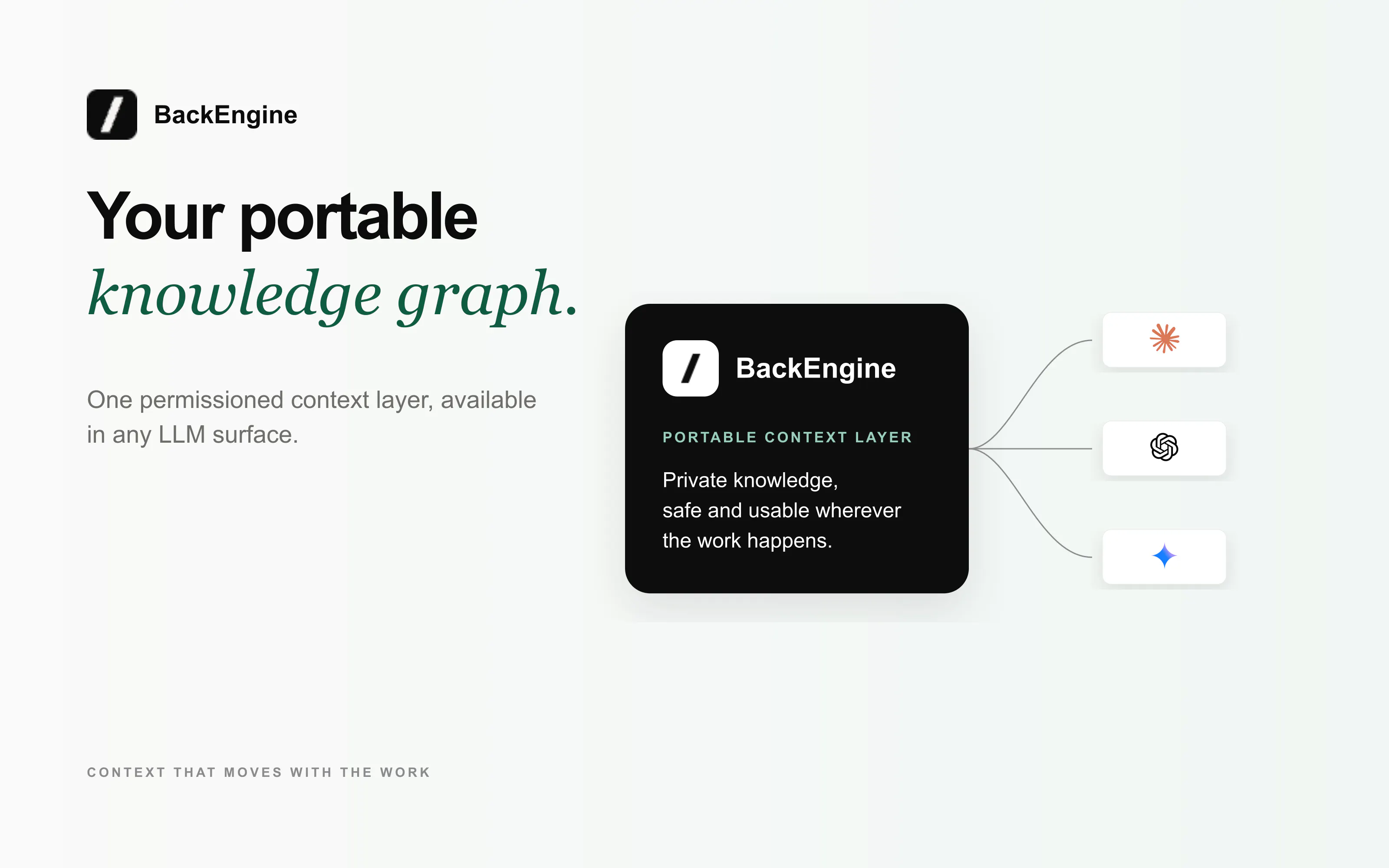
Most companies wire Claude or ChatGPT into Slack, email, calls, tickets, and their CRM over one singular MCP. That's raw pipes into scattered systems. The model reads a slice and guesses at the rest. BackEngine MCP connects to the same tools, but reads everything first, joins all of it into one permissioned record per account, kept current, so Claude and ChatGPT always work from the whole picture. Head-to-head: 67% fewer errors, 2.4x more key facts, 65% fewer tokens vs. direct connectors.
AI Analysis
BackEngine MCP connects to company tools like Slack, email, calls, tickets, and CRM. Unlike raw direct pipes that feed fragmented data slices to AI leading to guesses and errors, it first reads everything, unifies it into one permissioned, continuously updated record per account. This enables Claude, ChatGPT and similar models to always work from the complete context. Benefits vs direct connectors: 67% fewer errors, 2.4x more key facts surfaced, 65% fewer tokens consumed. Solves core pain of scattered internal knowledge making AI unreliable; value prop is turning private company data into a trustworthy, efficient foundation for AI.
Favorable as 2025-2026 sees explosive enterprise adoption of LLMs like Claude and ChatGPT. AI agent trends, demand for reduced hallucinations, mature API ecosystems, and productivity pressures in a competitive economy align perfectly with unified knowledge layers. No major regulatory hurdles specific to this; instead, data privacy focus supports permissioned solutions. Excellent Timing.
High. Technical integration of multiple APIs with real-time sync and granular permissions is challenging but achievable with current cloud and LLM tech. Dev/ops costs are moderate for a SaaS model with recurring revenue potential. Data compliance risks exist but permissioned records mitigate them. Strong scalability via cloud. Requires integration/AI expertise but team fit is realistic. Overall viable with good engineering.
Primary segments: Mid-to-large B2B companies (50-1000+ employees), AI/knowledge managers, CTOs in tech, consulting, finance and support-heavy industries. Geographic focus: US and Europe where AI tool adoption is highest. Core pain points: AI producing inaccurate outputs from incomplete internal data views. TAM is multi-billion dollar enterprise AI/knowledge management market; SAM is AI connectors/RAG layer segment; SOM targets early adopters of LLM workplace tools. High willingness to pay for measurable gains in accuracy and efficiency.
Medium. Direct competitors: 1. Glean (glean.com), 2. Hebbia (hebbia.com), 3. Dust (dust.tt), 4. Adept (adept.ai), 5. Custom enterprise RAG solutions via LangChain/LlamaIndex. Advantages: Superior unification into one permissioned record yields proven 67% error reduction, 2.4x facts, 65% token savings; focuses specifically on making existing AI (Claude/ChatGPT) smarter without new UI. Disadvantages: Newer entrant may have less brand recognition and ecosystem maturity compared to established players; pricing not detailed but likely subscription-based.
Upgrade Pro to unlock full AI analysis
Similar Products

Lev8
Find, research, and reach the right people
▲ 451 votes

Auriko
Trading desk for LLM calls
▲ 332 votes

Cohere Parse 5
Turn complex docs, tables & images into AI-ready data
▲ 158 votes

Adapt
The company brain that gets work done
▲ 124 votes

Tapfree for Chrome
Voice dictation that adapts to what’s on your screen
▲ 122 votes

CodeBurn
See where your AI coding spend actually goes
▲ 101 votes