
ChatGPT for Teens
ChatGPT, built differently for teens
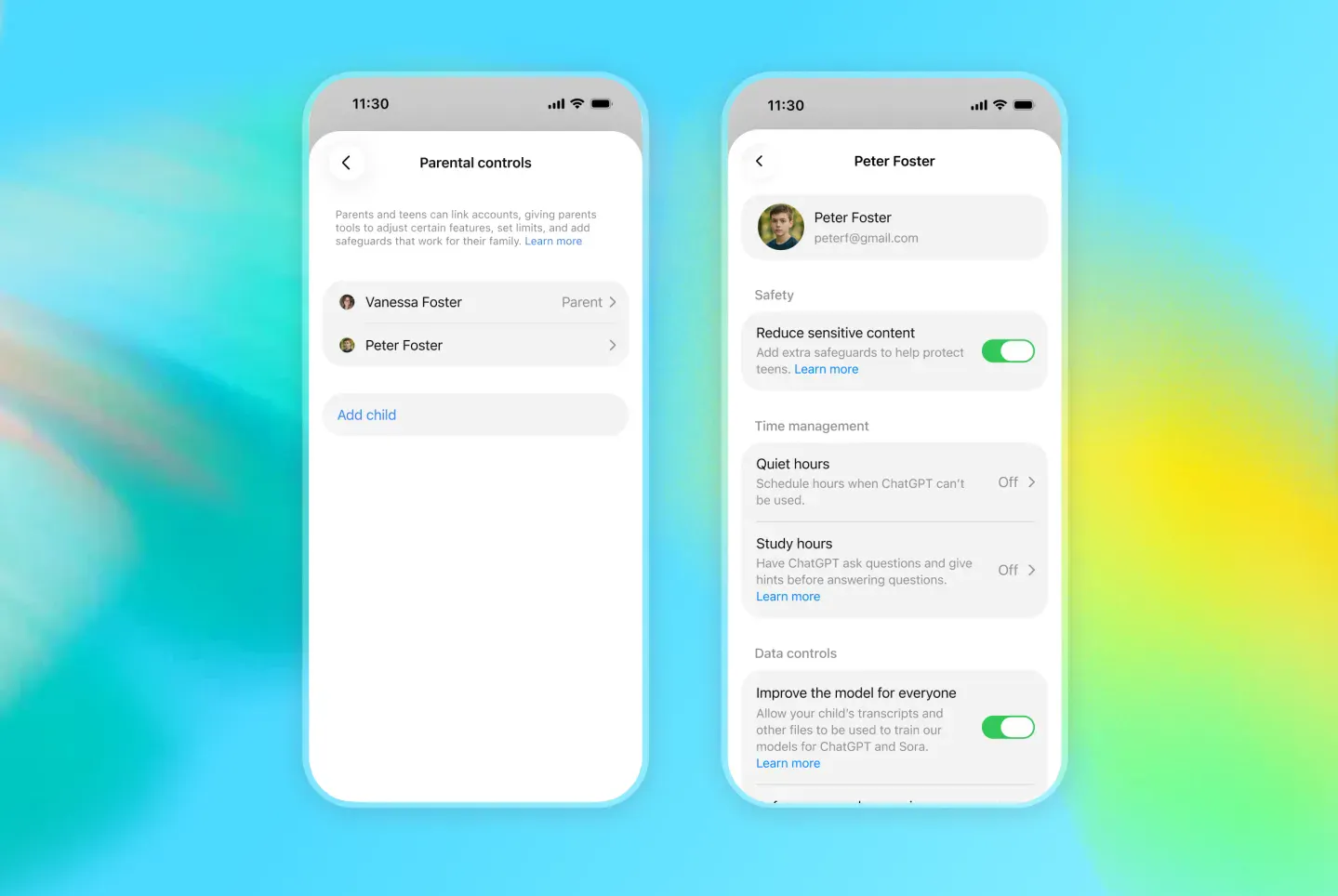
ChatGPT for Teens is a dedicated ChatGPT experience for ages 13–17, designed around how teens learn and use AI. It encourages working through problems instead of simply giving homework answers, with Study Mode, quizzes, learning visualizations, and Study Hours. Stronger safety protections and healthy-use features are built in by default, with optional parental controls—while keeping teens' conversations private.
AI Analysis
ChatGPT for Teens is a dedicated AI platform for ages 13-17 that promotes active learning by guiding users through problems instead of giving direct answers. It includes Study Mode, quizzes, learning visualizations, and Study Hours. Unique aspects are its stronger safety protections, healthy-use features, optional parental controls, and privacy assurance. It solves pain points of inappropriate AI use in education and passive learning, offering a value proposition of safe, engaging, and effective study companion powered by AI.
The market timing is favorable for 2025-2026 as AI tools become mainstream in education while concerns over academic integrity, student mental health, and online safety peak. With policies likely supporting responsible AI in schools and growing parental demand for controlled AI access, this product is well-positioned. Excellent Timing.
Feasibility is Medium. Technical difficulty is low-moderate by building on existing LLMs. Development costs for UI/UX tailored to teens and custom features are reasonable, but operational costs for safety moderation and support are high. Major risks include regulatory compliance for children's data (e.g. COPPA in US) and potential liability for AI outputs. Scalability is high, but requires careful team expertise in education and AI safety.
Main target segments: Teens 13-17 years old in middle and high school, parents seeking educational tools, focused on English-speaking regions like North America and Europe. The TAM for AI-driven educational assistants is expansive with strong growth projected. Core pain points: Teens struggling with self-directed learning using AI, parents worried about AI replacing critical thinking and exposure to harmful content. Willingness to pay: Moderate to high, as parents invest in education and safety tools.
Competition level: Medium. Direct competitors: 1. Khanmigo (khanacademy.org/khan-labs) - AI powered tutor. 2. SchoolAI (schoolai.com) - Classroom AI tools. 3. MagicSchool.ai (magicschool.ai) - AI for teachers and students. 4. OpenAI's ChatGPT with custom GPTs for education. This product has advantages in teen-focused design, built-in study tools and safety defaults. Disadvantages: Less brand recognition if independent, competition from free general AI, and need to prove efficacy over established edtech platforms.
Upgrade Pro to unlock full AI analysis
Similar Products

Auriko
Trading desk for LLM calls
▲ 332 votes

Cohere Parse 5
Turn complex docs, tables & images into AI-ready data
▲ 158 votes

Opaline
PostHog for team Claude Code and Codex sessions.
▲ 141 votes

Adapt
The company brain that gets work done
▲ 124 votes

Tapfree for Chrome
Voice dictation that adapts to what’s on your screen
▲ 122 votes

CodeBurn
See where your AI coding spend actually goes
▲ 101 votes