
DataBlur
Blur sensitive data on screen before anyone sees it
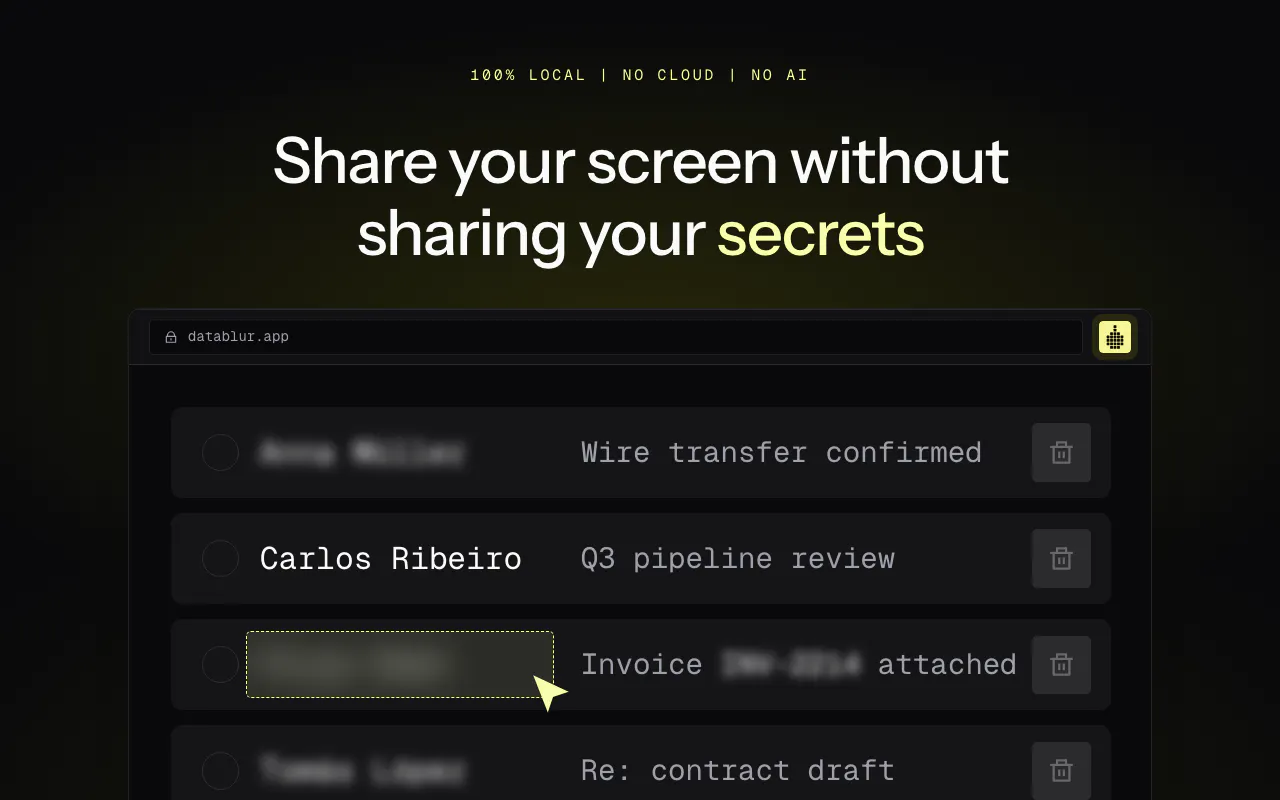
DataBlur blurs sensitive data on your screen in real time — during live calls, demos and recordings. Auto-detects emails, cards and API keys. 100% local: no cloud, no AI, no signup. When detection fails, it blurs more, not less.
AI Analysis
DataBlur automatically blurs sensitive data like emails, credit cards, and API keys on screen in real-time during calls, demos, and recordings. It is 100% local with no cloud, AI, signup, or data sharing. When detection is uncertain it blurs more rather than less for safety. It solves the pain of accidental exposure of private information in professional screen-sharing scenarios while preserving productivity. The value proposition is effortless, secure privacy protection without reliance on external services or complex setup.
In 2025-2026, rising remote/hybrid work, stricter global privacy regulations (GDPR, CCPA expansions), frequent screen-sharing in SaaS and support roles, and growing distrust of cloud/AI data handling create strong demand for local-first privacy tools. Recent high-profile leaks during demos amplify the need. Excellent Timing.
High. Technical implementation relies on efficient local pattern matching (e.g. regex) rather than heavy AI, keeping complexity and device resource use low. No server or cloud costs; easy distribution as a desktop app. Minimal compliance risks since data stays on-device. Scalable via direct downloads and simple updates. Main risks are cross-app/OS compatibility and potential over-blurring user experience. Rating: High.
Main segments: developers, sales engineers, product managers, customer support, and marketers aged 25-45 in tech/SaaS, finance, and consulting industries. Primarily North America and Europe with high remote-work density. TAM for privacy & compliance tools exceeds $8B; SAM for screen-sharing privacy approx. $300-500M. Core pains: accidental PII/secret leaks causing compliance violations or breaches. Strong willingness to pay for frictionless, reliable protection (likely subscription or one-time license).
Medium. Direct competitors: 1. Loom (loom.com) with post-recording editing/blur, 2. Zoom (zoom.us) selective sharing and virtual backgrounds, 3. Riverside.fm screen recording privacy tools, 4. OBS Studio with manual blur filters (obsproject.com), 5. enterprise DLP solutions like Broadcom Symantec (broadcom.com). Advantages: fully local, automatic real-time detection, no AI/cloud dependency, errs toward more blur for safety. Disadvantages: potentially higher false-positive blurring rate without AI, lacks polished collaboration features of larger platforms.
Upgrade Pro to unlock full AI analysis
Similar Products

Deliveryman.ai
Cold email infrastructure on autopilot without Gsuite
▲ 155 votes

Adapt
The company brain that gets work done
▲ 124 votes

Tapfree for Chrome
Voice dictation that adapts to what’s on your screen
▲ 122 votes

Kosshi
Simple, fast outliner for Mac and iPhone.
▲ 90 votes

Thoughts for Mac
Capture notes from your menubar using text, images or voice
▲ 90 votes

Refoid
Automate App Store refund responses and track every outcome
▲ 68 votes