Doop
Design with AI agents - live on the same canvas
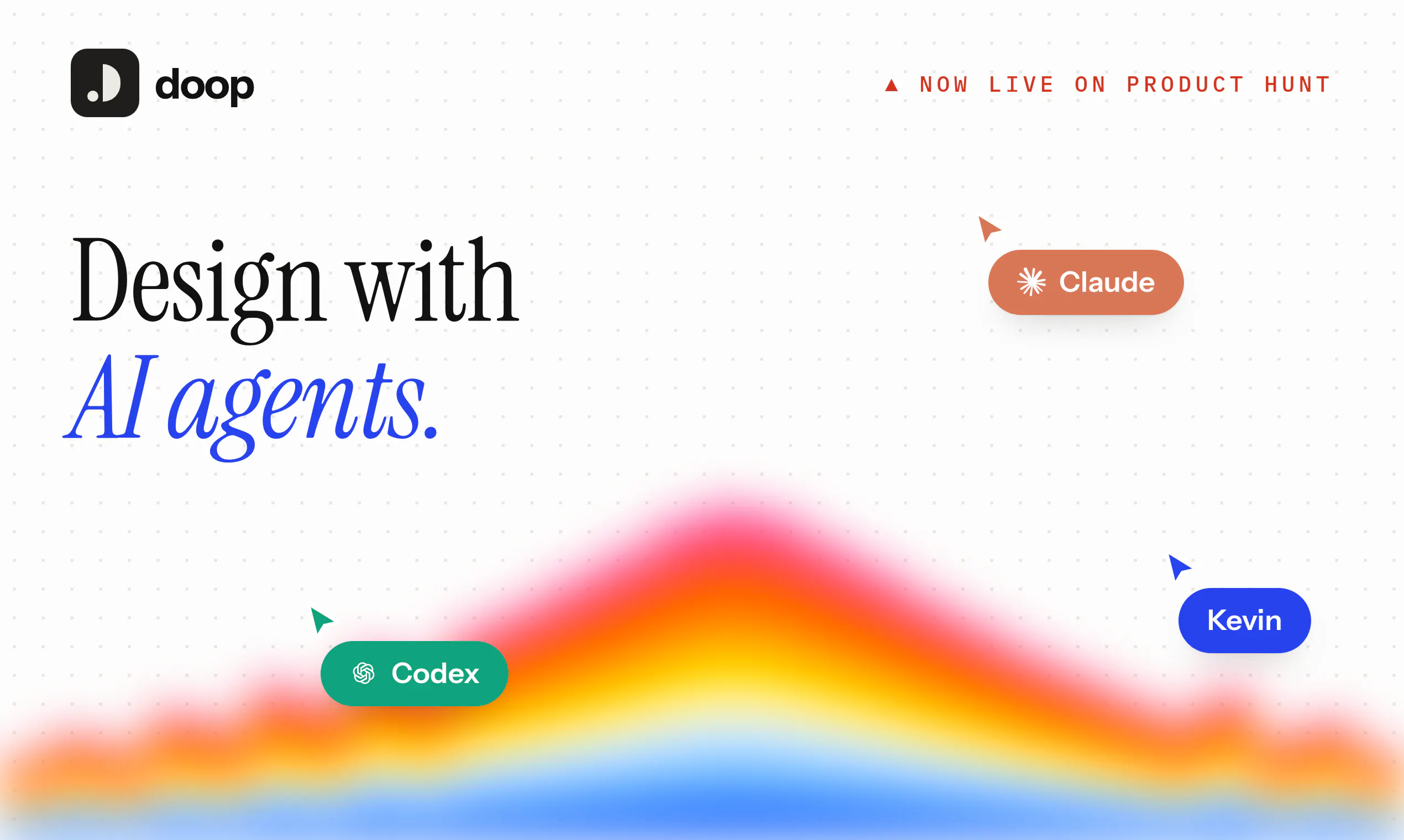
Doop is an infinite multiplayer canvas where AI agents design beside you. Claude, Codex and any MCP agent stream frames onto the canvas live, review each other's work, and share one memory of your decisions, design taste and context. Bring your own AI subscriptions, no platform tokens, no markup. Open source.
AI Analysis
Doop is an open-source infinite multiplayer canvas where users design alongside AI agents like Claude, Codex, and any MCP-compatible model. Core features include real-time streaming of AI-generated design frames directly onto the shared canvas, collaborative review among agents, and a unified memory system that retains user decisions, design taste, and context across sessions. It solves key pain points such as fragmented AI interactions, loss of context in design workflows, and high costs from platform markups by allowing users to bring their own AI subscriptions. The unique selling point is seamless human-AI symbiosis in a persistent, collaborative environment without vendor lock-in. Overall value proposition: dramatically boosts design creativity, speed, and iteration quality through live, shared intelligence.
In 2025-2026, AI agent technology and multimodal models are reaching high maturity with widespread API availability, while user demand for integrated AI in creative tools is exploding amid remote/hybrid work trends. Economic pressures favor productivity-enhancing tools, and open-source AI movements are accelerating adoption. No major regulatory hurdles specific to this space yet. This represents Excellent Timing as the infrastructure for real-time AI collaboration is now ready and market appetite for AI-native design tools is peaking.
Technical difficulty is moderate-high due to requirements for real-time streaming, multi-agent coordination, and persistent shared memory, but mitigated by leveraging mature LLM APIs. Development and operation costs are reasonable for an open-source project with BYO subscriptions reducing infrastructure burden. Low supply chain risks; compliance focuses on data privacy and AI terms of service. Strong scalability via cloud and open-source community contributions. Overall rating: High, supported by existing tech stack and open-source model lowering barriers.
Main target segments: UI/UX designers, product designers, and creative teams in tech startups, digital agencies, and mid-sized software companies (ages 25-40, tech-savvy). Geographic focus: primarily US and Europe, with growing adoption in Asia. Estimated TAM for AI-enhanced design software ~$15B by 2026, SAM for collaborative AI design tools ~$3B, SOM for open-source canvas solutions ~$500M. Core pain points include inefficient design iteration, context switching between tools, and expensive AI platform fees. Potential willingness to pay is high for premium features (e.g., $20-50/month) given productivity gains, though open-source core may start with freemium model.
Medium. Direct competitors: 1. Figma (figma.com) with FigJam AI, 2. Canva Magic Studio (canva.com), 3. Galileo AI (usegalileo.ai), 4. Uizard (uizard.io). Doop's advantages include true real-time multi-AI-agent collaboration on one infinite canvas, shared persistent memory, fully open-source, and zero markup on AI usage. Disadvantages: less mature ecosystem and integrations than Figma, potential inconsistency from BYO keys, and newer brand requiring community building to compete on polish and reliability.
Upgrade Pro to unlock full AI analysis
Similar Products

Cohere Parse 5
Turn complex docs, tables & images into AI-ready data
▲ 158 votes

Opaline
PostHog for team Claude Code and Codex sessions.
▲ 141 votes

Adapt
The company brain that gets work done
▲ 124 votes

Tapfree for Chrome
Voice dictation that adapts to what’s on your screen
▲ 122 votes

CodeBurn
See where your AI coding spend actually goes
▲ 101 votes

WikiFix for Confluence
Find and fix issues in your knowledge base
▲ 86 votes