Fred
AI-orchestrated UX research with behavioural tracking
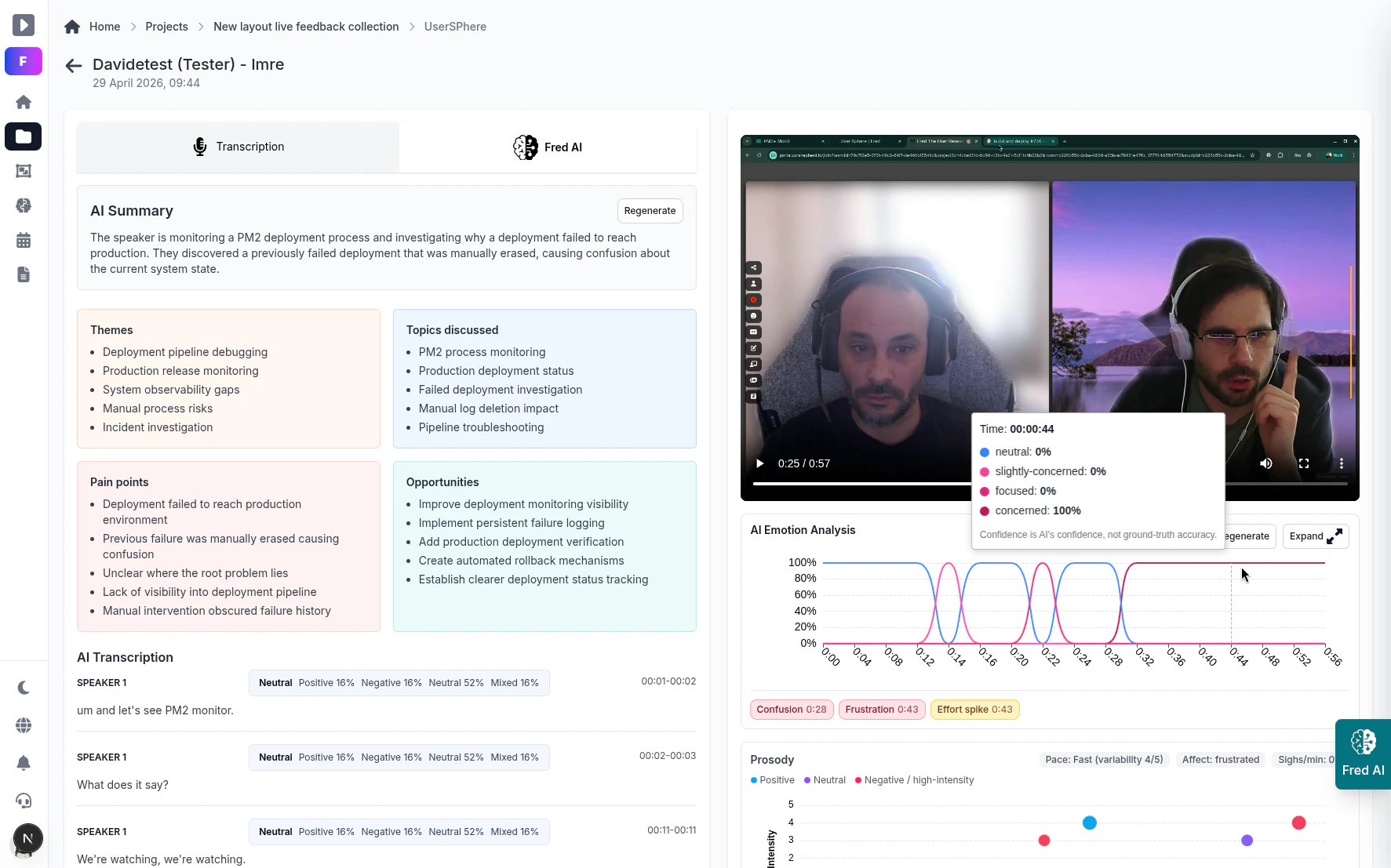
Fred now turns UX research into an AI-orchestrated workflow: plan studies, recruit and manage participants, run tests, analyze sessions, detect patterns, and build reports in one place. This launch adds full AI orchestration, real-time and replay-based eye tracking, gaze heatmaps, smarter analysis, and a broader research suite for teams that need faster evidence without losing methodological control.
AI Analysis
Fred is an all-in-one AI-orchestrated UX research platform that integrates study planning, participant recruitment/management, test execution, session analysis, pattern detection, and report building. Key features include real-time and replay-based eye tracking, gaze heatmaps, and smarter AI analysis while preserving methodological control. It addresses pain points like fragmented tools, time-consuming manual processes, slow insights, and scalability limits in traditional UX research. USP is full AI workflow orchestration combined with behavioral tracking for faster, rigorous evidence-based decisions. Value proposition: Accelerate research cycles for teams without sacrificing quality.
In 2025-2026, AI adoption in enterprise tools is surging, computer vision for eye tracking has matured, and digital teams face pressure for rapid, data-driven iteration amid competitive markets and economic demands for efficiency. User demand for integrated AI research platforms is rising while maintaining scientific rigor. This aligns perfectly with trends in AI-augmented productivity and UX tools. Excellent Timing.
Technical difficulty is medium-high due to AI orchestration, accurate eye tracking, and privacy-compliant data handling, but leverages mature models and cloud services. Development/operation costs are significant for AI compute and participant management but fit SaaS economics. Low supply chain risk; key compliance is GDPR for user data. Strong scalability potential as usage grows. Overall rating: High, supported by existing AI tech maturity and clear product-market fit for UX teams.
Main segments: UX researchers, product designers, PMs, and insights teams in mid-to-large SaaS/tech companies and agencies (demographics: professionals 25-45 years old). Industries: Software, consumer tech, fintech, e-commerce. Geographic: Primarily North America, Europe. UX research tools market TAM approx $1.5-2B (2025), SAM for AI-integrated ~$400-600M, SOM for this workflow ~$50M. Core pains: Slow research cycles, tool fragmentation, subjective analysis. High willingness to pay ($100-1000+/mo per team) for time-saving AI platforms.
Competition level: Medium. Direct competitors: 1. UserTesting (usertesting.com), 2. Maze (maze.co), 3. Lookback (lookback.io), 4. Hotjar (hotjar.com), 5. Dovetail (dovetail.com). Advantages vs competitors: Full end-to-end AI orchestration, integrated real-time eye tracking with gaze heatmaps, and smarter pattern detection in one platform. Disadvantages: Newer entrant with potentially less brand recognition, may require more setup for AI features compared to simpler tools. Strong differentiation in behavioral AI but faces pricing pressure from established players with broader user bases.
Upgrade Pro to unlock full AI analysis
Similar Products

Cohere Parse 5
Turn complex docs, tables & images into AI-ready data
▲ 158 votes

Opaline
PostHog for team Claude Code and Codex sessions.
▲ 141 votes

Adapt
The company brain that gets work done
▲ 124 votes

Kosshi
Simple, fast outliner for Mac and iPhone.
▲ 90 votes

WikiFix for Confluence
Find and fix issues in your knowledge base
▲ 86 votes

Refoid
Automate App Store refund responses and track every outcome
▲ 68 votes