
FUTO Swipe
Open models for on-device swipe typing
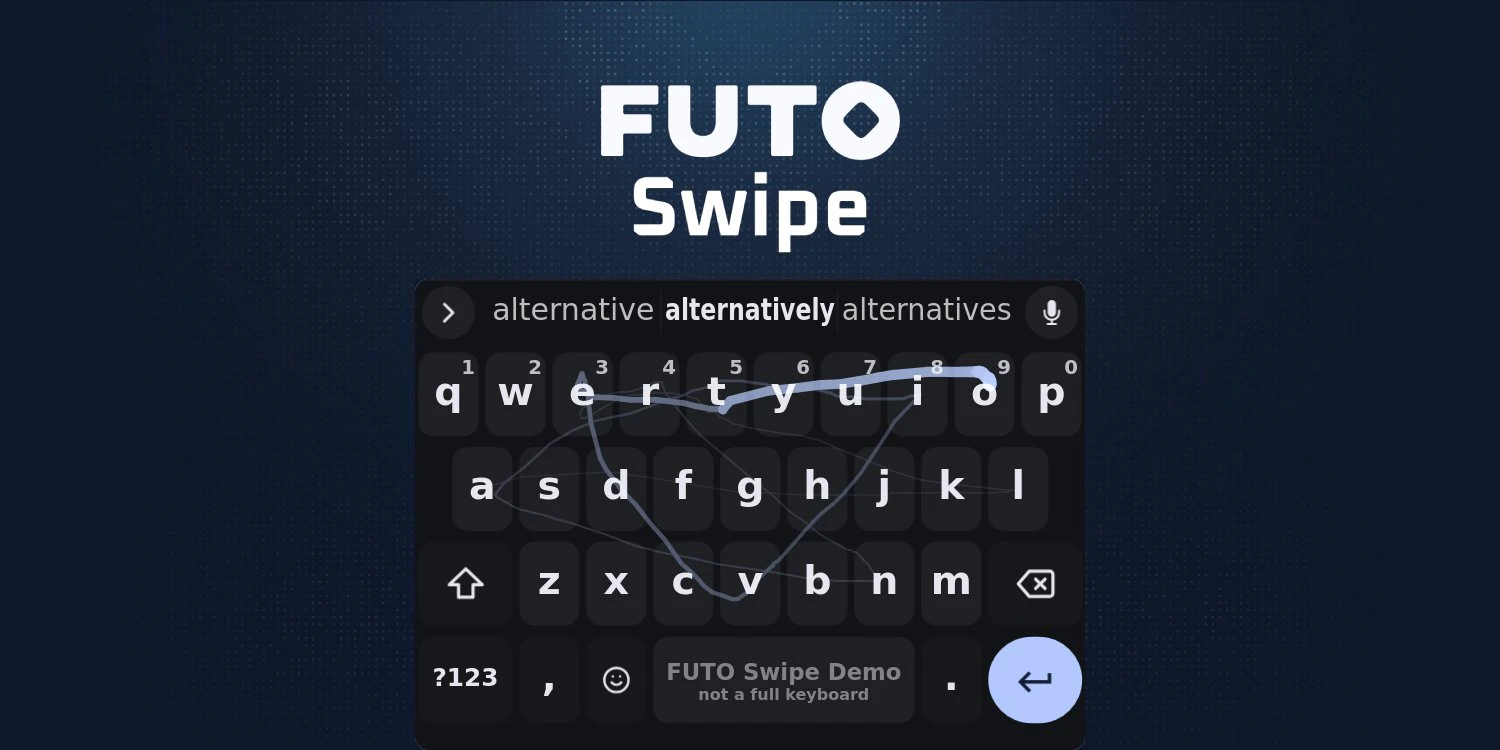
FUTO Swipe is a family of small, open models for accurate swipe typing. It includes a layout-agnostic encoder, a layout-specific decoder, and a lightweight context language model. The full system runs efficiently on-device with a very small footprint, and FUTO has also released the 1 million swipe dataset used to train it.
AI Analysis
FUTO Swipe offers a family of small, open-source models for accurate on-device swipe typing. It includes a layout-agnostic encoder, layout-specific decoder, and lightweight context language model that runs efficiently with a minimal footprint. It solves key pain points like privacy risks from cloud-based keyboards (e.g. data collection by Gboard) and lack of high-quality gesture typing in open-source alternatives. By releasing the models and the 1 million swipe dataset, it promotes transparency, customization, and community innovation. The value proposition is enabling private, efficient, and accessible advanced typing for developers building custom keyboards and privacy-focused users.
The market timing is favorable for 2025-2026 due to maturing on-device AI technologies, rising privacy regulations and user concerns over data collection, growing demand for open-source alternatives, and the trend toward efficient small models amid AI democratization. This aligns well with increasing interest in customizable, private mobile UX. Excellent Timing.
High. Models are small, proven to run efficiently on-device with low compute needs, keeping development and operation costs minimal. Open-source approach reduces risks; compliance is straightforward as no cloud data handling. High scalability for integration into keyboards, though adoption depends on developer uptake and cross-layout accuracy.
Main target segments: open-source developers and creators of custom Android keyboards, privacy-conscious tech enthusiasts and power users (ages 18-45). Industries: mobile input methods, AI tools, open-source software. Geographic: global with strong adoption potential in US and Europe due to privacy awareness. Core pain points: insufficient swipe accuracy in non-proprietary keyboards and data privacy risks. Willingness to pay: moderate, via project donations, premium apps or integration services.
Low. Direct competitors: 1. Gboard (gboard.app), 2. Microsoft SwiftKey (swiftkey.com), 3. FlorisBoard (florisboard.org), 4. AnySoftKeyboard (anysoftkeyboard.github.io), 5. TouchPal (touchpal.com). Advantages: fully open-source with released dataset, guaranteed on-device privacy, small efficient footprint. Disadvantages: may require more developer effort to integrate, potentially less polished accuracy or language support than proprietary cloud solutions initially.
Upgrade Pro to unlock full AI analysis
Similar Products

React UI Kit V7
All the chat components you need. None of the complexity
▲ 115 votes

CodeBurn
See where your AI coding spend actually goes
▲ 101 votes

Juggler
A visual AI coding harness
▲ 94 votes

gg-friggin-ez
Fast, cheap profanity and toxicity screening via Jev & Laya
▲ 88 votes

Blop
Describe your app and Blop tests it and repairs broken tests
▲ 80 votes

Prowler Cloud
Where your AI agent becomes a cloud security defender
▲ 64 votes