
NanoKVM-Go
Give your AI agent physical control over any screen
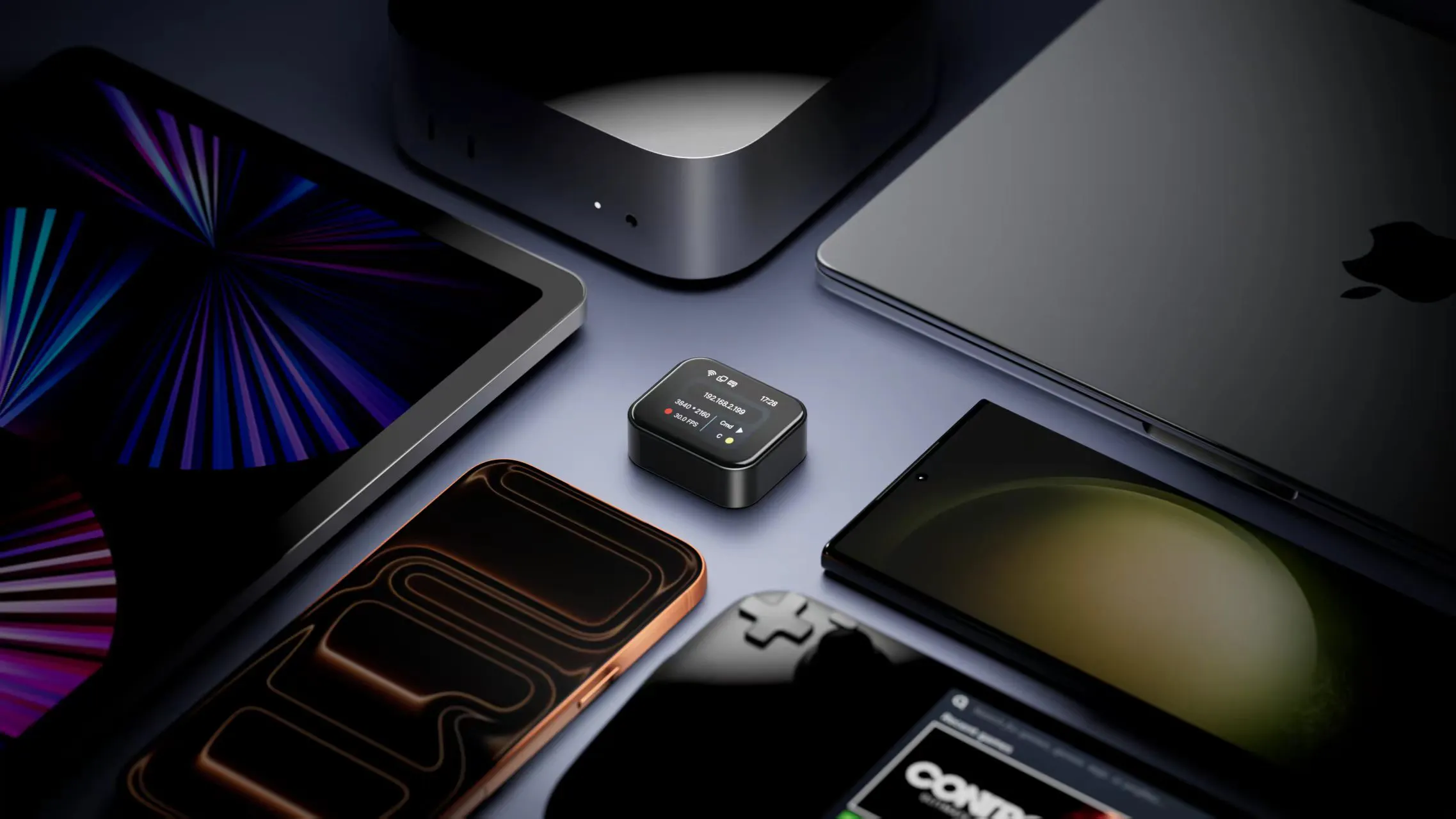
NanoKVM-Go is a watch-sized, serverless 4K KVM with WiFi 6 and built-in Tailscale. It acts as an open MCP server to give AI agents hardware-level screen visibility and keyboard/mouse input control over any connected laptop or mobile device.
AI Analysis
NanoKVM-Go is a watch-sized, serverless 4K KVM device with WiFi 6 and built-in Tailscale. It functions as an open MCP server, enabling AI agents to obtain hardware-level screen visibility and keyboard/mouse control over any connected laptop or mobile device. Key USPs include its ultra-compact form factor, no-server requirement, seamless networking, and direct AI integration. It solves critical pain points for AI agents limited to software interfaces without physical device interaction, as well as complex remote access setups for users. The value proposition is bridging AI intelligence with real-world hardware control for autonomous operations, remote management, and enhanced productivity without modifying target devices.
The timing is favorable for 2025-2026 with exploding growth in AI agents (e.g. tool use and computer control APIs from leading labs), maturing edge hardware tech, and rising demand for autonomous systems that work with legacy devices. WiFi 6 and VPN tools like Tailscale are stable, while economic trends favor automation to reduce labor costs. No major policy barriers evident. Excellent Timing.
High technical feasibility using proven HDMI capture, WiFi, and open-source components like Tailscale. Moderate development and operation costs for compact hardware. Supply chain for electronics is established but carries some manufacturing precision risks for watch-sized design. Low compliance risk as open source; strong scalability for both consumer and enterprise. Main challenge is quality control at scale. Overall rating: High.
Main segments: AI developers/engineers and researchers building autonomous agents (tech professionals aged 25-45), AI-focused startups/enterprises, and IT/remote ops teams. Geographically focused in US, China, Europe tech hubs. Estimated market: KVM/IP remote access TAM large ($1B+), with AI-agent specific segment emerging rapidly (SAM ~$200M+, SOM growing with AI adoption). Core pain points are AI's lack of physical control and cumbersome KVM setups. High willingness to pay for specialized AI-enabled hardware.
Medium. Direct competitors: 1. PiKVM (pikvm.org), 2. TinyPilot Voyager (tinypilot.com), 3. ATEN IP KVM (www.aten.com), 4. Waveshare HDMI KVM solutions. NanoKVM-Go advantages: watch-sized portability, serverless WiFi 6 + Tailscale integration, native open MCP for AI agents, true 4K support. Disadvantages: newer entrant with less established community than PiKVM, potentially higher unit cost, hardware reliability must prove itself at scale. Strong differentiation in the AI agent use case.
Upgrade Pro to unlock full AI analysis
Similar Products

Appwrite 2.0
The open-source cloud for agents and developers
▲ 215 votes

CodeBurn
See where your AI coding spend actually goes
▲ 101 votes

Juggler
A visual AI coding harness
▲ 94 votes

gg-friggin-ez
Fast, cheap profanity and toxicity screening via Jev & Laya
▲ 88 votes

Prowler Cloud
Where your AI agent becomes a cloud security defender
▲ 64 votes

Stagent
Drive Claude Code through long tasks it would otherwise drop
▲ 58 votes