
Google Gemma 4 12B
Run multimodal AI locally with an encoder-free architecture
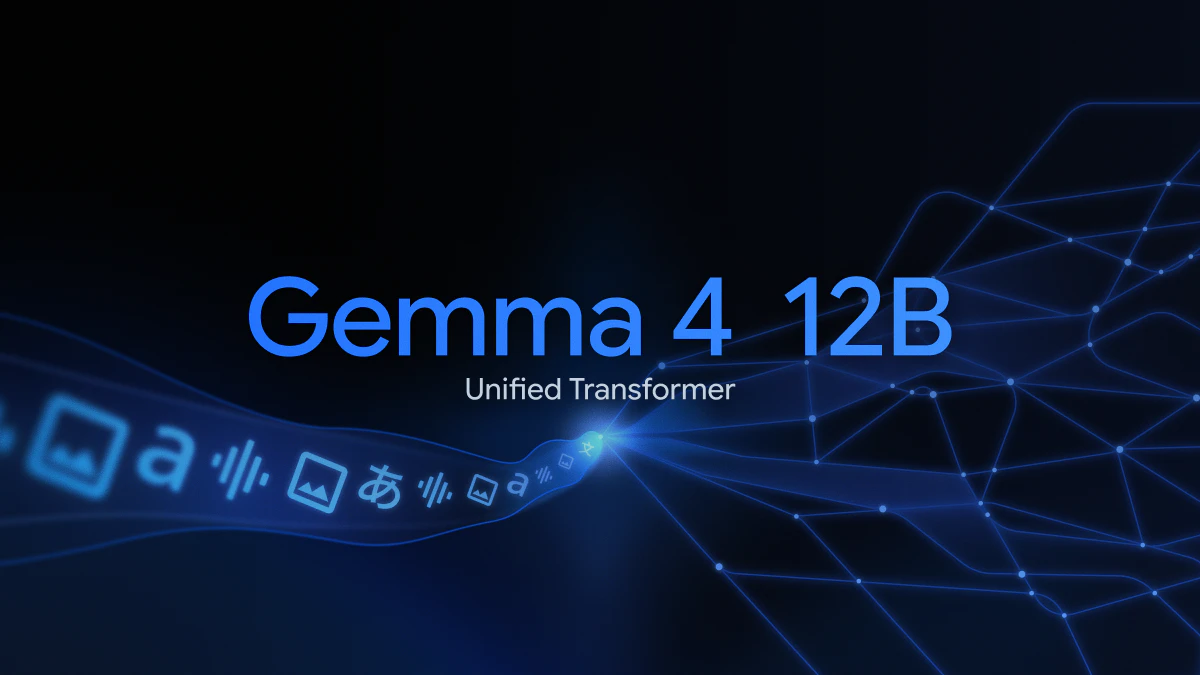
Gemma 4 12B processes text, vision, and audio natively without separate encoders, running on 16GB VRAM. For developers building local agentic applications who need multimodal capability without cloud dependency.
AI Analysis
Google Gemma 4 12B is an open-source multimodal AI model that natively processes text, vision, and audio using an encoder-free architecture. It runs efficiently on just 16GB VRAM, enabling fully local execution for agentic applications without cloud dependency. It solves key pain points for developers including high cloud API costs, latency, privacy risks, and internet reliance. The value proposition is empowering local multimodal AI development with high customizability, reduced costs, and strong performance on consumer hardware.
Favorable in 2025-2026 due to rising demand for privacy-focused, on-device AI amid stricter data regulations, maturing local inference tech (e.g. quantization, NPUs), and growth in agentic multimodal apps. Economic push for cost-efficient AI beyond cloud providers makes local open-source models highly relevant. Excellent Timing.
High. Technical barriers are addressed by Google's proven model optimization; 16GB VRAM requirement ensures broad accessibility. Open-source nature lowers dev costs via community support. Minimal supply chain risks, strong scalability for fine-tuning and deployment. Key enabler is demonstrated multimodal integration without encoders.
Primary users: AI/ML developers and engineers (25-45 years old, tech professionals) building local agentic apps. Industries: software development, AI research, edge computing. Geographic focus: Global with concentration in US, Europe, East Asia. Core pains: cloud costs, latency, data privacy. Estimated developer AI tools market is large and growing with high willingness to adopt free open-source models and pay for hosting/support services.
Medium. Direct competitors: 1. Meta Llama 3.2 (llama.meta.com), 2. Microsoft Phi-3.5-Vision (microsoft.com/ai), 3. Alibaba Qwen2-VL (qwen.ai), 4. Mistral Pixtral 12B (mistral.ai). Advantages: encoder-free native multimodal (text/vision/audio), lower VRAM needs for local runs, Google-backed quality. Disadvantages: newer entry may have smaller initial community than Llama; requires technical expertise for local setup.
Upgrade Pro to unlock full AI analysis
Similar Products

Opaline
PostHog for team Claude Code and Codex sessions.
▲ 141 votes

React UI Kit V7
All the chat components you need. None of the complexity
▲ 115 votes

Replay QA Security Scan
Automated Penetration Testing for AI-Built Apps
▲ 102 votes

CodeBurn
See where your AI coding spend actually goes
▲ 101 votes

Audryo
Customer email your agent can operate.
▲ 68 votes

Refoid
Automate App Store refund responses and track every outcome
▲ 68 votes