
Google Health
A new relationship with your health
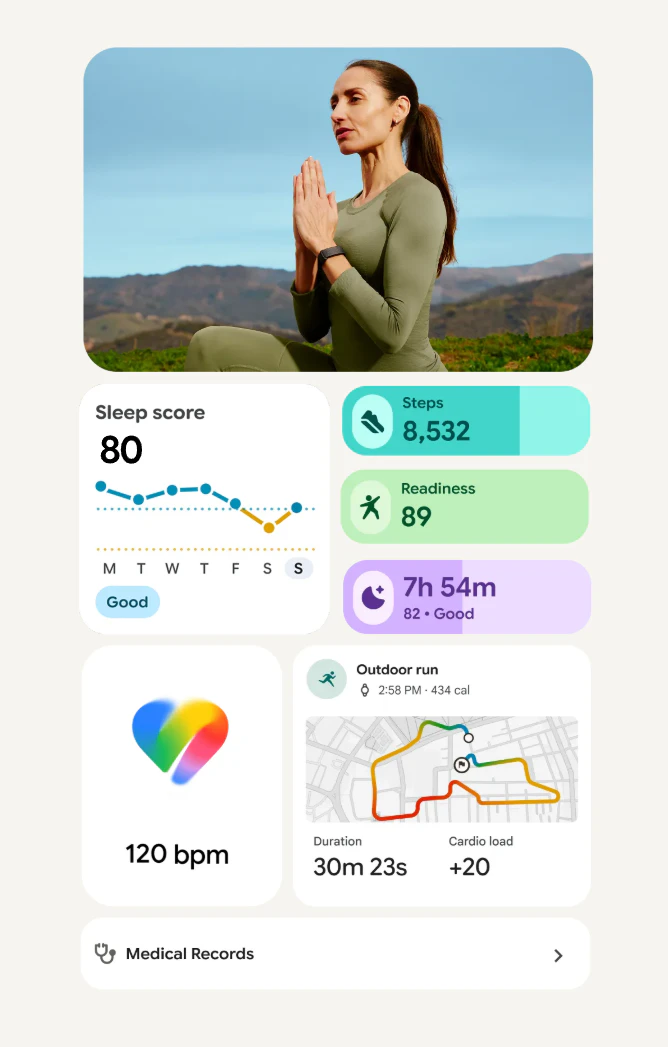
Google Health offers personalized health coaching built with Gemini. Track your fitness, sleep, and health data with guidance that evolves with you.
AI Analysis
Google Health offers personalized health coaching built with Gemini AI. It enables tracking of fitness, sleep, and health data, delivering guidance that adapts and evolves with the user. Core features include AI-powered insights, Android integration, and data analytics for proactive wellness. It solves pain points like generic advice, fragmented health tracking, and lack of personalized motivation. USP is the evolving, intelligent coaching that creates a dynamic relationship with health. Overall value proposition: empowering users with adaptive AI to improve long-term well-being seamlessly.
In 2025-2026, AI maturity (esp. multimodal models like Gemini), rising demand for preventive personalized health tech, wearable adoption, and post-pandemic wellness focus create strong tailwinds. Supportive digital health policies and economic emphasis on productivity via well-being align perfectly. Excellent Timing.
High technical feasibility leveraging Google's existing Gemini, Android ecosystem, and data capabilities. Moderate development costs for Google but high compliance risks around health data privacy (HIPAA/GDPR). Strong scalability potential with cloud infrastructure. Team fit excellent given Google's AI/health expertise. Overall: High.
Main segments: Tech-savvy adults 25-55 years old focused on fitness/wellness, Android users in US/Europe/urban Asia. Industries: consumer health & fitness. TAM for AI digital health ~$100B+ by 2026; SAM for personalized coaching apps ~$15B; SOM for Google ecosystem ~$2B. Core pains: interpreting complex data, sustaining habits. Moderate-to-high willingness to pay for premium AI features/subscriptions.
Medium. Direct competitors: Apple Health (apple.com), Fitbit (fitbit.com), Noom (noom.com), Whoop (whoop.com), Oura (ouraring.com). Advantages: Gemini-powered adaptive coaching, deep Android/data integration, evolving personalization. Disadvantages: Faces trust issues on data privacy vs. Apple, less hardware focus than Whoop/Oura, similar tracking features to Fitbit (Google-owned). Strong differentiation via AI evolution but competes in crowded wellness app space.
Upgrade Pro to unlock full AI analysis
Similar Products

Equitybee Benchmark
Compare your startup equity grant for free.
▲ 218 votes

Cohere Parse 5
Turn complex docs, tables & images into AI-ready data
▲ 158 votes

Opaline
PostHog for team Claude Code and Codex sessions.
▲ 141 votes

Adapt
The company brain that gets work done
▲ 124 votes

Cercle
The bat signal for your closest friends.
▲ 121 votes

Orus
Claude for investing in perpetuals
▲ 121 votes