
imgproxy v4
A fast and secure self-hosted image processing server
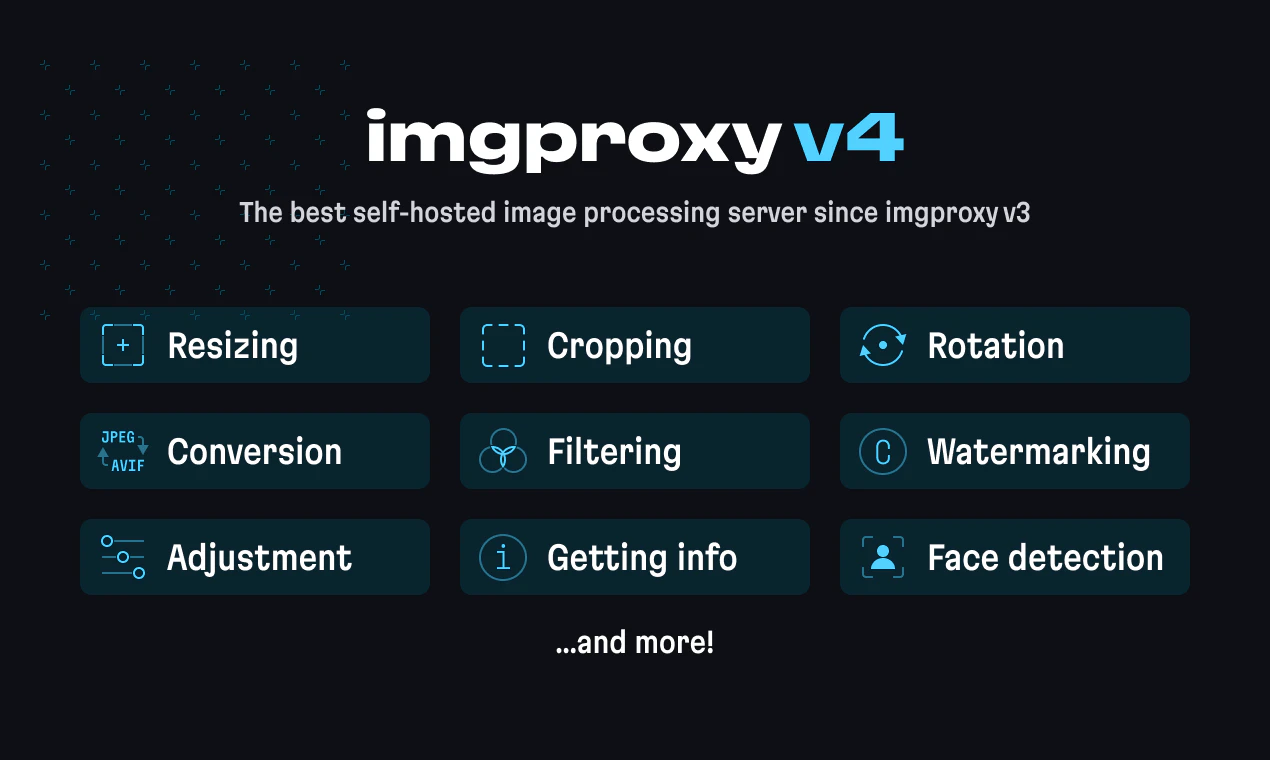
imgproxy is a fast and secure standalone server for resizing, processing, and converting images. The guiding principles behind imgproxy are speed, security, and simplicity. It is well equipped to handle huge volumes of image-processing requests with ease. imgproxy is a drop-in replacement for all the image-processing code in your web application. With imgproxy, you don’t need to repeatedly re-prepare images to fit your design every time it changes, as imgproxy does this on demand.
AI Analysis
imgproxy is a fast, secure, and simple self-hosted image processing server for on-demand resizing, cropping, format conversion (including WebP/AVIF), watermarking, and other operations via an intuitive URL API. It supports multiple storage backends like S3 and has a tiny memory footprint using libvips. USPs include exceptional performance at scale, strong security (avoiding ImageMagick vulnerabilities), and no need for pre-generating image variants. It solves pain points like high compute/storage costs, slow delivery, security risks, and inflexible image handling in web/mobile apps. Value proposition: acts as a drop-in replacement for in-app image processing code, enabling dynamic adaptation to design changes while reducing dev effort and infrastructure costs.
The market timing is favorable for 2025-2026. Explosive growth in AI-generated visuals, e-commerce, social media, and video content increases demand for efficient on-demand image optimization. Maturing next-gen formats (AVIF/WebP), emphasis on Core Web Vitals for performance, rising data privacy regulations favoring self-hosted over cloud, and cost-control pressures in uncertain economies align perfectly with imgproxy's strengths. Excellent Timing.
High. Mature Go-based architecture with libvips is technically straightforward to deploy via Docker; very low runtime costs due to minimal resource usage and high efficiency. Low supply chain/compliance risks for self-hosted open-source model. Excellent scalability for high-volume traffic. Best fit for teams with DevOps experience; proven in production by multiple companies.
Primary segments: software developers, backend/frontend engineers, DevOps, and tech/product teams (ages 25-45, tech-savvy) in global software, e-commerce, media/publishing, and SaaS companies handling high image volumes. Geographic focus: US, Europe, Asia tech hubs. TAM for image optimization/CDN tech ~$10B+, SAM for self-hosted developer tools ~$1B, SOM for imgproxy-like solutions ~$100M+. Core pains: slow load times, high infra costs, security vulnerabilities, inflexible asset management. High willingness to pay for enterprise support, advanced features, or managed hosting.
Medium. Direct competitors: 1. Thumbor (https://github.com/thumbor/thumbor), 2. Cloudinary (https://cloudinary.com), 3. Imgix (https://imgix.com), 4. ImageKit (https://imagekit.io), 5. Sirv (https://sirv.com). Advantages vs competitors: faster and more memory-efficient than Thumbor, superior security and lower ongoing costs than cloud services (no per-transformation fees), simpler standalone deployment. Disadvantages: lacks polished UI/dashboard of cloud platforms, requires self-hosting/maintenance effort unlike fully managed alternatives. Strong differentiation in speed, security, and self-hosted simplicity.
Upgrade Pro to unlock full AI analysis
Similar Products

Opaline
PostHog for team Claude Code and Codex sessions.
▲ 141 votes

React UI Kit V7
All the chat components you need. None of the complexity
▲ 115 votes

Coarena by Coasty
The arena where agents battle on real-world work
▲ 104 votes

Replay QA Security Scan
Automated Penetration Testing for AI-Built Apps
▲ 102 votes

Audryo
Customer email your agent can operate.
▲ 68 votes

Refoid
Automate App Store refund responses and track every outcome
▲ 68 votes