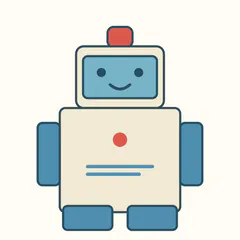
Infinomni
Turn drawings into 3D creations you can play with and print
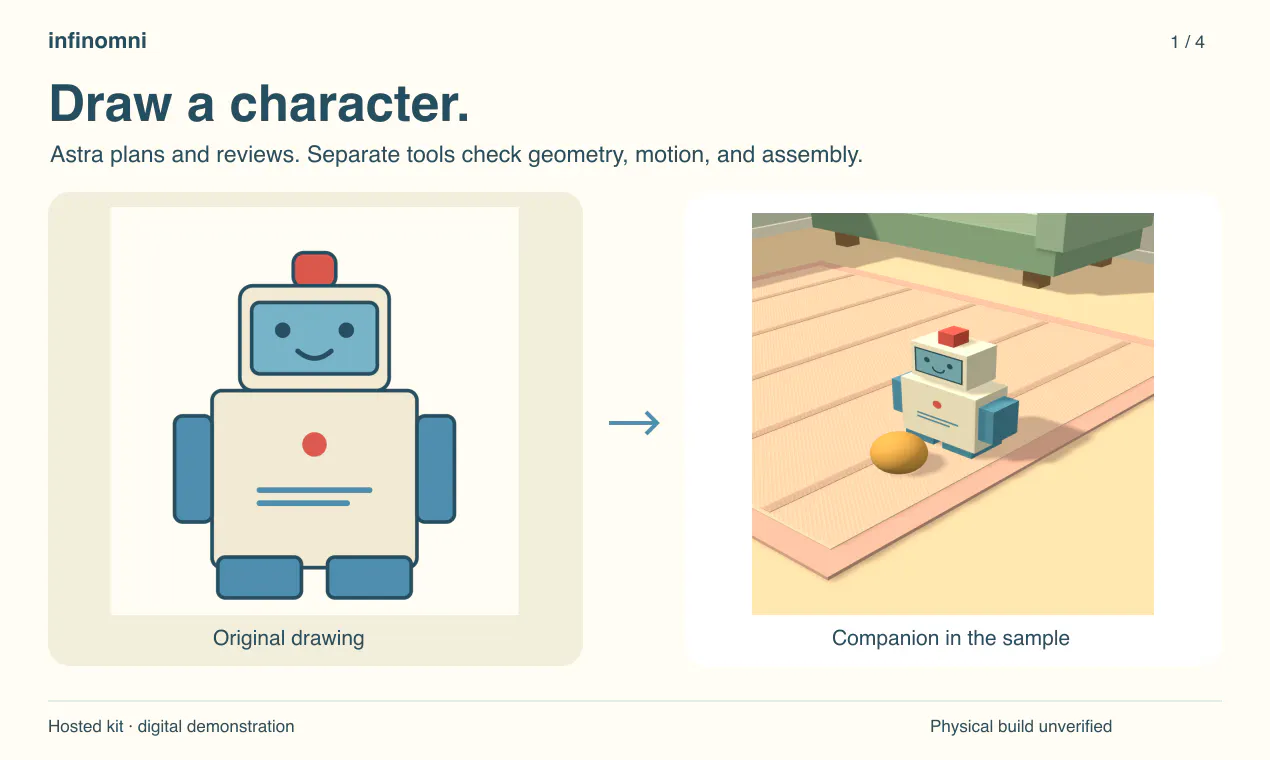
Infinomni lets anyone bring their own characters to life. Play with them in your virtual room, and 3D print them into existence. From figures to mini-robots designed, Infinomni designs any forms for the physical world starting with consumer hardware. Infinomni makes it fun to build things.
AI Analysis
Infinomni enables users to transform drawings into interactive 3D characters and creations. Core features include generating 3D models from sketches, playing with them in a virtual room, and 3D printing physical versions like figures or mini-robots. It solves the pain point that traditional 3D modeling is too complex for non-experts, while making creation fun and accessible. Unique selling points are the seamless blend of AI, virtual interaction, and physical hardware output starting with consumer devices. Overall value proposition: democratizing design to bring personal ideas into the tangible world.
Entering 2025-2026, timing is favorable due to maturing generative AI (post-OpenAI advancements), increased consumer adoption of affordable 3D printers, rising demand for STEM/creative tools, and interest in bridging digital-physical experiences via AR and robotics. Economic support for maker culture and personalization trends align well. No major policy barriers evident. Excellent Timing.
Overall feasibility is Medium. Technical challenges include reliable 2D-to-3D AI conversion, real-time virtual room integration, and hardware optimization for printing/robots. Development and operational costs are high for AI models and app maintenance. Supply chain and compliance risks exist for consumer hardware. Scalability is good via cloud services but requires strong AI/hardware team fit. Key reasons: leveraging existing AI APIs reduces some barriers but full integration remains complex.
Main segments: hobbyist makers, STEM students/educators (ages 8-35), 3D printing enthusiasts, and amateur designers. Demographics skew tech-savvy, middle-income, global with focus on North America/Europe. Industries: education, consumer robotics, creative hobbies. Estimated market: 3D printing/AI design TAM in tens of billions, SAM for accessible consumer creative tools several hundred million. Core pain: inability to easily materialize imaginative drawings. Willingness to pay: moderate-high for integrated fun tools/subscriptions.
Medium. Direct competitors: 1. Meshy.ai (meshy.ai) - AI image-to-3D generator. 2. Luma AI (lumalabs.ai) - AI-powered 3D capture and generation. 3. Kaedim (kaedim3d.com) - 2D to 3D AI for games. 4. Sloyd.ai (sloyd.ai) - AI 3D asset creation. 5. Tripo AI (tripo3d.ai). Advantages: unique virtual play + physical print/robotics focus for fun consumer experience. Disadvantages: potentially less specialized in pure 3D quality, higher execution risk with hardware integration, newer entrant.
Upgrade Pro to unlock full AI analysis
Similar Products

Lev8
Find, research, and reach the right people
▲ 451 votes

Auriko
Trading desk for LLM calls
▲ 332 votes

Cohere Parse 5
Turn complex docs, tables & images into AI-ready data
▲ 158 votes

Adapt
The company brain that gets work done
▲ 124 votes

Tapfree for Chrome
Voice dictation that adapts to what’s on your screen
▲ 122 votes

CodeBurn
See where your AI coding spend actually goes
▲ 101 votes