JAMtime.ai
Just tell your guitar pedal how to sound
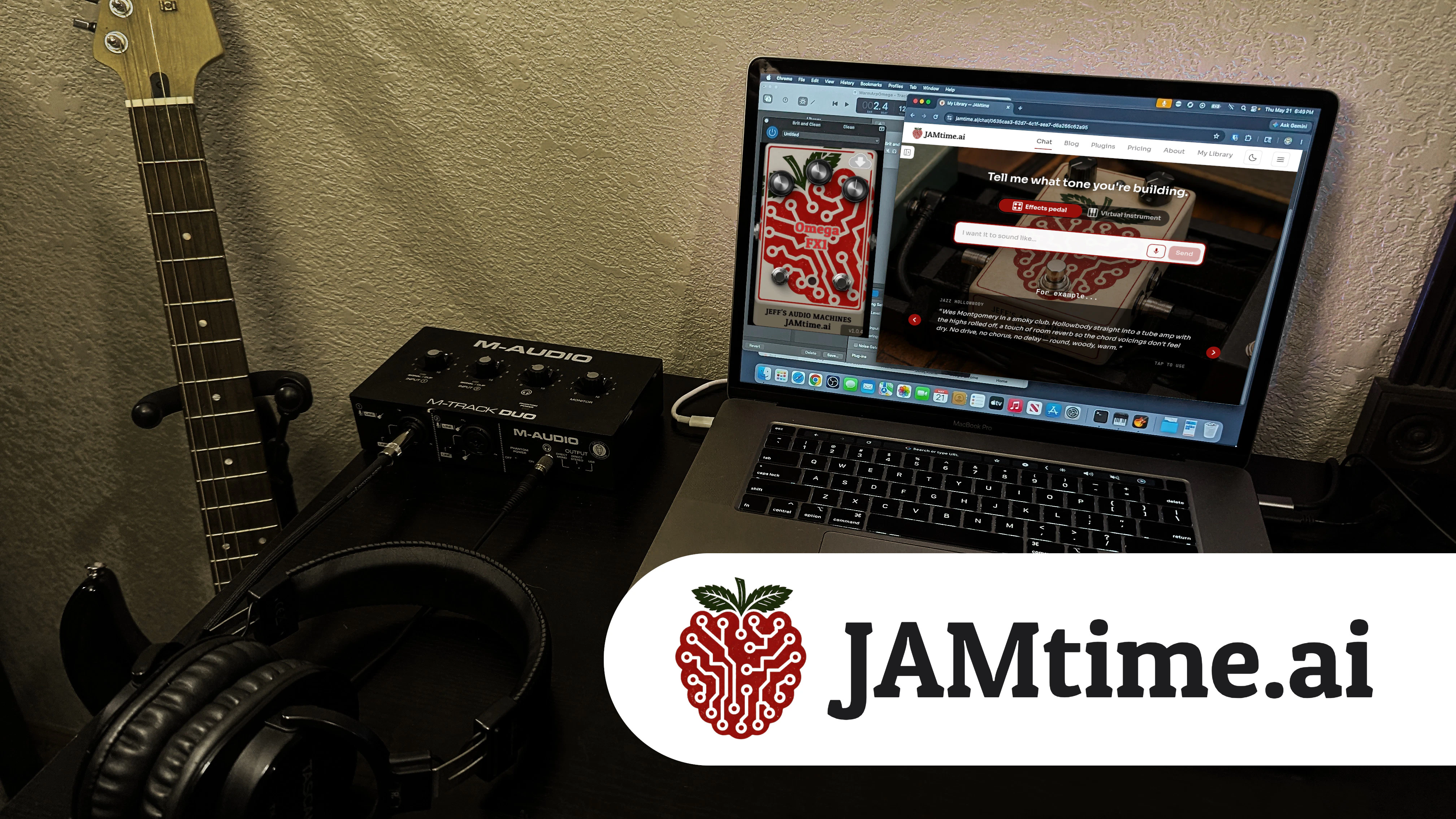
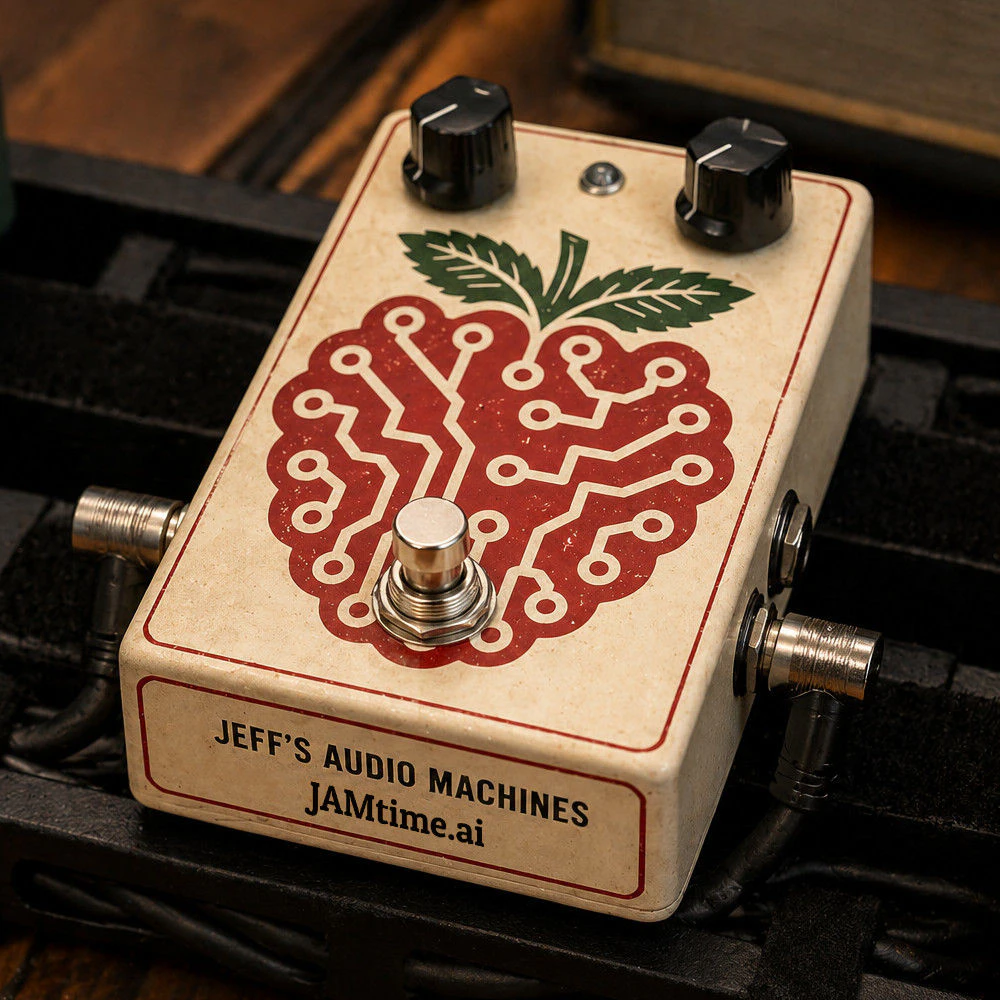
Tweaking knobs is a time-honored tradition in sound design. Chatting with AI is revolutionizing industries. JAMtime.ai embraces both, while keeping the human firmly in the driver's seat. Build and tweak your guitar pedal with phrases as simple or technical as you like, from "brighter" to "comb filter into a plate reverb." The AI writes a real DSP graph, not generated audio. Come fall in love with the JAMtime.ai workflow. Then take it to your DAW with free VST/AU plugins for Mac, Windows, Linux.
AI Analysis
JAMtime.ai enables users to design and tweak guitar pedal effects through natural language prompts instead of traditional knob tweaking. Users describe desired sounds simply or technically (e.g., 'brighter' or 'comb filter into a plate reverb'), and the AI generates a real, editable DSP graph rather than pre-rendered audio. It integrates human control with AI innovation, offering free VST/AU plugins for Mac, Windows, and Linux DAWs. This solves pain points of time-consuming manual sound design and steep technical learning curves. The core value is an intuitive, revolutionary workflow that accelerates creativity for musicians while producing professional, customizable results.
The 2025-2026 period is highly favorable as AI integration in creative tools matures rapidly, with LLMs enabling natural language interfaces in music production. User demand is shifting toward intuitive, conversational workflows amid growing AI adoption in audio. Technology for DSP and NLP is sufficiently advanced, and the economic environment supports innovative digital music tools. Excellent Timing.
Technical difficulty is moderate-high due to the need for precise natural language to DSP graph translation, but the alpha version demonstrates viability. Development and operation costs involve AI model hosting and plugin maintenance, which are manageable. Low supply chain or compliance risks as a software product. Strong scalability potential via cloud-based AI and cross-platform plugins. Overall rating: High, supported by existing prototypes and focus on DSP output over complex audio generation.
Main segments: Amateur and professional guitarists, sound designers, and music producers (ages 18-45, tech-savvy, often male-dominated hobbyist-to-pro spectrum). Industries: Music production, live performance, content creation. Geographic: Global, concentrated in North America, Europe. Estimated market: Global guitar effects market ~$1B+ TAM; AI music tools SAM growing to hundreds of millions; SOM in tens of millions for niche DSP plugins. Core pains: Inefficient effect tweaking and technical barriers. High willingness to pay for time-saving pro plugins or subscriptions.
Competition level: Medium. Direct competitors: 1. Neural DSP (neuraldsp.com) - AI guitar amp/effects plugins. 2. Positive Grid BIAS FX (positivegrid.com). 3. Line 6 Helix modeling (line6.com). 4. FabFilter creative effects plugins (fabfilter.com). Advantages: Unique natural language to real DSP graph workflow for high customizability and human control; not just modeling but generative. Disadvantages: Alpha-stage product may lack the refined library, UI polish, and proven reliability of established competitors; narrower focus on pedals vs full amp sims.
Upgrade Pro to unlock full AI analysis
Similar Products

Cohere Parse 5
Turn complex docs, tables & images into AI-ready data
▲ 158 votes

Opaline
PostHog for team Claude Code and Codex sessions.
▲ 141 votes

Adapt
The company brain that gets work done
▲ 124 votes

Tapfree for Chrome
Voice dictation that adapts to what’s on your screen
▲ 122 votes

WikiFix for Confluence
Find and fix issues in your knowledge base
▲ 86 votes

Patchcord
Studio sound for your mic in every Mac meeting with EQ
▲ 64 votes