
Kilo Code for JetBrains
Fully native, open-source coding agent built for JetBrains
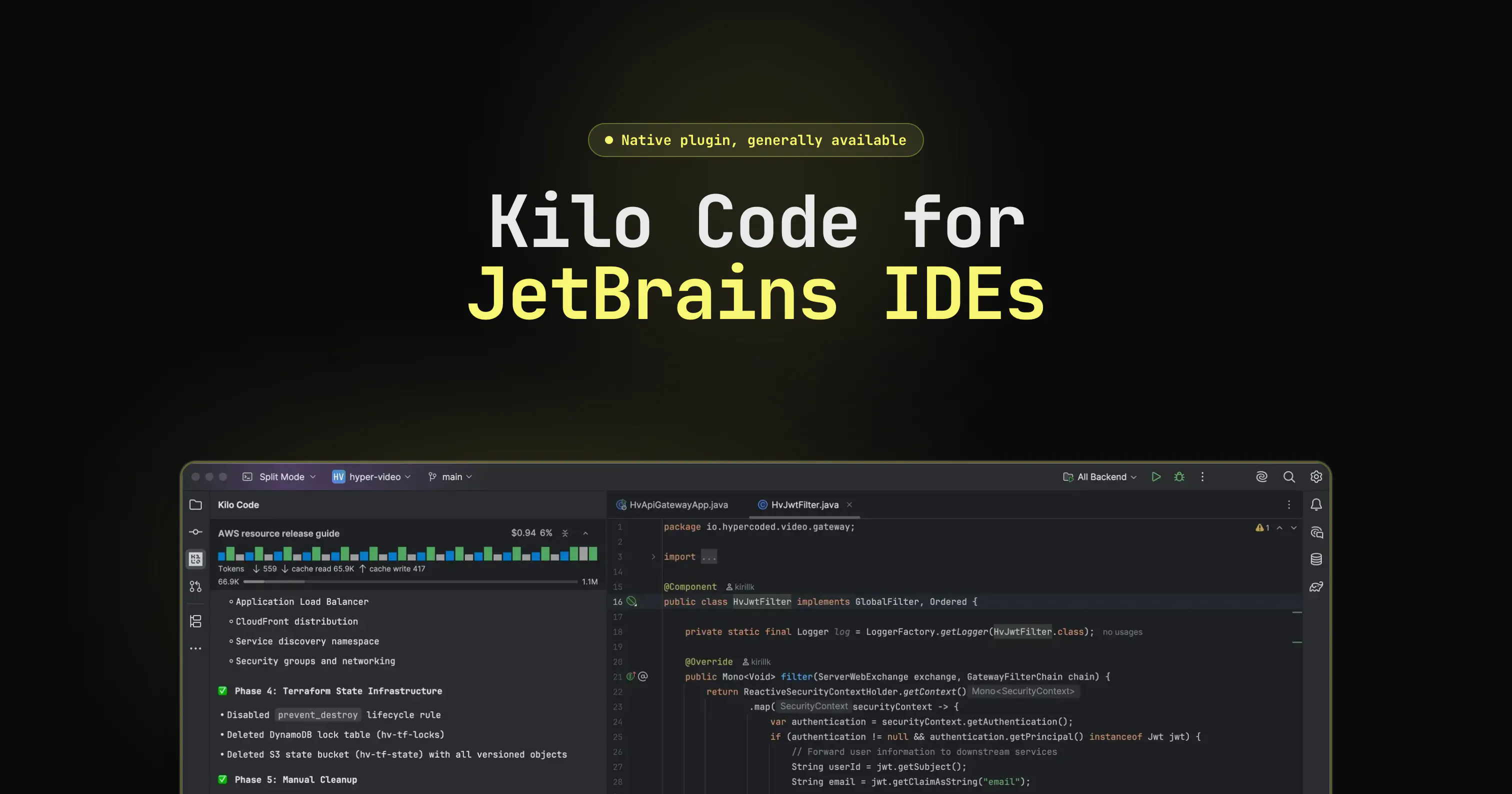
Kilo Code for JetBrains is a fully native, open-source coding agent for IntelliJ IDEA, WebStorm, PyCharm, GoLand, Rider, PhpStorm, CLion, RubyMine — any JetBrains IDE. Designed for both local and remote dev, with parallel agents in isolated worktrees, GitHub PRs and diffs inline, and 500+ models.
AI Analysis
Kilo Code for JetBrains is a fully native, open-source AI coding agent integrated directly into JetBrains IDEs such as IntelliJ IDEA, WebStorm, PyCharm, GoLand, and others. Core features include support for both local and remote development, parallel agents running in isolated worktrees, inline GitHub PRs and diffs, and compatibility with over 500 AI models. It solves key developer pain points like fragmented AI tool usage, lack of deep IDE integration, inefficient multi-task handling, and reliance on closed-source solutions. The value proposition is enhanced productivity through flexible, transparent, and seamless AI assistance that fits naturally into existing JetBrains workflows without context switching.
The 2025-2026 period is highly favorable with surging adoption of agentic AI in software development, maturing local and open-source LLM ecosystems, and growing demand for privacy-focused, IDE-native tools amid rising costs of proprietary AI services. Economic pressures favor open-source alternatives, and policy support for AI innovation aligns well. This product capitalizes on the shift from chat-based AI to deeply integrated coding agents. Rating: Excellent Timing.
Technical integration into JetBrains IDEs is achievable via their established plugin APIs, though managing parallel agents and multiple models adds complexity. Open-source nature reduces development costs through community contributions. Operational costs depend on model usage (local vs API). Low supply chain risks; scalability is strong for both individual and team use. Compliance with open-source and data privacy standards is manageable. Overall rating: High, supported by native design and model flexibility.
Primary users: Professional developers and software engineers using JetBrains IDEs (Java, Python, Go, PHP, etc.), including indie hackers, startups, and enterprise teams. Industries: Software development, IT services, tech. Geographic: Global with concentration in North America, Europe, and Asia-Pacific. Estimated TAM for AI coding tools exceeds $10B by 2026; SAM for IDE plugins ~$500M; SOM for open-source JetBrains agents ~$50-100M. Core pains: Poor IDE-AI integration and context loss. High willingness to pay for enterprise features or support despite open-source base.
Competition Level: Medium. Direct competitors: 1. JetBrains AI Assistant (jetbrains.com/ai), 2. GitHub Copilot (github.com/features/copilot), 3. Continue.dev (continue.dev), 4. Tabnine (tabnine.com), 5. Cody by Sourcegraph (sourcegraph.com/cody). Advantages: Fully open-source, supports 500+ models, unique parallel isolated worktrees, native GitHub PR integration. Disadvantages: Potentially less polished UI/UX than commercial tools, requires setup for models, limited brand recognition as a newer entrant compared to established players.
Upgrade Pro to unlock full AI analysis
Similar Products

Opaline
PostHog for team Claude Code and Codex sessions.
▲ 141 votes

React UI Kit V7
All the chat components you need. None of the complexity
▲ 115 votes

Replay QA Security Scan
Automated Penetration Testing for AI-Built Apps
▲ 102 votes

CodeBurn
See where your AI coding spend actually goes
▲ 101 votes

Audryo
Customer email your agent can operate.
▲ 68 votes

Refoid
Automate App Store refund responses and track every outcome
▲ 68 votes