Lattics
Brain-like knowledge base with AI writing & deep research
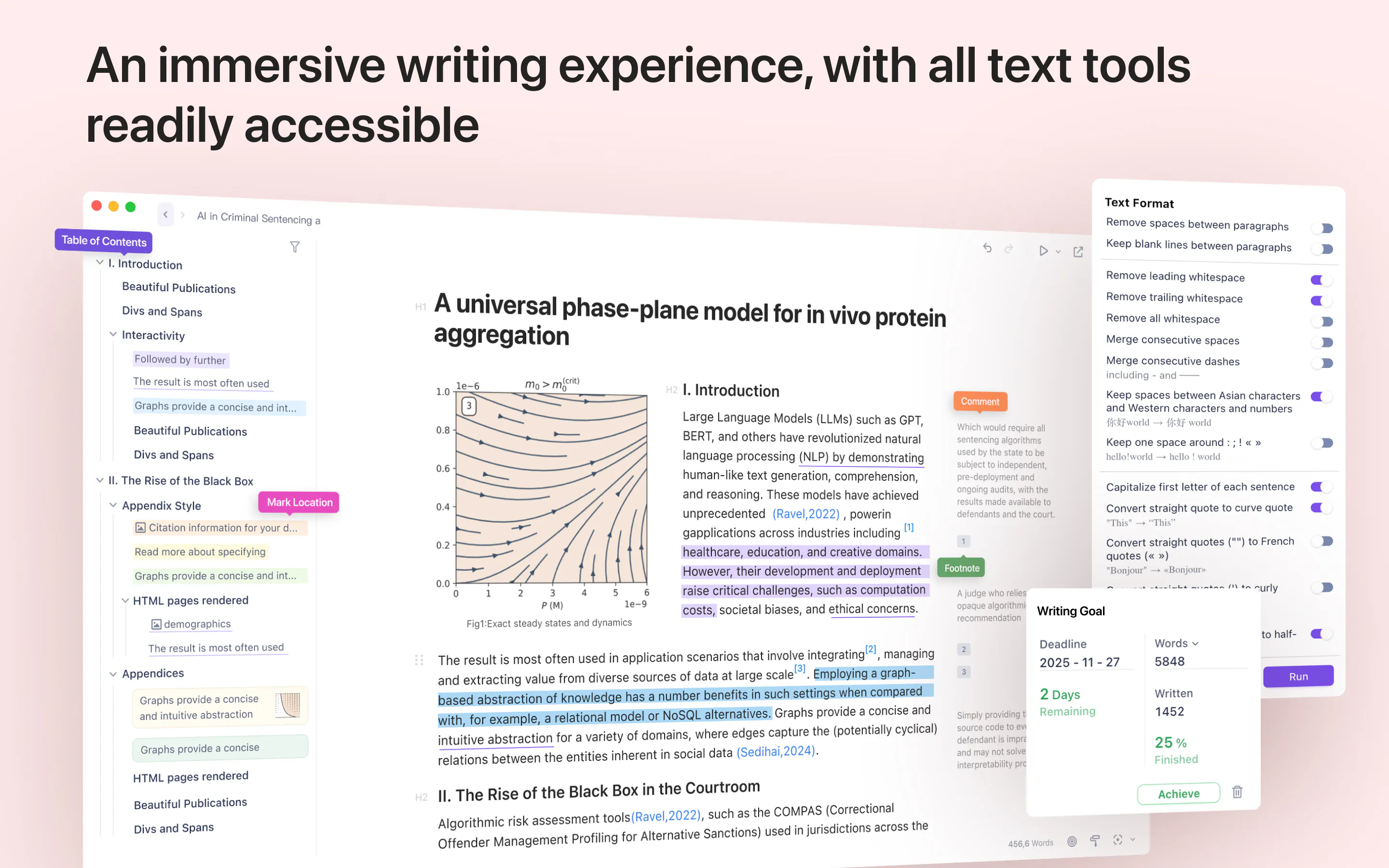
Three years ago, we launched Lattics as a "brain-like" knowledge management tool for writers and researchers. Today, we're back with something much bigger — AI-assisted writing that's deeply integrated into your research and creative workflow. *** 30% OFF DISCOUNT for Produnct Hunt, Limited for 50 *** Please check the discount code in the link :https://lattics.com/specialoffer/7fGKwQZEhV, You will get 30% discount code of Lattics Pro
AI Analysis
Lattics is a brain-like knowledge base that uses interconnected, neural network-inspired notes for organizing ideas. Evolved from a knowledge management tool for writers and researchers, it now deeply integrates AI-assisted writing and deep research tools into the creative workflow. Key features include AI content generation, intelligent research synthesis, and seamless knowledge connectivity. It addresses pain points like fragmented information, difficulty linking ideas, writer's block, and inefficient research-to-writing transitions. The value proposition is enhanced creativity and productivity through an intuitive, AI-powered platform that mimics brain functions for better knowledge management and output.
The market timing is favorable for 2025-2026 as LLM technology has matured, enabling seamless AI integration in productivity tools. User demand is shifting towards AI that enhances rather than replaces creative workflows, especially among writers and researchers. Economic pressures favor efficiency-boosting tools, and the post-AI hype phase focuses on practical applications like deep research integration. Excellent Timing.
High. The product has been iteratively developed over three years, demonstrating technical viability for the brain-like structure and AI integrations via existing LLM APIs. Development and operation costs are moderate, primarily AI inference and cloud hosting, covered by Pro subscriptions. Low supply chain or compliance risks as a digital SaaS tool. Strong scalability potential and team fit given their established experience in this domain.
Main target segments: Writers, researchers, academics, and content creators (ages 25-45) in industries such as publishing, education, journalism, and independent scholarship. Geographically global with likely adoption in English and Chinese-speaking markets. TAM/SAM/SOM for AI-enhanced knowledge management and writing tools is substantial and growing rapidly. Core pain points: disconnected notes, slow research synthesis, and transitioning insights into polished writing. High willingness to pay for Pro features among professionals seeking workflow efficiency.
Medium. Direct competitors: 1. Obsidian (obsidian.md), 2. Roam Research (roamresearch.com), 3. Notion (notion.so), 4. Mem (getmem.com), 5. Capacities (capacities.io). Advantages vs competitors: Unique brain-like neural structure with tighter AI writing/research workflow integration tailored for creators; established three-year foundation. Disadvantages: Smaller brand recognition than Notion or Obsidian; potentially higher learning curve for the lattice system; pricing (with 30% PH discount on Pro) must compete with free tiers offered by others. Differentiation lies in the depth of AI embedded directly in the research-to-writing process.
Upgrade Pro to unlock full AI analysis
Similar Products

Cohere Parse 5
Turn complex docs, tables & images into AI-ready data
▲ 158 votes

Opaline
PostHog for team Claude Code and Codex sessions.
▲ 141 votes

Adapt
The company brain that gets work done
▲ 124 votes
Kosshi
Simple, fast outliner for Mac and iPhone.
▲ 90 votes

WikiFix for Confluence
Find and fix issues in your knowledge base
▲ 86 votes

Refoid
Automate App Store refund responses and track every outcome
▲ 68 votes