
Lexi
The operating system for legal work
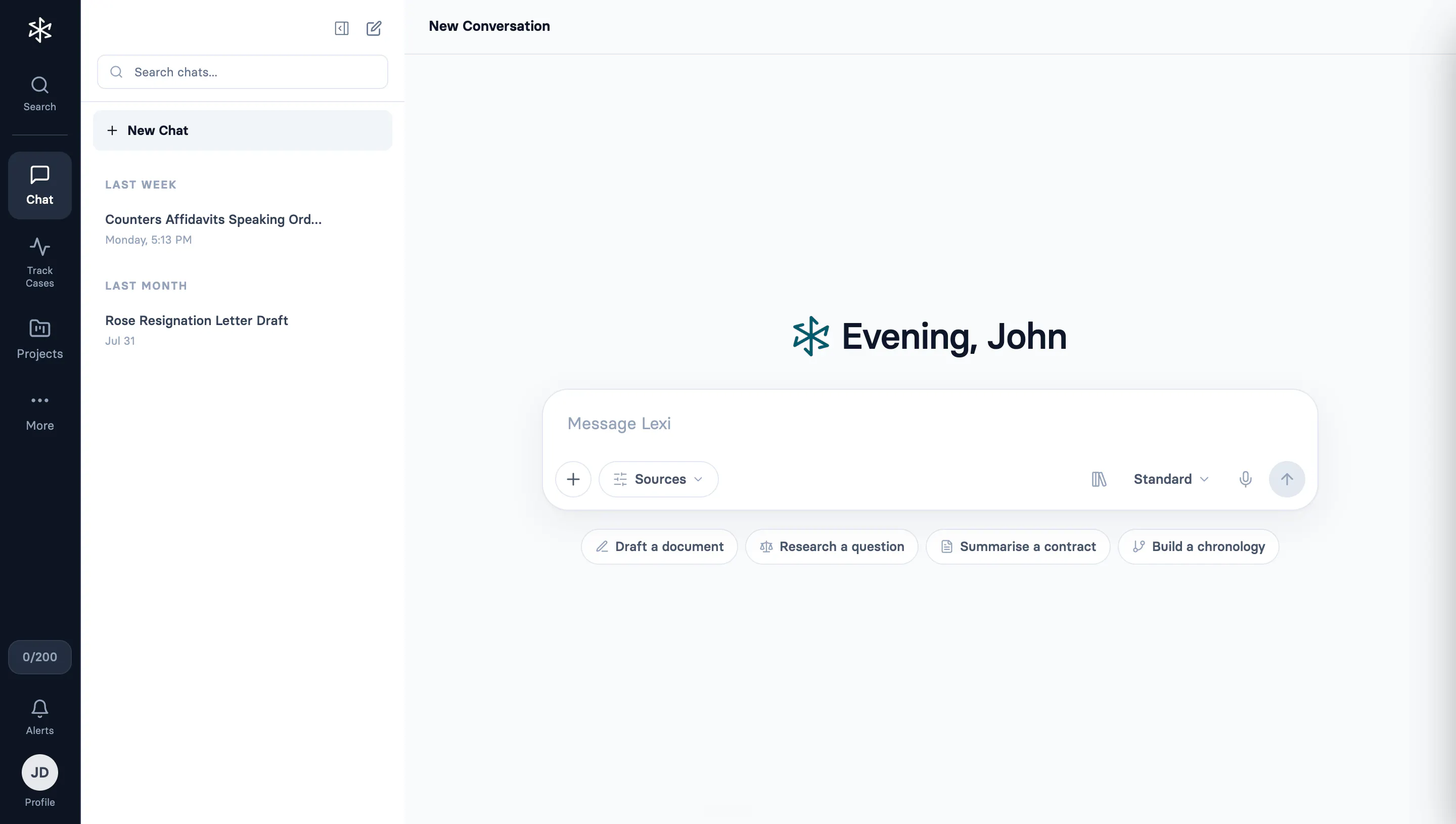
Lexi is the operating system for legal work. Legal teams use Lexi to draft, review, research, organize matter knowledge, and track every matter in one place, while lawyers stay focused on judgment, strategy, counsel, advocacy, and clients.
AI Analysis
Lexi is an all-in-one operating system for legal work that enables legal teams to draft, review, research, organize matter knowledge, and track matters in a unified platform. It solves key pain points including fragmented tools, inefficient knowledge management, time wasted on administrative tasks, and difficulty maintaining focus on core legal activities. Unique selling points include centralizing all matter-related workflows while allowing lawyers to prioritize judgment, strategy, advocacy, and client relationships. The value proposition is boosted productivity, streamlined operations, and enhanced focus for legal professionals through an integrated SaaS solution.
The timing is favorable for 2025-2026 as AI tools for professional services are maturing rapidly, legal tech adoption is accelerating due to demands for efficiency and cost reduction, and user needs for integrated platforms are rising amid remote/hybrid work trends. Economic pressures on law firms further drive productivity tool demand, though evolving AI regulations and data privacy policies add some caution. Overall: Excellent Timing.
Technical difficulty is moderate to high due to need for accurate AI in legal research/drafting and strict data security. Development and operation costs are significant for building a comprehensive platform. Compliance risks are high given legal industry regulations on client data. Scalability potential is strong as a SaaS model. Team would need legal domain expertise. Overall rating: Medium.
Main targets are lawyers, paralegals, and legal operations teams in small to large law firms, primarily in the US, UK, and common law jurisdictions. Demographics: professionals aged 28-60 with high disposable income for tools. Legal tech market is large with strong demand; core pain points are disjointed systems and non-billable time. Users show high willingness to pay for solutions improving efficiency and billable hours (pricing likely subscription-based).
Competition level: High. Direct competitors: Harvey (harvey.ai), Casetext/CoCounsel (casetext.com), Clio (clio.com), LexisNexis AI tools (lexisnexis.com), Thomson Reuters Westlaw. Advantages: Comprehensive 'OS' positioning integrates drafting/research/tracking better than fragmented tools; focuses on lawyer experience. Disadvantages: Newer entrant faces trust/brand challenges vs. established players with deeper legal databases; pricing and specific feature depth may need proving against specialized AI legal tools.
Upgrade Pro to unlock full AI analysis
Similar Products

Adapt
The company brain that gets work done
▲ 124 votes

Tapfree for Chrome
Voice dictation that adapts to what’s on your screen
▲ 122 votes

Kosshi
Simple, fast outliner for Mac and iPhone.
▲ 90 votes

Thoughts for Mac
Capture notes from your menubar using text, images or voice
▲ 90 votes

Saldor
Speed up procurement and AP.
▲ 78 votes

Refoid
Automate App Store refund responses and track every outcome
▲ 68 votes