
MarkIt
Trade compliance infrastructure for import workflows
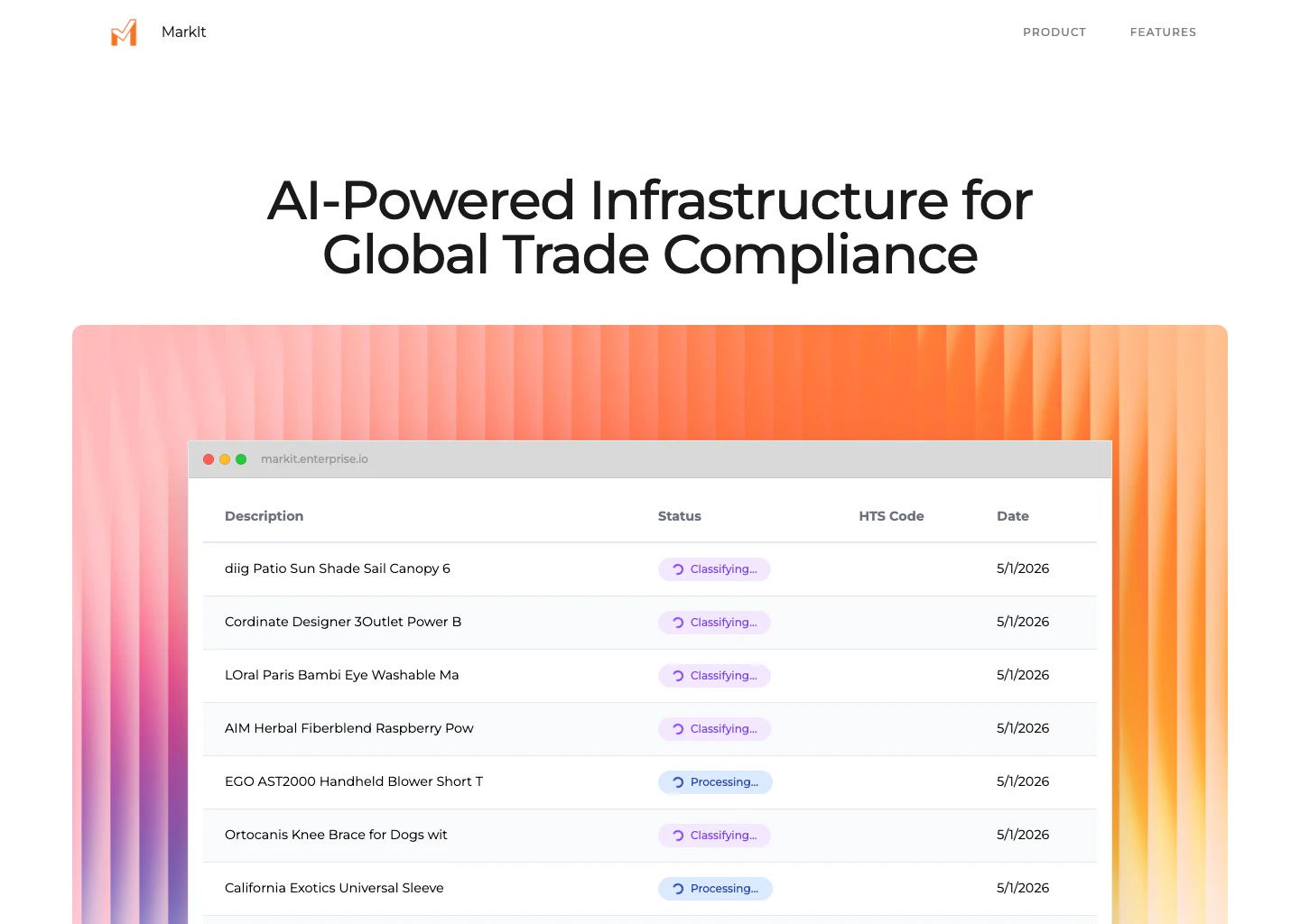
MarkIt helps enterprises manage classification, audit trails, and trade compliance governance across legal, procurement, and logistics workflows. it's what flexport promised, before becoming a normal customs broker / forwarder.
AI Analysis
MarkIt is a specialized trade compliance infrastructure for import workflows. Core features include product classification management, audit trail maintenance, and governance tools spanning legal, procurement, and logistics teams. It solves key pain points such as regulatory complexity, compliance errors risking fines/delays, fragmented workflows, and lack of transparency. USP: Delivers focused compliance infrastructure unlike Flexport which pivoted to standard brokerage/forwarding. Value proposition: Enables enterprises to achieve efficient, risk-reduced, audit-ready import operations through dedicated governance tools.
In 2025-2026, global trade faces rising tariffs, sanctions, supply chain regulations (e.g. CBAM, forced labor bans), and geopolitical tensions, driving demand for automated compliance tools. AI maturity for classification and digitalization of trade docs create favorable conditions. Singapore's position as a trade hub and pro-innovation policies further support it. This is Excellent Timing as enterprises prioritize compliance resilience over cost.
Technical difficulty is moderate with need for accurate regulatory databases, AI classification, and ERP integrations. Development/operation costs are medium for SaaS but high for legal content maintenance. Compliance risks are notable (inaccurate advice could lead to liability). Scalability is strong once data foundations are built. With Singapore Pitch backing, team likely has relevant fit. Overall rating: Medium due to domain expertise and regulatory update challenges.
Main targets: Mid-to-large enterprises with high import volumes in manufacturing, electronics, retail, and pharmaceuticals. Heavy focus on Singapore and Southeast Asia, with potential in EU/US markets. TAM for global trade compliance software ~$3B (growing 10%+ CAGR), SAM (Asia enterprise segment) ~$600M, SOM (initial Singapore-focused) ~$30-50M. Core pain points: HS classification accuracy, audit readiness, cross-department coordination. High willingness to pay (subscription $10K-$100K+/yr) to avoid penalties exceeding $1M.
Competition level: Medium. Direct competitors: 1. Flexport (flexport.com) - offers compliance but as part of broader forwarding. 2. Descartes Systems (descartes.com) - comprehensive trade compliance software. 3. Thomson Reuters ONESOURCE (onesource.thomsonreuters.com) - global trade management. 4. Integration Point (integrationpoint.com, now part of SAP). 5. Customs4Trade (customs4trade.com). Advantages: Niche focus on infrastructure/governance with better workflow integration and modern approach vs bloated enterprise suites. Disadvantages: Likely smaller database, less brand recognition, and fewer global offices compared to incumbents. Pricing presumed usage-based SaaS vs their large enterprise contracts.
Upgrade Pro to unlock full AI analysis
Similar Products
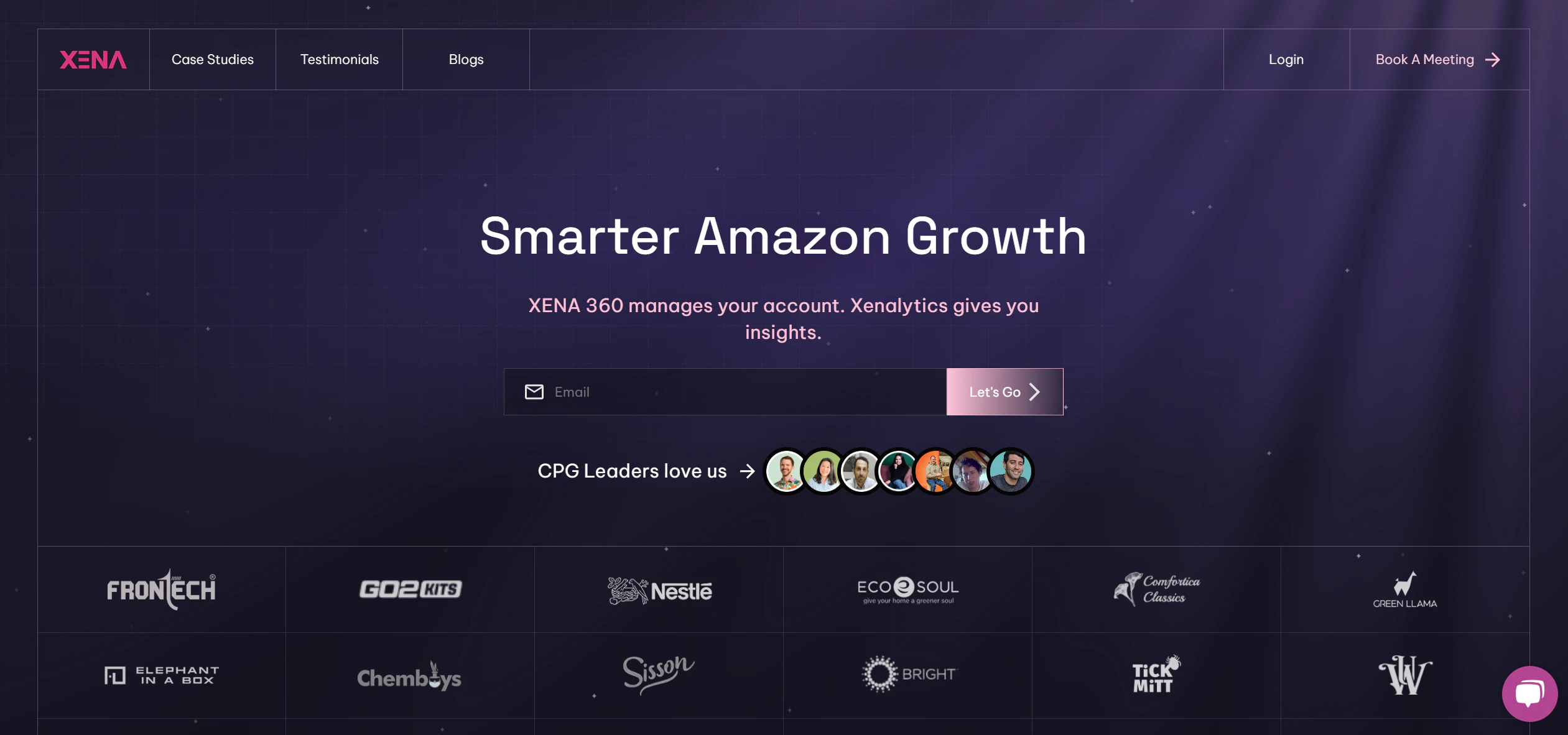
Xena Intelligence
Amazon growth analytics for CPG brands
▲ 67 votes

Betterteem
AI attrition forecasting for workforce teams
▲ 67 votes

Greenmentor.co
ESG training and carbon management platform
▲ 66 votes

MyGigsters
Payments infrastructure for gig economy platforms
▲ 64 votes

Rey Assurance
Digital health app for care and insurance workflows
▲ 62 votes

QuikBot Technologies
Autonomous delivery platform for last-mile logistics
▲ 62 votes