
Microflow
Microcontrollers made simple.
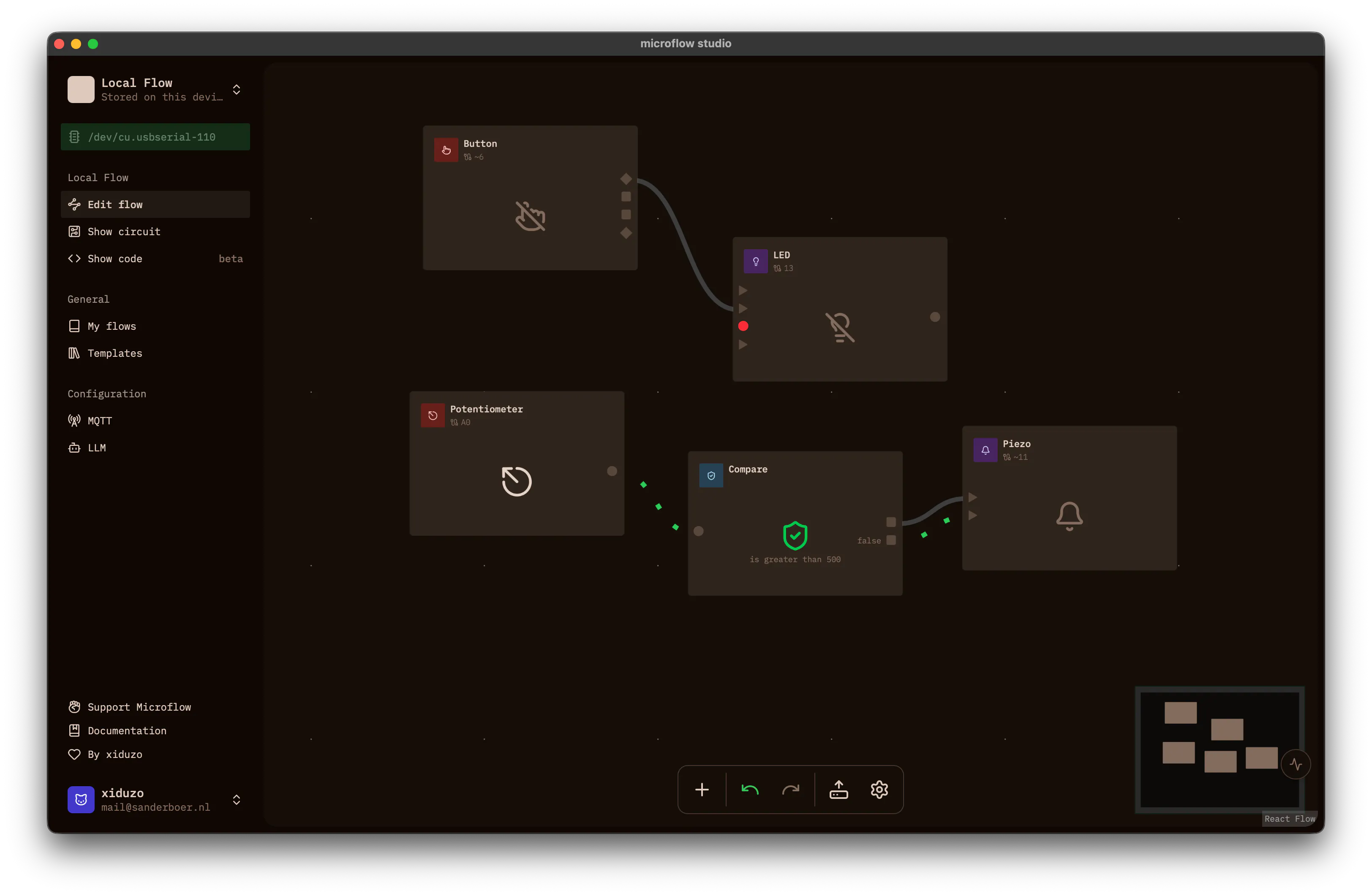
Microflow is a set of tools to make it easier to start prototyping for interactivity. Fully open-source, forever free!
AI Analysis
Microflow is a fully open-source, forever free set of tools that simplifies prototyping interactivity with microcontrollers. Core features focus on easing the start of hardware projects through accessible interfaces, design tool integrations, and GitHub compatibility. It addresses key user pain points such as the complexity and steep learning curve of traditional microcontroller programming for non-specialists. The unique selling point is democratizing hardware prototyping by removing cost barriers and keeping it open forever. Overall value proposition: enabling creators, designers, and makers to quickly bring interactive ideas to life without technical or financial hurdles.
The timing is favorable for 2025-2026 as IoT, edge computing, and AI-integrated devices continue to expand rapidly, increasing demand for accessible prototyping tools. Technology for open-source microcontroller platforms is mature, user demands are shifting towards simpler, no-code/low-code solutions amid maker and indie hardware trends. Economic pressures favor free tools, with supportive policies for open innovation. Excellent Timing.
Overall feasibility is high. Technical difficulty is manageable leveraging existing open-source embedded libraries; development and operation costs are low due to community-driven model. Minimal supply chain or compliance risks as it provides software/tools rather than physical hardware. Strong scalability via GitHub contributions, though team fit depends on embedded systems expertise. High.
Main target segments: Makers, product designers, educators, and hobbyists in prototyping and interactivity (ages 18-40, tech-savvy). Industries: DIY electronics, education (STEM), indie hardware development. Geographic: Global with concentration in US, Europe, China. Market size: Growing open-source hardware sector (TAM ~$15B for broader electronics prototyping, SAM ~$2B for dev tools, SOM smaller for new entrants). Core pain points: Complex setup and coding for microcontrollers. Willingness to pay: Moderate; users often support via donations/sponsorships despite free core product.
Competition level: Medium. Direct competitors: Arduino IDE (arduino.cc), PlatformIO (platformio.org), Wokwi (wokwi.com), Tinkercad (tinkercad.com), CircuitPython (adafruit.com/circuitpython). Advantages: Simpler focus on interactivity, fully open-source with no restrictions, strong design tools/GitHub emphasis. Disadvantages: Likely smaller ecosystem and community compared to Arduino; may require more validation for advanced use cases. Differentiation through 'made simple' approach helps but faces pressure from established free tools.
Upgrade Pro to unlock full AI analysis
Similar Products

Loot
Collect your favorite things in real life
▲ 115 votes

CodeBurn
See where your AI coding spend actually goes
▲ 101 votes

gg-friggin-ez
Fast, cheap profanity and toxicity screening via Jev & Laya
▲ 88 votes

Polygram
AI-native design and coding app to build mobile & web apps
▲ 81 votes

Prowler Cloud
Where your AI agent becomes a cloud security defender
▲ 64 votes

Poddle
Swing your phone, play pickleball on any computer!
▲ 62 votes