
Polygram
AI-native design and coding app to build mobile & web apps
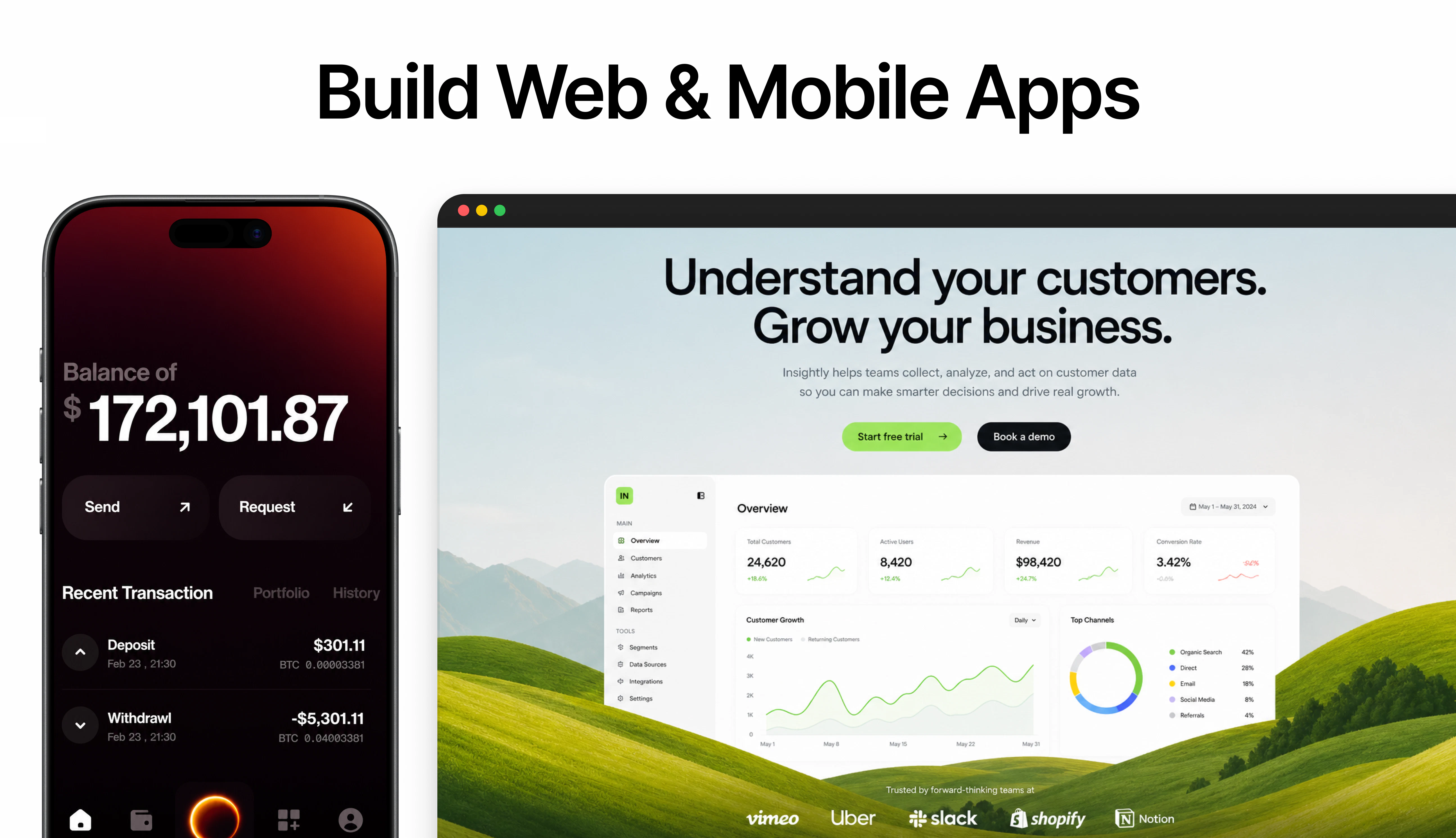
Polygram is an AI-native design and coding app to build mobile & web apps. Instead of blindly vibe-coding from a prompt, Polygram first understands your idea, expands it into a product plan, designs complete app screens on an infinite AI canvas, and then turns them into production-ready apps. Build mobile apps, web apps, dashboards, SaaS tools, and more — faster and with fewer wasted tokens.
AI Analysis
Polygram is an AI-native design and coding app that builds mobile, web apps, dashboards, and SaaS tools. It understands user ideas, expands them into product plans, generates complete app screens on an infinite AI canvas, then produces production-ready code. USP: structured workflow avoiding blind vibe-coding and token waste. Solves pain points of inefficient prompting, fragmented design-to-code processes, and high iteration costs in traditional AI tools. Value proposition: faster, higher-quality app creation with better efficiency.
In 2025-2026, timing is favorable with maturing multimodal LLMs for design/code gen, surging demand for AI-assisted no-code tools amid developer shortages, and economic focus on rapid prototyping/efficiency. AI adoption in product development is accelerating. Excellent Timing.
Medium feasibility. Technical difficulty is high for seamless integration of idea understanding, planning, infinite canvas design, and cross-platform code generation. AI inference costs are significant but manageable with optimization. Low compliance risks for SaaS; strong scalability potential via cloud. Relies on advanced AI models which are increasingly accessible.
Main segments: indie developers, UI/UX designers, startup founders, non-technical entrepreneurs in tech (primarily North America, Europe). TAM for AI dev tools projected >$10B by 2026; SAM for AI app builders ~$1-2B. Core pains: slow design-to-code cycles, high dev costs, prompt inefficiency. High willingness to pay for time-saving subscriptions.
Competition level: Medium. Direct competitors: v0 (v0.dev), Bolt.new (bolt.new), Lovable (lovable.dev), Replit Agent (replit.com), Dora AI (dora.ai). Advantages: structured idea-to-plan-to-design-to-code on infinite canvas, reduced token waste vs prompt-only tools. Disadvantages: potentially steeper learning curve than simple prompt-to-app competitors; newer entrant with less established user base.
Upgrade Pro to unlock full AI analysis
Similar Products

Auriko
Trading desk for LLM calls
▲ 332 votes

Cohere Parse 5
Turn complex docs, tables & images into AI-ready data
▲ 158 votes

Opaline
PostHog for team Claude Code and Codex sessions.
▲ 141 votes

Adapt
The company brain that gets work done
▲ 124 votes

Tapfree for Chrome
Voice dictation that adapts to what’s on your screen
▲ 122 votes

CodeBurn
See where your AI coding spend actually goes
▲ 101 votes