
Muse Gadgets
Meta's open-source kit for building your own AI gadgets
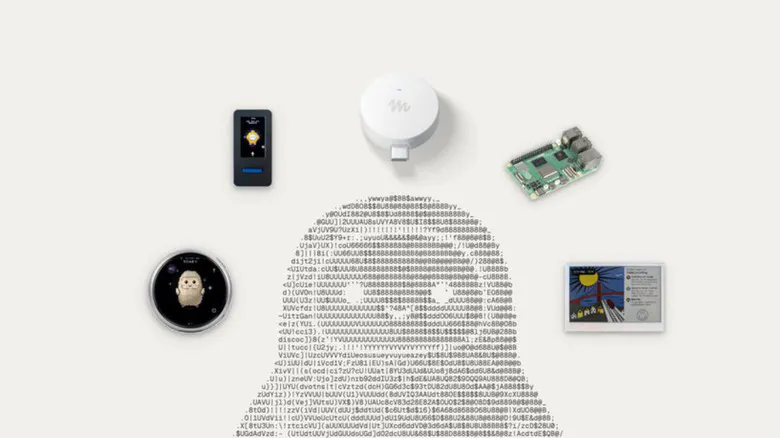
Muse Gadgets is Meta's open-source hardware toolkit for bringing Muse into the physical world. Connect an ESP32, Raspberry Pi, or Linux device to displays, microphones, speakers, buttons, sensors, and more, then let Muse interact through the hardware you build. Make a pocket AI companion, e-ink briefing display, smart-home controller, TV interface, or something entirely your own. SDKs and firmware are open source under Apache 2.0.
AI Analysis
Muse Gadgets is Meta's open-source hardware toolkit designed to integrate Muse AI into the physical world. It allows users to connect ESP32, Raspberry Pi, or Linux devices to peripherals including displays, microphones, speakers, buttons, and sensors. This enables creation of custom AI gadgets like pocket companions, e-ink briefing displays, smart-home controllers, or TV interfaces. SDKs and firmware are fully open under Apache 2.0. Core USPs are flexibility, openness, and Meta's AI backing. It solves pain points of proprietary closed systems and complex custom hardware-AI integration, empowering makers with a value proposition of unlimited creativity for personalized real-world AI interactions.
In 2025-2026, AI edge computing is maturing rapidly with growing demand for on-device personalized AI amid rising privacy concerns. The success and learnings from early AI gadgets (e.g. Rabbit R1) combined with strong open-source momentum and supportive tech policies make this an ideal window for an accessible AI hardware toolkit. User interest in DIY AI is peaking. Excellent Timing.
Technical difficulty is medium-low as it utilizes mature, widely available platforms (ESP32/RPi) with ready SDKs and firmware. Development and operation costs are low for an open-source project; supply chain for components is stable with minimal compliance risks under Apache 2.0. High community scalability potential. Overall rating: High. Key reasons include leveraging existing ecosystems and Meta's resources.
Main segments: DIY makers, hardware/AI developers, tinkerers and educators (ages 18-45, tech-savvy). Industries include IoT, prototyping, consumer electronics and open-source communities. Geographic focus: Global with concentration in North America, Europe, and East Asia. Estimated TAM for AI hardware dev tools is multi-billion; SAM for open-source kits in maker space is several hundred million; SOM depends on adoption. Core pains: barriers to integrating advanced AI with custom hardware. Moderate willingness to pay for components, kits or advanced support.
Competition level: Medium. Direct competitors: 1. Arduino with AI/ML integrations (arduino.cc), 2. Raspberry Pi AI Camera and kits (raspberrypi.com), 3. NVIDIA Jetson series for edge AI (nvidia.com), 4. Particle Matter IoT platform (particle.io). Advantages: Meta AI model integration, full Apache 2.0 openness, broad device compatibility and example projects. Disadvantages: Requires user assembly and coding knowledge vs more plug-and-play commercial products; less marketing than consumer-focused gadgets.
Upgrade Pro to unlock full AI analysis
Similar Products

Auriko
Trading desk for LLM calls
▲ 332 votes

Cohere Parse 5
Turn complex docs, tables & images into AI-ready data
▲ 158 votes

Opaline
PostHog for team Claude Code and Codex sessions.
▲ 141 votes

Adapt
The company brain that gets work done
▲ 124 votes

Tapfree for Chrome
Voice dictation that adapts to what’s on your screen
▲ 122 votes

CodeBurn
See where your AI coding spend actually goes
▲ 101 votes