
OpenClaw 2.0
The AI that really does things
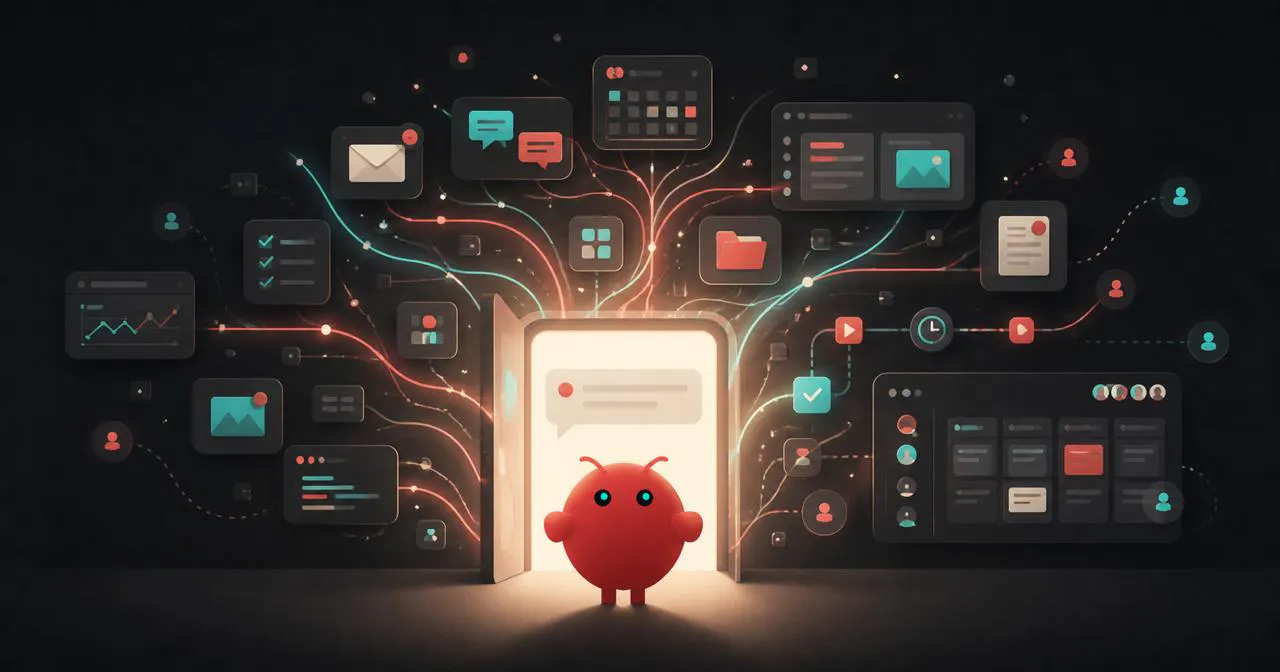
OpenClaw 2.0 simplifies setup by detecting ChatGPT or Claude keys automatically and lets configuration happen through chats with the agent itself. It adds multiplayer team features for sharing sessions, refreshed browser tools for better tracking, and memory upgrades, all while running personal AI helpers locally on devices for tasks like browser control and file management.
AI Analysis
OpenClaw 2.0 is a locally running AI agent for practical tasks including browser control and file management. Core features include automatic detection of ChatGPT/Claude API keys, conversational setup and configuration directly with the agent, multiplayer team session sharing, upgraded browser tools for improved tracking, and enhanced memory systems. It solves key pain points such as complex installation processes, lack of persistence/memory in AI interactions, and absence of collaborative features in single-user tools. The value proposition centers on delivering a private, actionable AI that truly 'does things' on user devices, simplifying automation for individuals and teams.
The 2025-2026 period aligns perfectly with surging demand for agentic AI, maturing local LLM capabilities, heightened privacy regulations, and user shift toward tools that execute real digital tasks rather than just generate text. Developer focus on automation via GitHub and bots further supports adoption. Economic pressures for productivity gains make this ideal. Excellent Timing.
Technical challenges exist in ensuring reliable local browser automation and cross-platform compatibility, with moderate development and operation costs for maintaining local execution and team features. Low supply chain risk as a software product, though AI compliance and scalability of multiplayer sessions pose considerations. Team fit appears strong given the 2.0 iteration. Overall Medium feasibility due to industry-wide hurdles in agent reliability despite local advantages.
Primary segments: Developers, AI enthusiasts, and small technical teams focused on automation (demographics: tech professionals 25-45 years old). Industries: Software development and digital productivity. Geographic: Global with heavy adoption in US and Europe. TAM for AI agent tools is substantial (multi-billion by 2026), with SAM for local/collaborative agents in hundreds of millions and SOM niche in tens of millions. Core pain points include tedious manual digital tasks and complex AI onboarding. High willingness to pay for seamless team and productivity features.
Medium. Direct competitors: 1. Open Interpreter (openinterpreter.com), 2. Auto-GPT (github.com/Significant-Gravitas/AutoGPT), 3. MultiOn (multion.ai), 4. Adept AI (adept.ai), 5. Lindy (lindy.ai). Advantages vs competitors: Automatic key detection, fully chat-based configuration, unique multiplayer/team sharing, strong local privacy focus, and memory upgrades. Disadvantages: Potential hardware demands for local running, less established brand than some cloud alternatives, and browser tools may trail specialized cloud agents in polish.
Upgrade Pro to unlock full AI analysis
Similar Products

Opaline
PostHog for team Claude Code and Codex sessions.
▲ 141 votes

Cercle
The bat signal for your closest friends.
▲ 121 votes

Orus
Claude for investing in perpetuals
▲ 121 votes

Replay QA Security Scan
Automated Penetration Testing for AI-Built Apps
▲ 102 votes

Audryo
Customer email your agent can operate.
▲ 68 votes

Refoid
Automate App Store refund responses and track every outcome
▲ 68 votes