
Oxlo.ai
Scale across AI models without scaling your bill
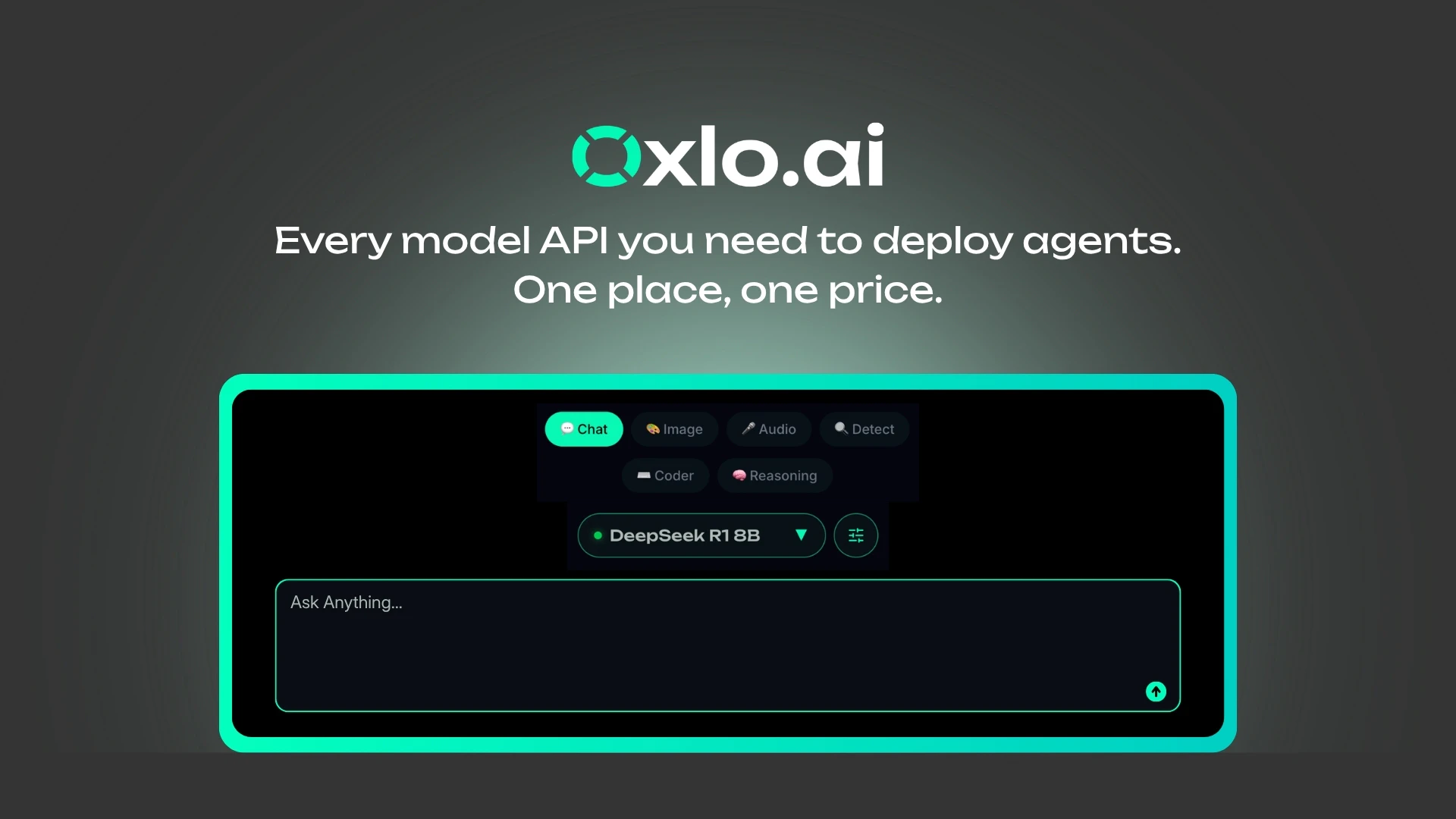
Most AI teams pick a model first and discover the bill later. We built Oxlo.ai to change that. Access 35+ frontier AI models including DeepSeek V4 Pro, Kimi K2.6, GLM 5, Qwen, Llama, and Mistral through a single API. Compare models, calibrate responses, and choose the right model for each use case. Scale across AI models with predictable monthly subscriptions, benchmark-grade performance, generous usage limits, and we never train on your data.
AI Analysis
Oxlo.ai provides a single API to access 35+ frontier AI models like DeepSeek V4 Pro, Kimi K2.6, GLM 5, Qwen, Llama, and Mistral. Core features include model comparison, response calibration, and per-use-case selection. It solves the common pain of selecting an AI model only to face unpredictable high bills later by offering predictable monthly subscriptions, benchmark performance, generous usage limits, and a strict no-training-on-user-data policy. The value proposition is flexible scaling across top models without cost escalation, giving AI teams better control, cost predictability, and optimized performance for their applications.
The 2025-2026 period features explosive growth in AI model releases, increasing enterprise adoption of generative AI, and strong demand for cost control amid economic pressures. Technology for unified routing and benchmarking is mature, while privacy concerns favor providers that don't train on user data. Changing demands favor flexibility over vendor lock-in. This aligns perfectly with market needs. Rating: Excellent Timing.
Technical difficulty is medium as it requires reliable routing, latency optimization, and integration with multiple upstream providers. Development and operation costs are manageable via cloud infrastructure but depend on usage volume. Supply chain risks are low; compliance is straightforward with the no-training policy. Scalability is high through subscription tiers. Overall rating: High, assuming the team has AI infrastructure experience.
Main target users are AI/ML engineers, developer teams, and tech companies building AI applications (startups to enterprises). Industries: software development, AI services, SaaS. Geographic distribution: global with strong interest in North America, Europe, and Asia (esp. China for native models like GLM/Qwen). TAM for AI inference APIs exceeds $15B by 2026; SAM for multi-model platforms ~$2-3B; SOM for subscription model ~$300M+. Core pain points: unpredictable costs and model selection friction. High willingness to pay for predictable budgeting and performance optimization.
Competition Level: Medium. Direct competitors: 1. OpenRouter (openrouter.ai), 2. Together AI (together.ai), 3. Fireworks AI (fireworks.ai), 4. DeepInfra (deepinfra.com), 5. Groq (groq.com). Advantages vs competitors: truly predictable flat-rate monthly subscriptions instead of token-based billing, strong inclusion of Chinese frontier models (Kimi, GLM, Qwen), and built-in comparison/calibration tools. Disadvantages: newer entrant with potentially smaller ecosystem and less brand recognition than established players; may have fewer models or slower feature velocity initially.
Upgrade Pro to unlock full AI analysis
Similar Products

Cohere Parse 5
Turn complex docs, tables & images into AI-ready data
▲ 158 votes

Adapt
The company brain that gets work done
▲ 124 votes

Tapfree for Chrome
Voice dictation that adapts to what’s on your screen
▲ 122 votes

React UI Kit V7
All the chat components you need. None of the complexity
▲ 115 votes

Replay QA Security Scan
Automated Penetration Testing for AI-Built Apps
▲ 102 votes

Refoid
Automate App Store refund responses and track every outcome
▲ 68 votes