Particle Studio
Transform Static Images Into Dynamic Particle Experiences
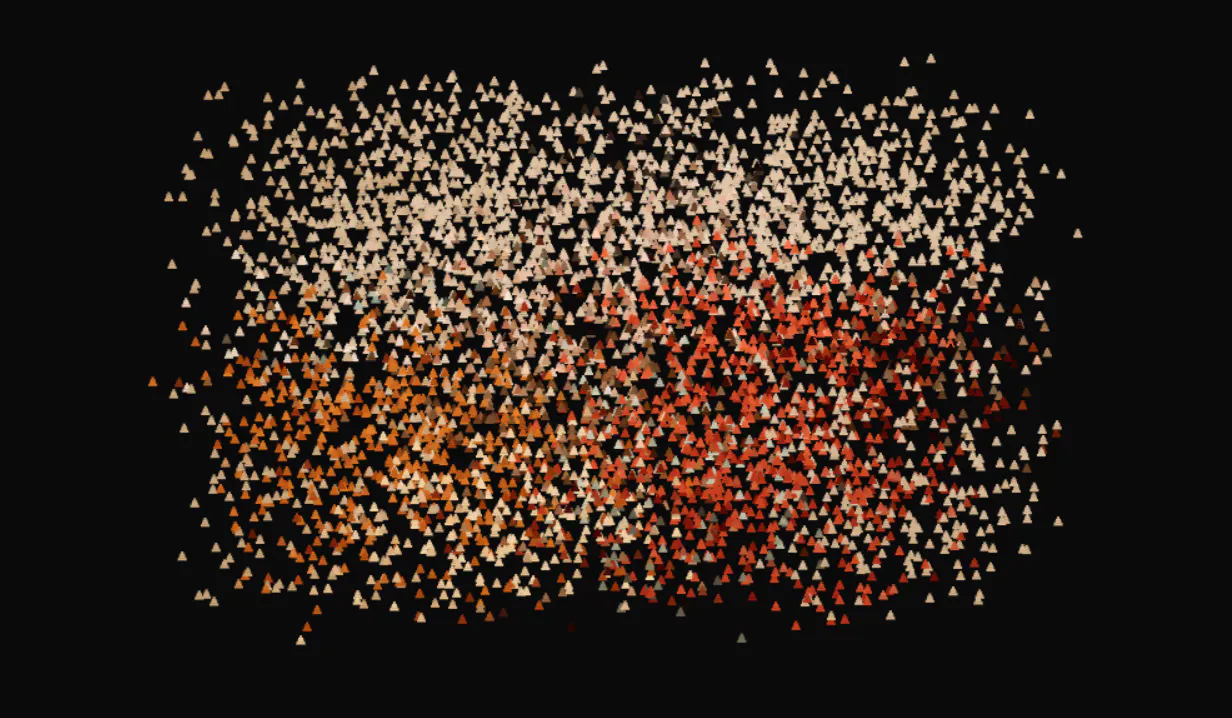
Particle Studio turns your images into interactive, customizable particle compositions. Upload an image, choose from circles, squares, triangles, or cubes, and fine-tune particle size, motion trails, and cursor interaction to create your own visual experience. When you're happy with the result, share it instantly with Copy Link or take it beyond the studio with Export HTML Bundle to create an offline, interactive version you can experiment with using your own images.
AI Analysis
Particle Studio is a no-code design tool that converts static images into interactive, dynamic particle compositions. Key features include image upload, selection of particle shapes (circles, squares, triangles, cubes), customization of size, motion trails, and cursor-based interactions. Users can instantly share creations via link or export an HTML bundle for offline experimentation and integration. It addresses the pain point of needing advanced coding or design skills to produce engaging web visuals, making particle effects accessible. USP is the seamless transformation of ordinary images into captivating, customizable experiences. Value proposition: Empowers designers, developers, and creators to quickly build and deploy interactive visuals without technical complexity.
The market timing is favorable for 2025-2026 due to maturing WebGL and canvas technologies enabling smooth particle rendering, rising demand for interactive no-code web experiences amid growing digital marketing and AI-driven design trends, and increasing adoption of dynamic visuals in social media and websites. Economic recovery supports investment in creative tools, with no major policy barriers. This aligns perfectly with the boom in accessible creative SaaS. Rating: Excellent Timing.
Technical difficulty is medium, relying on established web technologies like Canvas/WebGL for particles, with no complex AI or hardware needs. Development and operation costs are low-to-medium for a SaaS web app. Minimal supply chain or compliance risks (standard data privacy). Strong scalability via cloud hosting. High team fit for frontend developers. Overall rating: High, due to proven tech stack and low barriers to user acquisition and iteration.
Main target segments: Web designers, frontend developers, digital marketers, and no-code creators (ages 25-45, tech-savvy professionals), primarily in North America and Europe, with growing adoption in Asia. Industries include UI/UX design, advertising, and content creation. Estimated market: No-code design tools TAM ~$15B by 2026, SAM for interactive visual tools ~$2B, SOM for particle-specific niche ~$100M+. Core pain points: Time-consuming and skill-intensive creation of dynamic web effects. Potential willingness to pay: Moderate-to-high for premium features like advanced exports or subscriptions.
Competition level: Medium. Direct competitors: 1. tsParticles (https://particles.js.org), 2. particles.js (https://vincentgarreau.com/particles.js/), 3. CodePen particle demos, 4. Rive (https://rive.app/) for interactive animations, 5. LottieFiles (https://lottiefiles.com). Advantages: Specialized image-to-particle conversion, no-code simplicity, direct HTML export for offline use. Disadvantages: Newer entrant with potentially fewer advanced customization options or community support compared to established libraries; lacks integration depth of full animation suites.
Upgrade Pro to unlock full AI analysis
Similar Products

Opaline
PostHog for team Claude Code and Codex sessions.
▲ 141 votes

React UI Kit V7
All the chat components you need. None of the complexity
▲ 115 votes

Replay QA Security Scan
Automated Penetration Testing for AI-Built Apps
▲ 102 votes

CodeBurn
See where your AI coding spend actually goes
▲ 101 votes

Audryo
Customer email your agent can operate.
▲ 68 votes

Refoid
Automate App Store refund responses and track every outcome
▲ 68 votes