
Pocket by Meta
Vibe-code games, then share them like TikToks
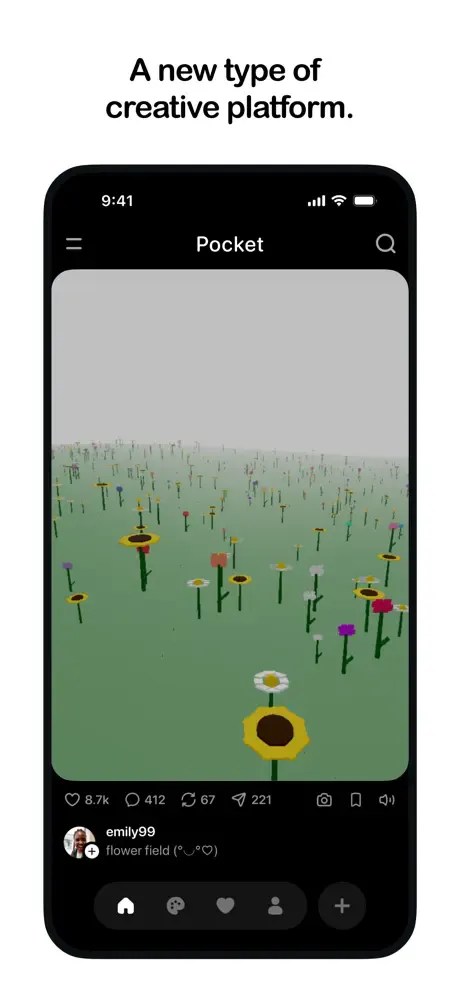
Pocket is Meta's new social app for creating, playing, and remixing interactive experiences with AI. Describe an idea and turn it into a playable "gizmo" that can respond to touch, motion, sound, photos, and even your camera. Share it to the feed, play what others have imagined, or remix their creations into something new. It's vibe coding turned into a social experience—no coding required.
AI Analysis
Pocket by Meta is an AI-driven social app enabling users to create playable 'gizmos'—interactive games and experiences—by simply describing ideas in natural language, with no coding needed. Gizmos respond to touch, motion, sound, photos, and camera inputs. Core features include sharing creations in a TikTok-style feed, playing others' inventions, and remixing them. It solves the pain point of technical barriers to game creation and limited interactive social content. USP is vibe-based 'coding' turned into a viral, community-driven experience. Value proposition: Democratizes creative expression, blending AI, gaming, and social media for fun, accessible innovation.
In 2025-2026, timing is favorable due to mature generative AI tech, rising demand for no-code creative tools, and user shift toward interactive over passive social media. GenZ seeks authentic creation and remixing experiences. Meta's AI push (e.g., Llama models) aligns well amid economic recovery supporting digital entertainment. Potential headwinds include AI regulation and content moderation challenges. Overall: Excellent Timing.
High. Meta possesses advanced AI capabilities, massive compute resources, and expertise in scalable social apps (Instagram, WhatsApp). Technical challenges in real-time multimodal AI on mobile are manageable with their R&D. Development costs are covered by Meta's budget, though ongoing inference costs could be high. Compliance risks around camera/privacy are notable but addressable. Strong scalability via network effects. Team fit excellent given Meta's talent pool.
Primary users: Gen Z and young Millennials (ages 13-35), creative gamers, hobbyist makers, and social media enthusiasts. Demographics skew tech-savvy, urban, balanced gender. Geographic: Global, starting with Android users in North America, Europe, and Southeast Asia. Industries: Gaming, digital content creation, social entertainment. TAM for social gaming and AI creator tools ~$150B+, SAM for no-code AI experiences ~$15B, SOM ~$1B initially. Core pains: Inability to easily prototype interactive ideas; desire for deeper engagement than scrolling. Willingness to pay: Moderate, via freemium model, virtual goods, or subscriptions.
Medium. Direct competitors: 1. Roblox (roblox.com) - extensive user-generated games but steeper learning curve vs. pure natural language. 2. Minecraft (minecraft.net) - creative building without strong AI. 3. TikTok (tiktok.com) - short-form creative sharing but limited interactivity. 4. Rosebud AI (rosebud.ai) - AI game prototyping. 5. Inworld AI (inworld.ai) - for NPC interactions. Advantages: Seamless AI description-to-play, Meta's massive distribution and social graph, true remixing like TikTok. Disadvantages: Potential AI inconsistency, privacy concerns with Meta/camera access, less established UGC ecosystem than Roblox, possible higher compute dependency.
Upgrade Pro to unlock full AI analysis
Similar Products

Cohere Parse 5
Turn complex docs, tables & images into AI-ready data
▲ 158 votes

Opaline
PostHog for team Claude Code and Codex sessions.
▲ 141 votes

Adapt
The company brain that gets work done
▲ 124 votes

Tapfree for Chrome
Voice dictation that adapts to what’s on your screen
▲ 122 votes

Orus
Claude for investing in perpetuals
▲ 121 votes

WikiFix for Confluence
Find and fix issues in your knowledge base
▲ 86 votes