Product Logic As A Service
Decision engine for developers. Language agnostic, low code.
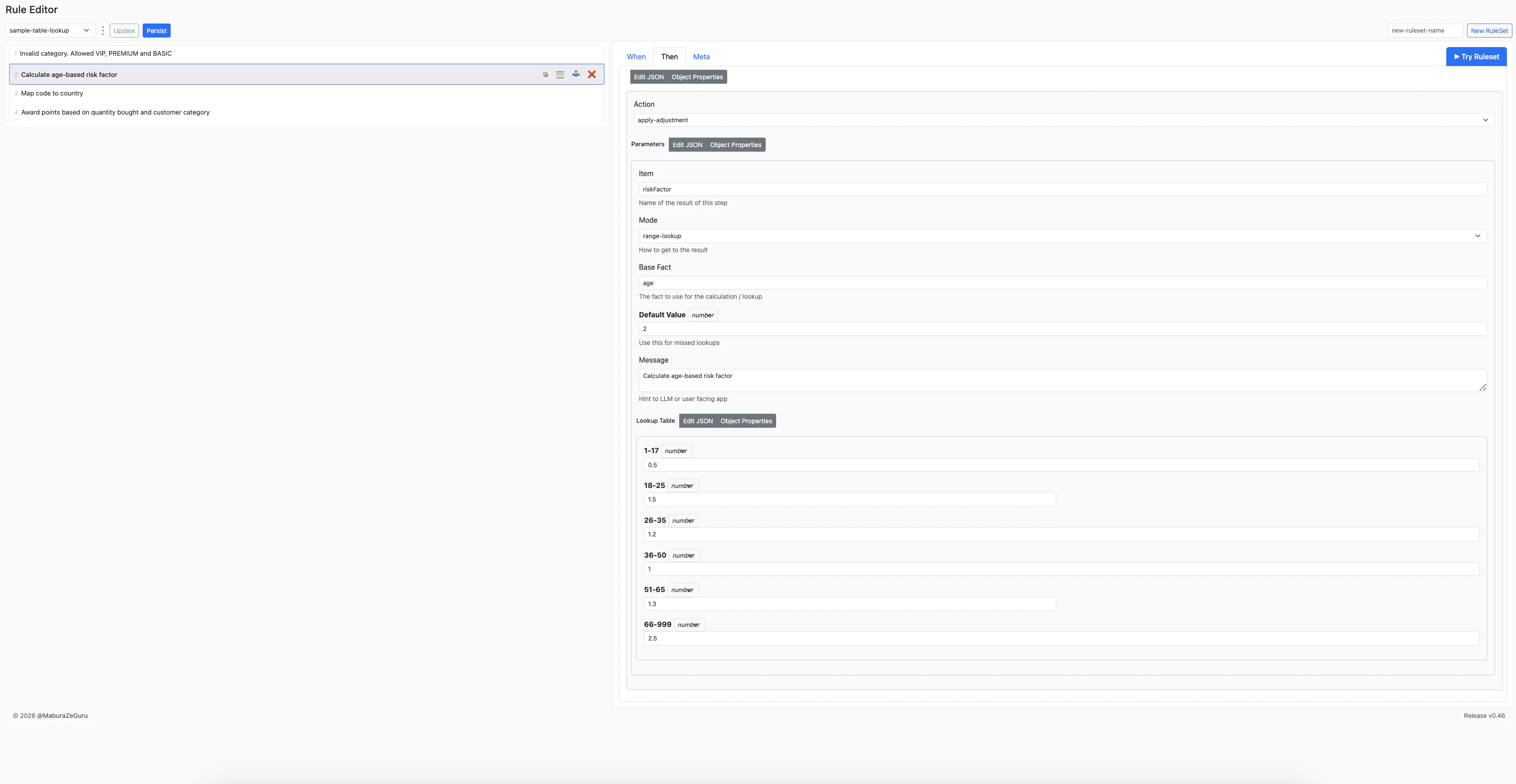
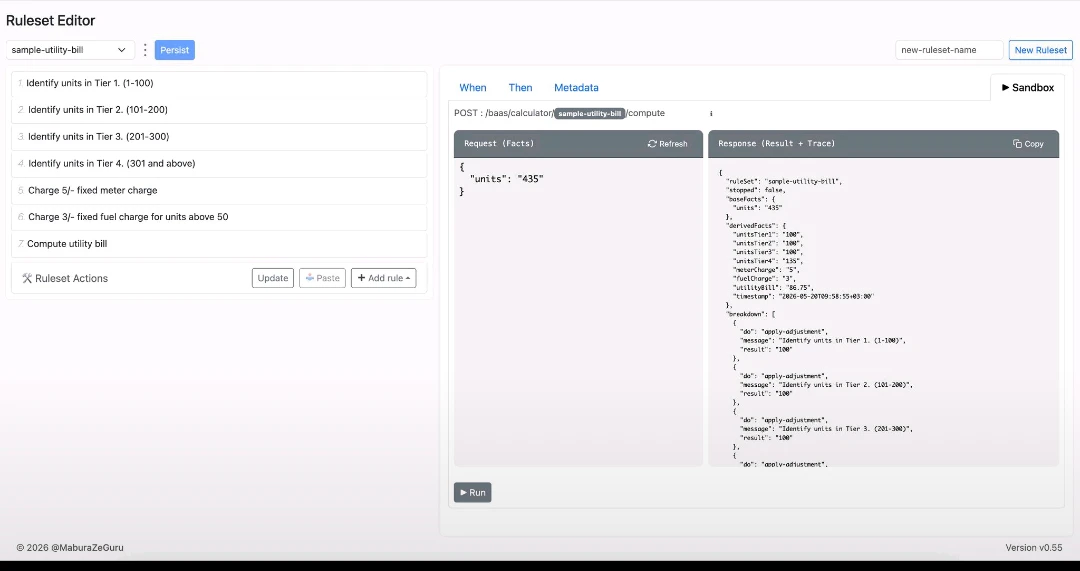
A developer companion for building dynamic calculators and product logic outside your core application/ system. Low code, API first, language agnostic and blazing fast with an inbuilt webui. Make business logic Flexible, Explainable, Fast
AI Analysis
Product Logic As A Service is a low-code, API-first decision engine that allows developers to build and manage dynamic calculators and complex product logic externally from their core applications. Core features include language-agnostic integration, blazing-fast execution, an intuitive web UI, and tools to make business rules flexible, explainable, and quick to iterate. It addresses key pain points like rigid hardcoded logic that slows updates, reduces transparency, and complicates maintenance in fast-evolving products. The value proposition is decoupling business logic for greater agility, faster deployment, and improved explainability without altering core codebases.
In 2025-2026, low-code/no-code adoption is accelerating, AI-enhanced decision tools are maturing, and developers demand agile ways to handle business rules amid rapid product iteration needs. Economic pressures favor efficient, scalable SaaS tools that reduce engineering overhead. This aligns well with trends in API-first architectures and explainable AI. Excellent Timing.
Technical implementation leverages mature rules engine tech with added low-code UI and API layers (medium difficulty). Development and operation costs are standard for SaaS API products. Low supply chain or compliance risks for a dev tool. Strong scalability via cloud infrastructure. High overall feasibility with good team fit for developer-focused products. Rating: High.
Primary users: Software developers, product engineers, and technical PMs in SaaS, fintech, and e-commerce companies. Geographic focus: North America and Europe-based tech firms. TAM for developer tools ~$15B, SAM for decision/logic platforms ~$1B, SOM ~$100M. Core pains: inflexible embedded logic hindering speed and transparency. High willingness to pay for productivity gains ($49-299/mo tiers typical).
Competition level: Medium. Direct competitors: 1. DecisionRules (decisionrules.io), 2. Camunda (camunda.com), 3. Rule Engine by FlexRule (flexrule.com), 4. JSON Rules Engine services, 5. Drools (drools.org). Advantages: simpler low-code focus, blazing speed, built-in web UI for non-engineers, strong explainability. Disadvantages: newer entrant with potentially fewer enterprise integrations and proven scale compared to Camunda or established rules platforms.
Upgrade Pro to unlock full AI analysis
Similar Products

Cohere Parse 5
Turn complex docs, tables & images into AI-ready data
▲ 158 votes

Opaline
PostHog for team Claude Code and Codex sessions.
▲ 141 votes

Coarena by Coasty
The arena where agents battle on real-world work
▲ 104 votes

Replay QA Security Scan
Automated Penetration Testing for AI-Built Apps
▲ 102 votes

Audryo
Customer email your agent can operate.
▲ 68 votes

Refoid
Automate App Store refund responses and track every outcome
▲ 68 votes