Psistar
The agentic team member for high-stakes operations
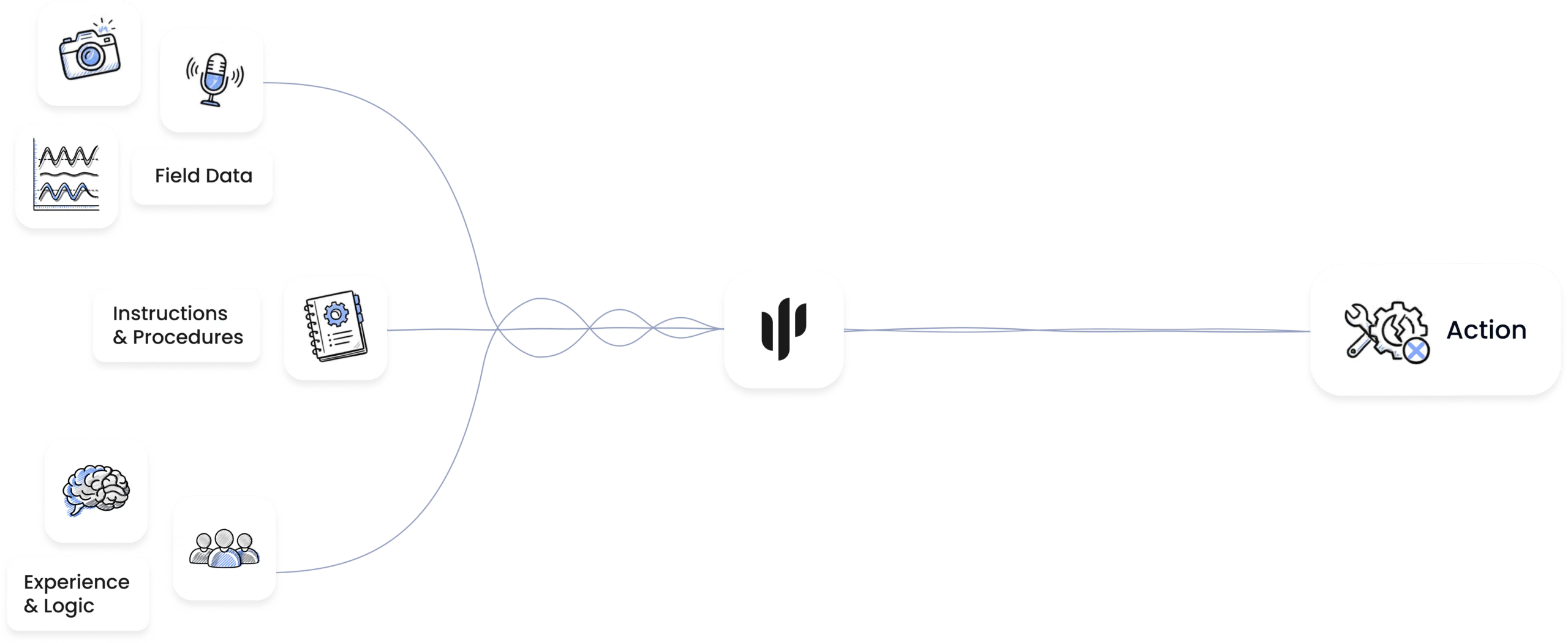
Psistar builds physics-informed foundation models that turn sensor streams and playbooks into offline decision support for operators in power, aerospace, defense, and industrial systems.
AI Analysis
Psistar builds physics-informed foundation models that turn sensor streams and playbooks into offline decision support for operators in power, aerospace, defense, and industrial systems. As the agentic team member for high-stakes operations, its core features include integrating real-time sensor data with procedural knowledge to deliver actionable insights without constant connectivity. It solves key pain points like information overload from sensors, complex decision-making in uncertain environments, and limited support in offline or remote scenarios. The value proposition is enhanced safety, efficiency, and reliability in critical physical systems through AI that respects physics and operational playbooks.
Favorable in 2025-2026 due to rapid maturation of foundation models and agentic AI, rising demand for resilient offline systems in critical infrastructure amid cybersecurity risks, edge computing growth, defense modernization, and industrial digital transformation. Geopolitical factors boost adoption in aerospace/defense. Excellent Timing.
Medium. High technical difficulty in developing physics-informed foundation models requiring AI and domain physics expertise. Significant development costs for training and validation; high compliance and security risks in defense/aerospace. Strong scalability potential post-development but depends on specialized team and data access. Key risks are regulatory hurdles and integration with legacy industrial systems.
Primary segments: operators, engineers, and decision-makers in power utilities, aerospace firms, defense contractors, and industrial manufacturing (demographics: technical professionals aged 30-55). Geographic focus: advanced industrial regions including US, Europe, Israel. Core pain points: processing multi-modal sensor data and adhering to playbooks under time pressure. High willingness to pay for proven risk-reducing tools. Market size not specified in sources; TAM likely large in industrial AI/defense sectors.
Medium. No direct competitors listed in provided sources. Similar players in adjacent spaces include PhysicsX (physicsx.ai) for physics-based ML, C3.ai (c3.ai) for industrial AI, Palantir (palantir.com) for defense analytics, and Siemens MindSphere for industrial IoT. Advantages: unique focus on offline, agentic, physics-informed models tailored to playbooks and high-stakes ops. Disadvantages: potentially higher specialization leading to longer sales cycles vs broader platforms.
Upgrade Pro to unlock full AI analysis
Similar Products

Bagel AI
Your Product Decisions Partner
▲ 73 votes
Xenaris
When a deal dies, nothing should be wasted
▲ 73 votes

Aiso
Rank your brand in ChatGPT, Gemini, and AI answers
▲ 67 votes

SaolaAI
Autonomous quality for engineering teams
▲ 63 votes

Reborn Medical
Real-time brain imaging for critical care teams
▲ 61 votes

Shopeaks
Social storefronts for posts, stories, and ads
▲ 60 votes