
Reborn Medical
Real-time brain imaging for critical care
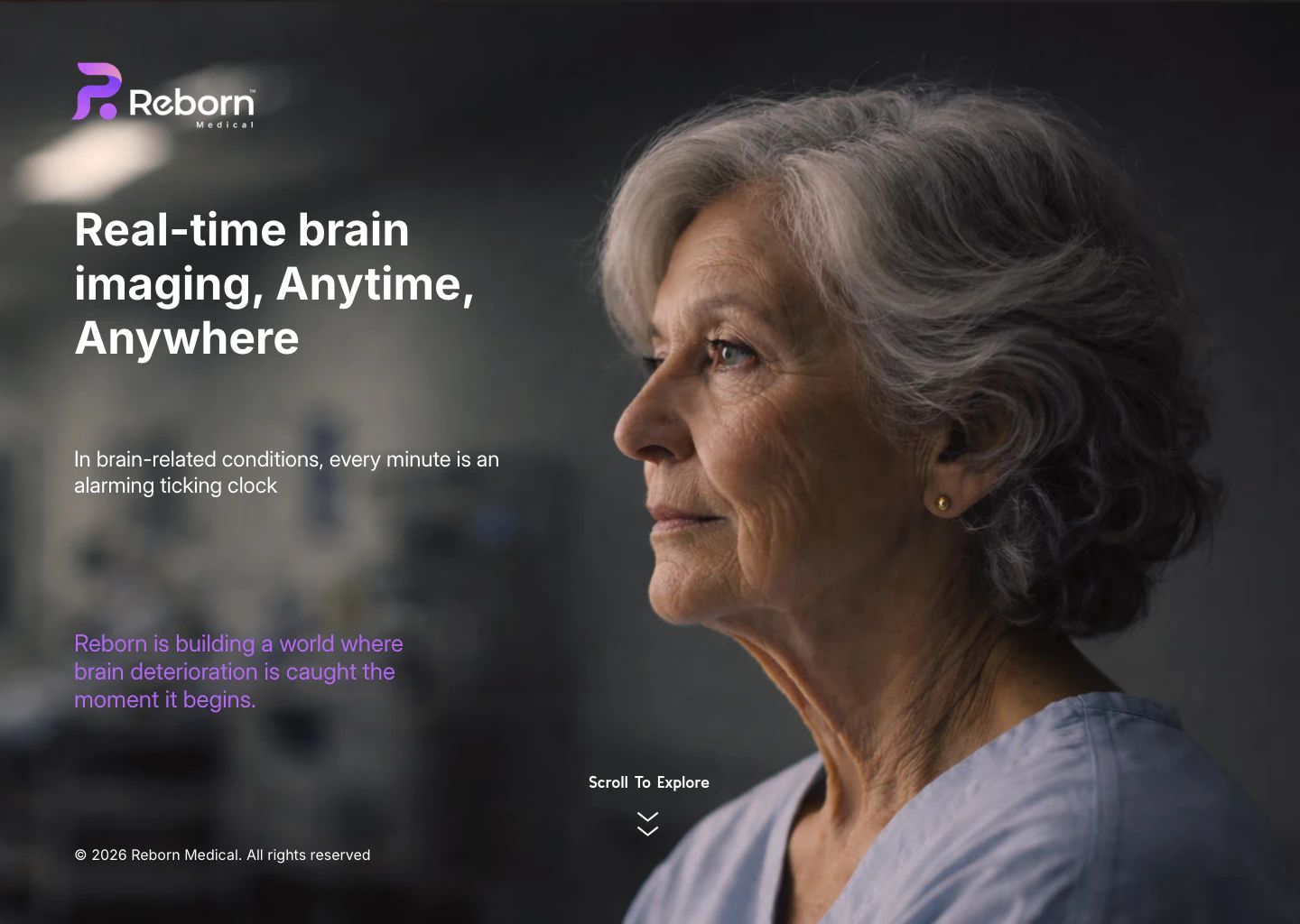
Reborn Medical is developing portable brain imaging to catch deterioration earlier, with real-time monitoring designed for urgent care decisions.
AI Analysis
Reborn Medical is developing portable brain imaging technology for real-time monitoring in critical care. Core features include continuous bedside imaging to detect brain deterioration earlier. It solves main user pain points like delayed detection and risks of transporting unstable patients for traditional CT/MRI scans in urgent settings. Unique selling points are its portability and design for immediate, data-driven decisions in emergencies. The overall value proposition is enabling faster interventions to improve outcomes in ICUs and critical care through accessible real-time insights.
In 2025-2026, market timing is favorable due to maturing portable sensor and AI imaging technologies, rising demand from aging populations needing better critical care, and healthcare systems prioritizing efficient, bedside solutions post-pandemic. Supportive innovation policies and economic pressures to reduce hospital costs align well. It is a good time as tech maturity meets urgent user needs for real-time monitoring tools. Rating: Excellent Timing.
Overall feasibility is Medium. Technical difficulty is high for accurate portable brain imaging; R&D and clinical validation costs are substantial. High compliance risks due to medical device regulations (FDA/CE marking). Supply chain for specialized hardware adds complexity. With a focused medtech team, fit is adequate and scalability is promising post-approval, but regulatory timelines are a key barrier. Supporting reasons: Strong clinical need but significant technical and approval hurdles.
Main target segments: Critical care physicians, neurologists, and ICU staff in hospitals, primarily in developed regions (US, Europe, Israel). Estimated market size: Large TAM in global neuromonitoring and portable imaging markets (multi-billion USD potential), with SAM for critical care real-time solutions representing a substantial hospital opportunity. Core pain points: Lack of continuous real-time brain data leading to late interventions. Potential willingness to pay: High, given hospitals' investment in outcome-improving technologies.
Competition level: Medium. Direct competitors: 1. Hyperfine (Swoop Portable MRI, https://hyperfine.io), 2. Ceribell (Rapid EEG, https://ceribell.com), 3. Butterfly Network (iQ+ Ultrasound, https://www.butterflynetwork.com), 4. Nihon Kohden (neuromonitoring systems, https://www.nihonkohden.com). Advantages: Focused on portable real-time imaging for urgent deterioration detection with potential for seamless critical care integration. Disadvantages: Earlier stage with less established clinical evidence vs. commercialized alternatives; possibly higher regulatory barriers than EEG-based solutions. Strong differentiation in direct imaging but faces pressure from existing bedside monitors.
Upgrade Pro to unlock full AI analysis
Similar Products

Bagel AI
Your Product Decisions Partner
▲ 73 votes
Xenaris
When a deal dies, nothing should be wasted
▲ 73 votes

Aiso
Rank your brand in ChatGPT, Gemini, and AI answers
▲ 67 votes

SaolaAI
Autonomous quality for engineering teams
▲ 63 votes

Reborn Medical
Real-time brain imaging for critical care teams
▲ 61 votes

Shopeaks
Social storefronts for posts, stories, and ads
▲ 60 votes