
RUUN
A Tor-based browser with a separate direct mode
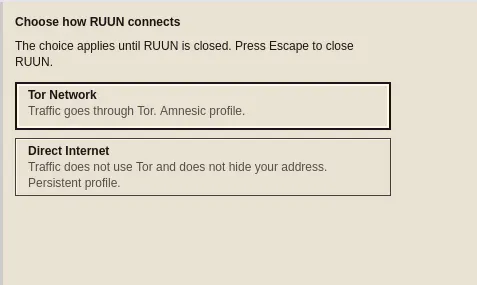
RUUN is a Tor Browser-based browser built around one simple idea: stop switching between browsers. It gives you two completely separate modes — Tor Mode for Tor-routed, hardened browsing and Direct Mode for normal persistent browsing with its own profile, cookies, bookmarks, logins, and history. RUUN also brings back a classic early-web UI instead of another modern browser interface.
AI Analysis
RUUN is a Tor Browser-based tool offering two isolated modes in one app: Tor Mode for anonymous, hardened browsing and Direct Mode for everyday persistent use with separate cookies, bookmarks, history, and profiles. It eliminates the hassle of switching browsers while featuring a nostalgic early-web UI instead of modern designs. It solves key pain points like fragmented browsing experiences, privacy vs. convenience trade-offs, and managing multiple profiles. USP is the seamless dual-mode integration with retro aesthetics for users seeking both security and simplicity. Value proposition: A single browser for private and normal web use without compromises.
In 2025-2026, rising privacy regulations, increasing surveillance concerns, data breach fatigue, and demand for convenient all-in-one tools align well with RUUN's concept. Tor technology is mature and user awareness of tracking is high. However, browser market saturation and dominance by established players like Chrome/Brave create headwinds. It is a Moderate Timing as privacy demand grows but differentiation and adoption barriers remain.
Medium. Technical difficulty is moderate-high as it forks Tor Browser (open source) but requires ongoing security updates, dual-mode isolation, and engine maintenance. Dev/operation costs are significant for a small team due to browser complexity. High compliance and security risks for privacy tools; scalability is feasible post-launch but demands expertise. Team fit depends on browser devs; overall viable but resource-intensive.
Main segments: Privacy-focused users (journalists, activists, developers, tech enthusiasts), ages 18-45, tech-savvy, distributed globally with focus on US/Europe and censored regions (e.g. China, Middle East). Industries: Tech, journalism, research. TAM for digital privacy tools ~$15-20B, SAM for privacy browsers ~$300-500M, SOM ~$5-15M for niche Tor variants. Core pains: Browser switching friction and setup complexity. Willingness to pay: Moderate (donations, freemium potential).
Medium. Direct competitors: 1. Tor Browser (torproject.org), 2. Brave (brave.com), 3. Mullvad Browser (mullvad.net/browser), 4. LibreWolf (librewolf.net). Advantages vs competitors: Unique integrated dual Tor/Direct modes with fully separate profiles in one app, distinctive retro UI. Disadvantages: Likely slower performance inherited from Tor, lower brand trust as a newer project, less feature-rich/polished than Brave, potential maintenance challenges compared to Mozilla-backed options. No pricing details available but competitors are mostly free.
Upgrade Pro to unlock full AI analysis
Similar Products

Auriko
Trading desk for LLM calls
▲ 332 votes

React UI Kit V7
All the chat components you need. None of the complexity
▲ 115 votes

Replay QA Security Scan
Automated Penetration Testing for AI-Built Apps
▲ 102 votes

CodeBurn
See where your AI coding spend actually goes
▲ 101 votes

Refoid
Automate App Store refund responses and track every outcome
▲ 68 votes

Opaline
PostHog for team Claude Code and Codex sessions.
▲ 0 votes