
Second Eyes
Automatically shortlist photos for faster publishing
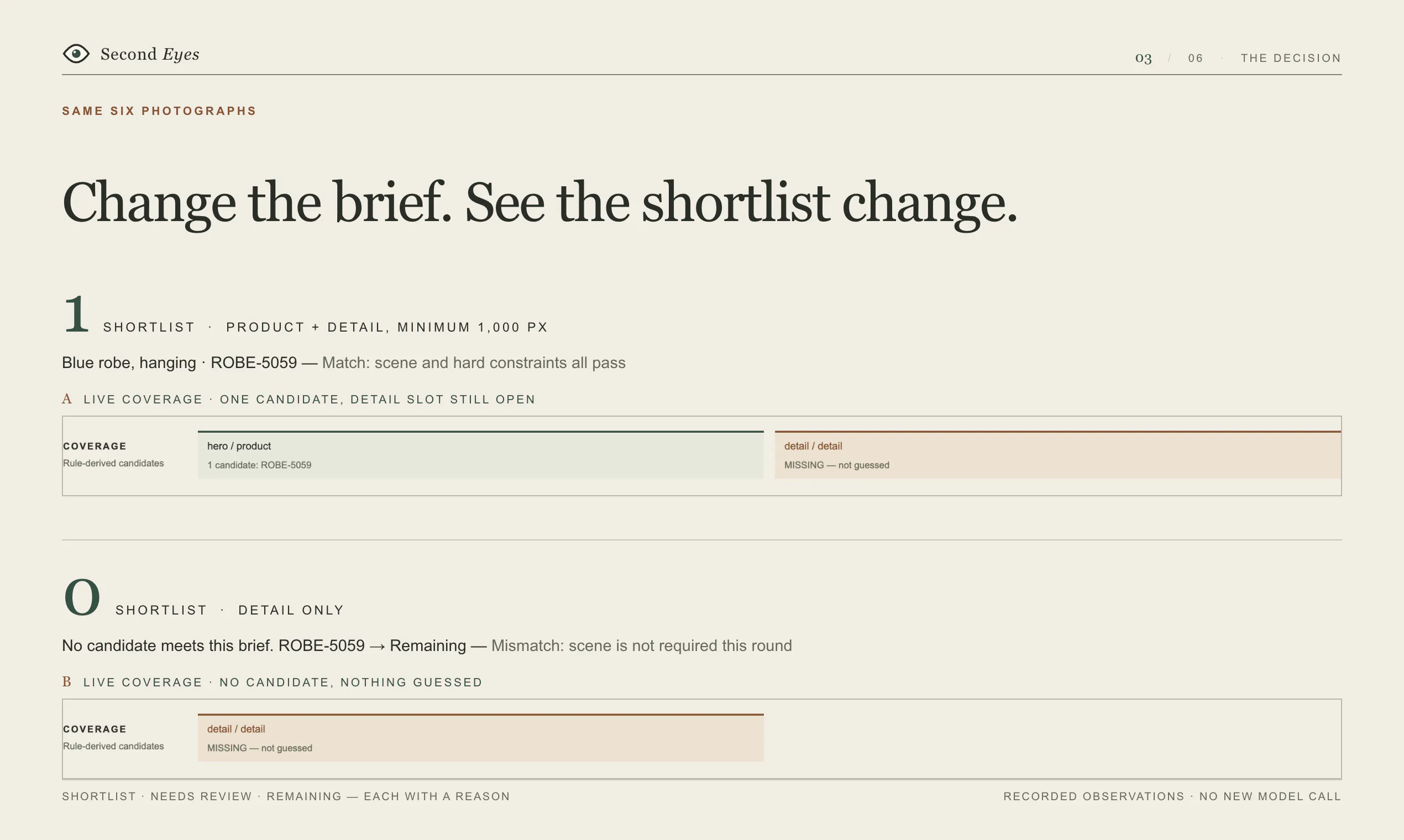
Second Eyes helps you sort photos, understand the shortlist, and make the final call. For business briefs or personal needs, see why each photo was shortlisted and what still needs checking. You decide what to publish. Explore a real media editorial project involving 404 source files, then try six public sample photos to see how your requirements reshape the shortlist. This demo uses a recorded review. No uploads yet. Would you use this with your own photos? Share your workflow in the comments.
AI Analysis
Second Eyes is an AI-powered photo curation tool that automatically shortlists images based on user-defined business or personal briefs. Core features include explanatory reasoning for each selection, interactive refinement, and final user decision-making. It solves the pain of manually reviewing large batches of photos (e.g. 404 files in a media project), reducing time and subjectivity in selection for publishing. USP is transparent, explainable AI that shows why photos are chosen and what needs checking. Overall value proposition: faster publishing workflows with human oversight, demonstrated via recorded demos and sample photos (no uploads yet).
Favorable in 2025-2026 with maturing multimodal AI models (post-OpenAI advancements), surging demand for AI productivity tools in content creation, and expanding digital media/photography markets. Creators face increasing photo volumes from smartphones and shoots, driving need for smart curation. Positive economic focus on efficiency and no major regulatory barriers for image AI. Excellent Timing.
High feasibility. Relies on mature computer vision and LLM APIs (e.g. OpenAI) for analysis, keeping technical difficulty and dev costs moderate. Operational costs for processing many images could rise with scale. Minimal supply chain risk; compliance focuses on data privacy for photo uploads. Strong scalability via cloud, though current demo stage indicates easy initial rollout. Team with AI experience would fit well.
Main segments: professional photographers, media editorial teams, content marketers, and social media managers (ages 25-45, tech-savvy). Industries: photography, journalism, marketing, digital agencies. Geographic: global with concentration in North America and Europe. Estimated market: growing AI photography tools segment within multi-billion content creation TAM; strong demand for efficiency. Core pain points: time sink in manual photo sorting and inconsistent selection. High willingness to pay via subscriptions for teams saving hours per project.
Medium. Direct competitors: 1. Adobe Lightroom/Sensei (adobe.com), 2. Capture One (captureone.com), 3. Imagga (imagga.com), 4. Clarifai (clarifai.com). Advantages: unique explainable shortlisting tied to custom briefs, transparency in AI logic, focused on publishing decisions vs general editing/tagging. Disadvantages: currently demo-only with no live uploads or integrations, lacks established brand and ecosystem compared to Adobe, potentially higher per-image costs.
Upgrade Pro to unlock full AI analysis
Similar Products

Equitybee Benchmark
Compare your startup equity grant for free.
▲ 218 votes

Adapt
The company brain that gets work done
▲ 124 votes

Tapfree for Chrome
Voice dictation that adapts to what’s on your screen
▲ 122 votes

CodeBurn
See where your AI coding spend actually goes
▲ 101 votes

Kosshi
Simple, fast outliner for Mac and iPhone.
▲ 90 votes

Thoughts for Mac
Capture notes from your menubar using text, images or voice
▲ 90 votes