
Tacet
The brain monitor for cognitive health scores
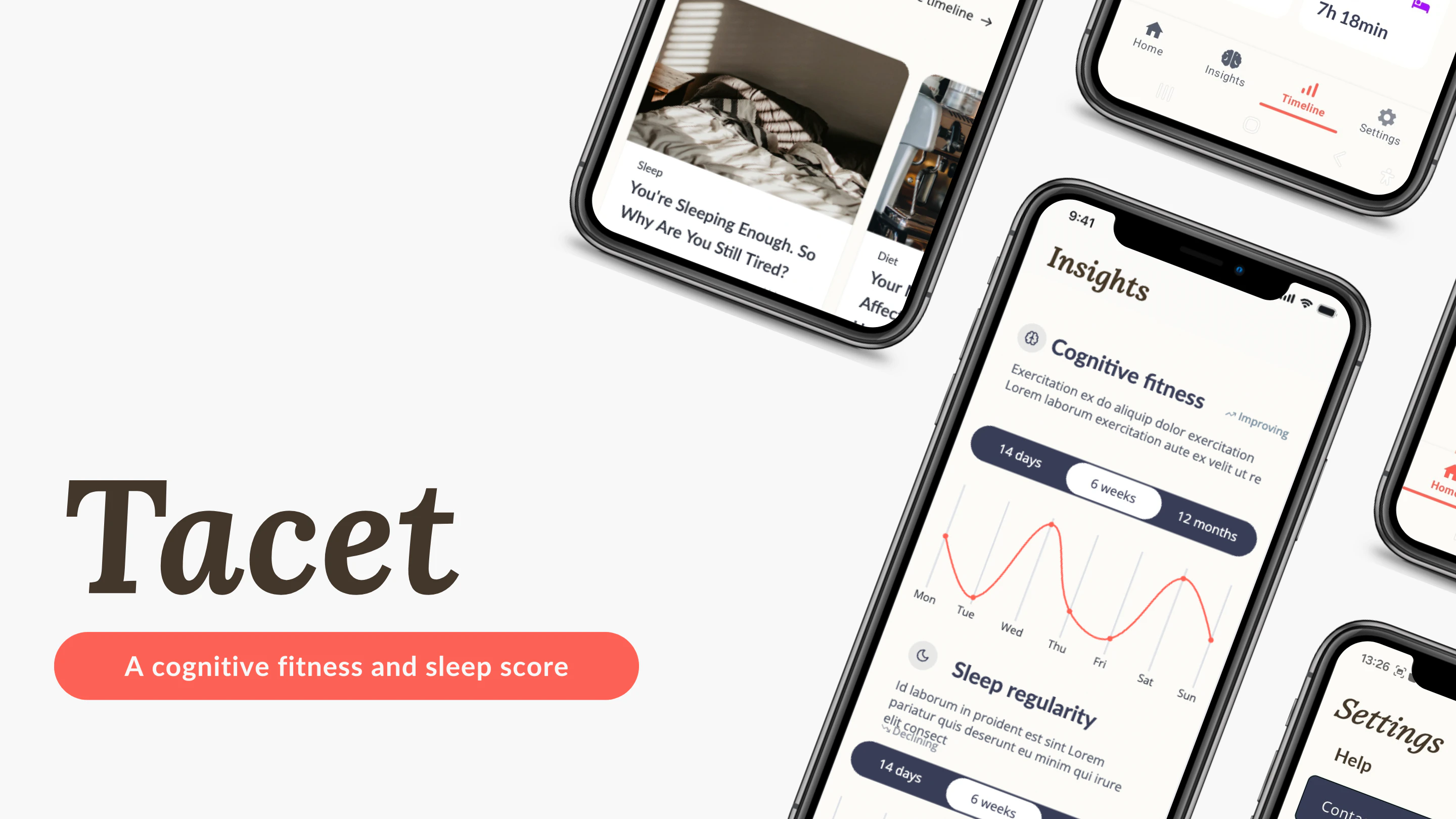
You track your steps. Your heart rate. Your calories. But what about your brain? Tacet gives you a daily cognitive fitness score and sleep quality tracking, drawn from the rhythm of how you tap your phone. Those timing patterns carry a surprisingly accurate signal about your cognitive state. No headset, no expensive hardware, no setup. Passive tracking, built on neuroscience research from Leiden University. Traditional brain monitoring is expensive. Tacet brings it to your pocket. Start today!
AI Analysis
Tacet is an Android app that delivers daily cognitive fitness scores and sleep quality tracking by passively analyzing the rhythm and timing patterns of how users tap their phone. Built on neuroscience research from Leiden University, it requires no hardware, headsets, or manual setup. It solves the key pain point of neglecting brain health while easily tracking physical metrics like steps and heart rate, as traditional brain monitoring is expensive and complex. The value proposition is an accessible, pocket-based cognitive monitor that brings neuroscience insights to everyday users for improved health awareness and productivity.
In 2025-2026, market timing is favorable due to rising consumer focus on mental and cognitive health, maturity of on-device AI for passive sensing, increased demand for non-invasive digital health tools post-pandemic, and supportive policies for health tech innovation. Users seek seamless integration beyond wearables. Economic tailwinds in digital wellness further support adoption. Excellent Timing.
Technical implementation leverages existing smartphone sensors and established neuroscience models, but requires robust ML for accurate tap analysis across devices (medium difficulty). Low development/operation costs as a software-only app with no hardware. Privacy and compliance risks exist for health data (GDPR/HIPAA). Strong scalability via app stores. No supply chain issues. Overall rating: High, supported by passive nature and research foundation.
Primary segments: Tech-savvy Android users aged 25-55 in health & fitness and productivity categories, including biohackers, professionals monitoring wellness, and those concerned with cognitive decline. Geographic focus: US, Europe, global English-speaking markets. TAM for digital cognitive health tools is substantial within the $200B+ digital health market; SAM for passive mobile trackers is mid-sized; SOM targets early adopters via app stores. Core pain: Lack of easy, affordable brain health insights. Moderate to high willingness to pay for proven value via subscriptions.
Competition level: Medium. Direct competitors: 1. Lumosity (lumosity.com), 2. Elevate (elevateapp.com), 3. Muse (choosemuse.com), 4. Brain.fm (brain.fm), 5. Peak (peak.net). Advantages vs competitors: Fully passive (no games, headsets or active tasks), leverages unique tap rhythm neuroscience for cognitive and sleep scores. Disadvantages: Newer entrant with potentially less brand recognition; accuracy depends on user interaction volume; limited to Android initially. Strong differentiation through zero-friction hardware-free approach.
Upgrade Pro to unlock full AI analysis
Similar Products
Adapt
The company brain that gets work done
▲ 124 votes
Cercle
The bat signal for your closest friends.
▲ 121 votes
Orus
Claude for investing in perpetuals
▲ 121 votes
Coarena by Coasty
The arena where agents battle on real-world work
▲ 104 votes

WikiFix for Confluence
Find and fix issues in your knowledge base
▲ 86 votes
Refoid
Automate App Store refund responses and track every outcome
▲ 68 votes