
Tracea
Datadog for AI agents - traces, RCA, and team memory
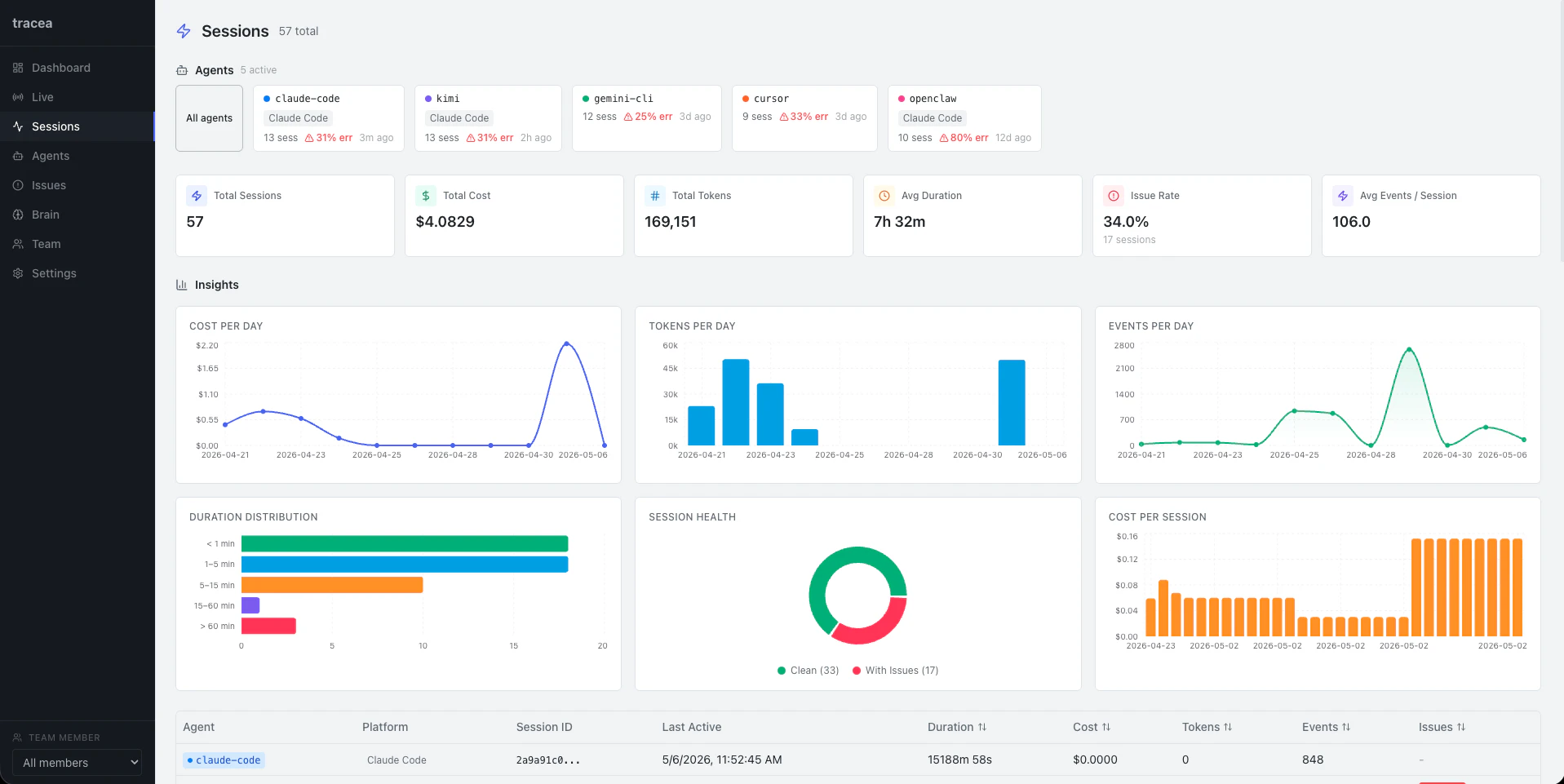
Agents fail silently. You fire one off, it runs, nothing comes back - no trace, no cost data, no idea which call broke. Tracea captures every tool call, LLM response, and cost spike. Automatic RCA tells you exactly why it failed. YAML detection rules catch loops, spikes, and silent errors before they hit production. Self-hosted. One Docker command. No data leaves your network. Company Brain turns every session into team memory - agents start smarter each run.
AI Analysis
Tracea is a self-hosted observability tool for AI agents, positioned as 'Datadog for AI agents'. Core features include capturing every tool call, LLM response, and cost spike; automatic root cause analysis (RCA) for failures; YAML detection rules to catch loops, spikes, and silent errors pre-production; and 'Company Brain' that converts sessions into shared team memory for smarter subsequent runs. It solves key pain points like silent agent failures, lack of visibility into operations/costs, debugging difficulties, and loss of organizational knowledge. Deployed via one Docker command with no data leaving the network, its value proposition is privacy-first, proactive monitoring and continuous improvement for reliable AI agent development.
In 2025-2026, AI agent adoption is accelerating rapidly with maturing LLM tech and rising enterprise demand for reliable autonomous systems. Privacy regulations and concerns over cloud data sharing favor self-hosted solutions. User needs for observability and RCA are growing as agents move to production. This aligns perfectly with industry trends toward AI reliability and internal toolchains. Excellent Timing.
High. Technical difficulty is manageable using established tracing, LLM integration, and Docker technologies. Development and operation costs are low due to self-hosted open-source model with one-command deploy. Minimal supply chain or compliance risks as data stays on-prem. Strong scalability potential for team memory via knowledge bases. Fits well for a YC developer tools team.
Main target users: AI/ML engineers, developers building autonomous agents, and technical teams in startups/enterprises (demographics: tech professionals aged 25-45). Industries: AI development, software/SaaS. Geographic: Global with focus on US and Europe (YC-aligned). Estimated market size: Rapidly expanding AI observability sector (large TAM within multi-billion devtools market; SAM for agent-specific tools; SOM for self-hosted/open-source segment). Core pain points: silent failures, no visibility/RCA, repeated errors, knowledge loss. High willingness to pay for time-saving, privacy-focused reliability tools.
Medium. Direct competitors: LangSmith (smith.langchain.com), Helicone (helicone.ai), Arize Phoenix (phoenix.arize.com), AgentOps (agentops.ai), Traceloop (traceloop.com). Advantages vs competitors: fully self-hosted with strict data privacy (no network egress), unique YAML proactive rules, and Company Brain for team memory/knowledge retention. Disadvantages: newer entrant may have fewer pre-built LLM integrations or ecosystem support initially; open-source model could limit enterprise sales velocity compared to VC-backed cloud competitors.
Upgrade Pro to unlock full AI analysis
Similar Products

Auriko
Trading desk for LLM calls
▲ 332 votes

Opaline
PostHog for team Claude Code and Codex sessions.
▲ 141 votes

React UI Kit V7
All the chat components you need. None of the complexity
▲ 115 votes

Replay QA Security Scan
Automated Penetration Testing for AI-Built Apps
▲ 102 votes

CodeBurn
See where your AI coding spend actually goes
▲ 101 votes

Refoid
Automate App Store refund responses and track every outcome
▲ 68 votes