
TravelMind
AI-powered city discovery built on taste, not reviews
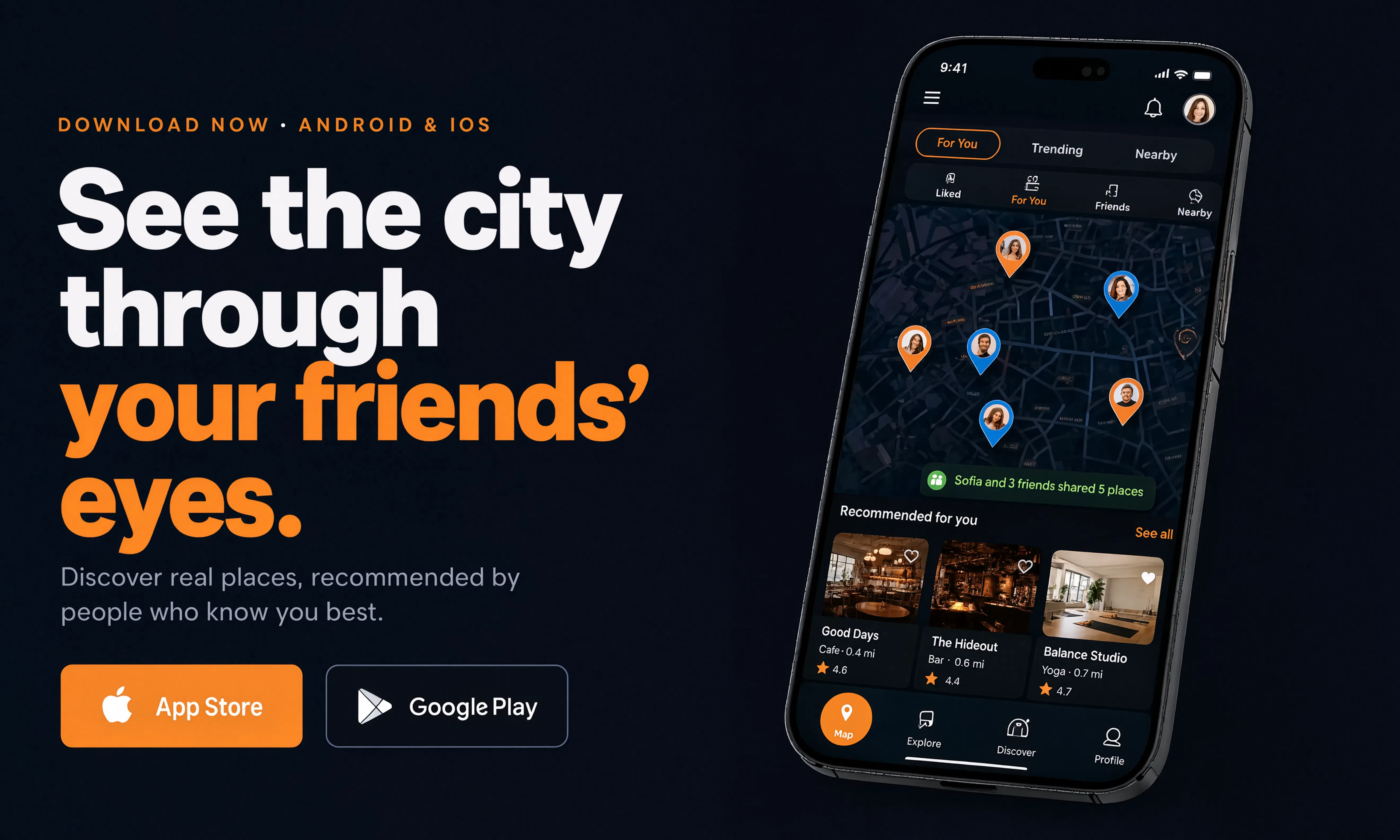
You land in a new city. You open every app you know. Two hours later you're still scrolling, still unsure, still guessing. TravelMind was built for that moment. Swipe through places, tell us what you love — the AI does the rest. It learns your taste and finds the right spot before you even know to look. Your taste. Every city. Live now on iOS and Android.
AI Analysis
TravelMind is an AI-powered mobile app for personalized city discovery, available on iOS and Android. Users swipe through places to indicate preferences, allowing the AI to learn their unique taste and proactively recommend spots instead of relying on generic reviews. It directly solves the pain of decision fatigue, endless scrolling across apps, and uncertainty upon landing in a new city. The core value proposition is intuitive, taste-driven exploration that delivers relevant discoveries quickly, making travel more spontaneous and enjoyable without guesswork.
In 2025-2026, AI personalization technologies have matured for consumer apps, global travel demand continues to surge with experiential focus, and users increasingly reject review-based fatigue in favor of tailored suggestions. Economic recovery supports travel tech investment. This aligns perfectly with rising AI adoption in lifestyle tools. Excellent Timing.
Technical implementation uses established mobile frameworks and AI recommendation models, with moderate development and operational costs for backend inference and geolocation services. Privacy compliance for location data is a key but addressable risk. The product is already launched and live, indicating strong scalability potential with cloud infrastructure. Overall rating: High, supported by current tech maturity and existing availability.
Primary segments: Tech-savvy millennial and Gen Z travelers (ages 25-40), urban explorers, and international tourists visiting major cities. Geographic focus: Global, with high adoption in North America, Europe, and Asia. TAM for travel tech exceeds $10B; SAM for AI-powered discovery tools approx. $800M-$1B; SOM depends on user acquisition but targets early adopters. Core pains: information overload and unpersonalized suggestions. Willingness to pay: moderate-high for premium personalization via subscriptions or in-app purchases.
Medium. Direct competitors: 1. TripAdvisor (tripadvisor.com) - review-driven recommendations; 2. Google Maps (maps.google.com) - location-based generic suggestions; 3. Wanderlog (wanderlog.com) - AI-assisted trip planning; 4. Layla (uselayla.com) - conversational AI travel advisor; 5. Sygic Travel (travel.sygic.com) - guide-focused discovery. Advantages: unique swipe-based taste learning over review bias, proactive personalized discovery. Disadvantages: newer entrant with smaller user base for training AI, less established brand trust and network effects compared to incumbents.
Upgrade Pro to unlock full AI analysis
Similar Products

Cohere Parse 5
Turn complex docs, tables & images into AI-ready data
▲ 158 votes

Opaline
PostHog for team Claude Code and Codex sessions.
▲ 141 votes

Adapt
The company brain that gets work done
▲ 124 votes

Tapfree for Chrome
Voice dictation that adapts to what’s on your screen
▲ 122 votes

WikiFix for Confluence
Find and fix issues in your knowledge base
▲ 86 votes

Saldor
Speed up procurement and AP.
▲ 78 votes